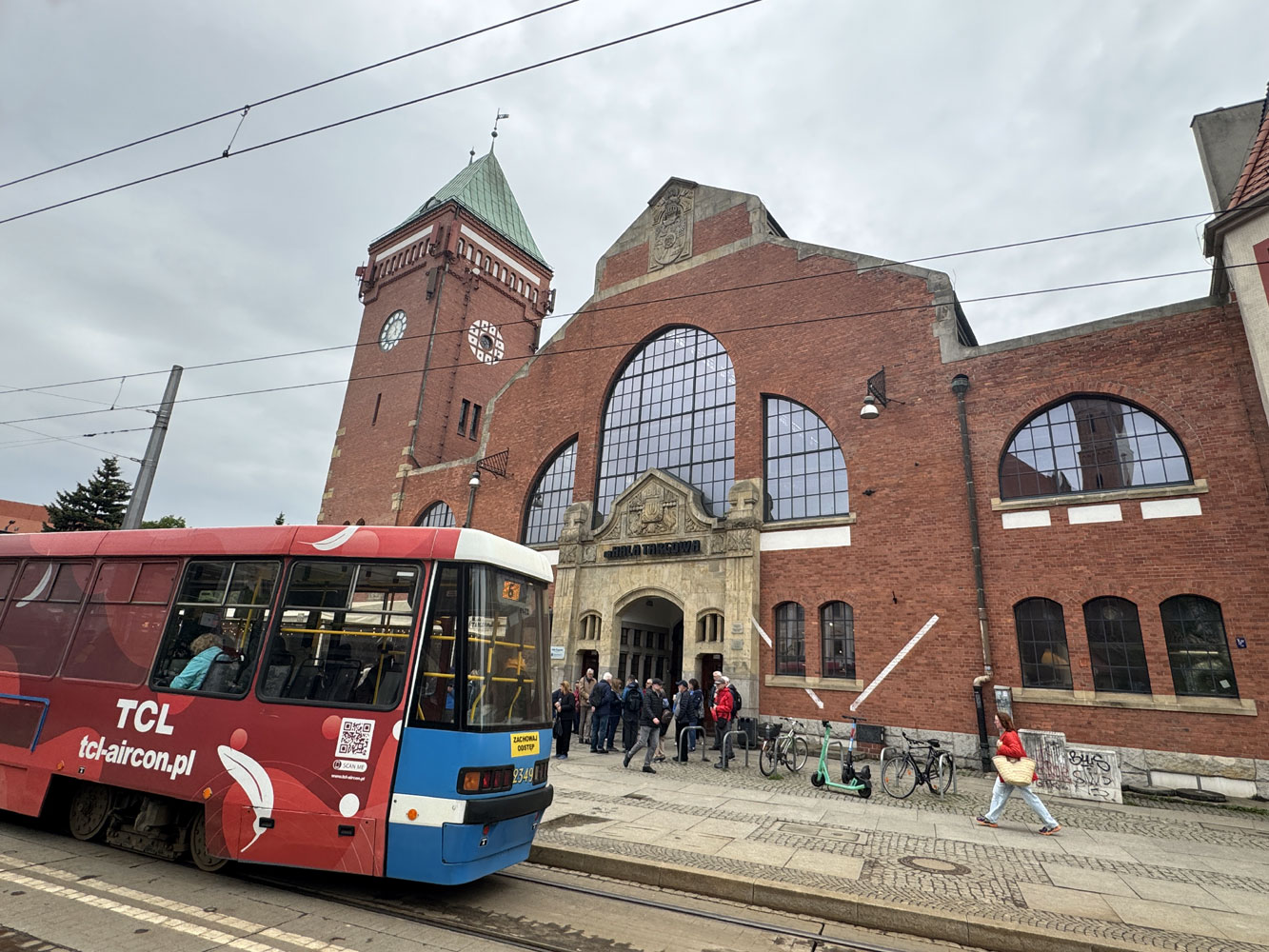
|
A full day in the
interesting city of Wroclaw
|
|
|
|
|
| |
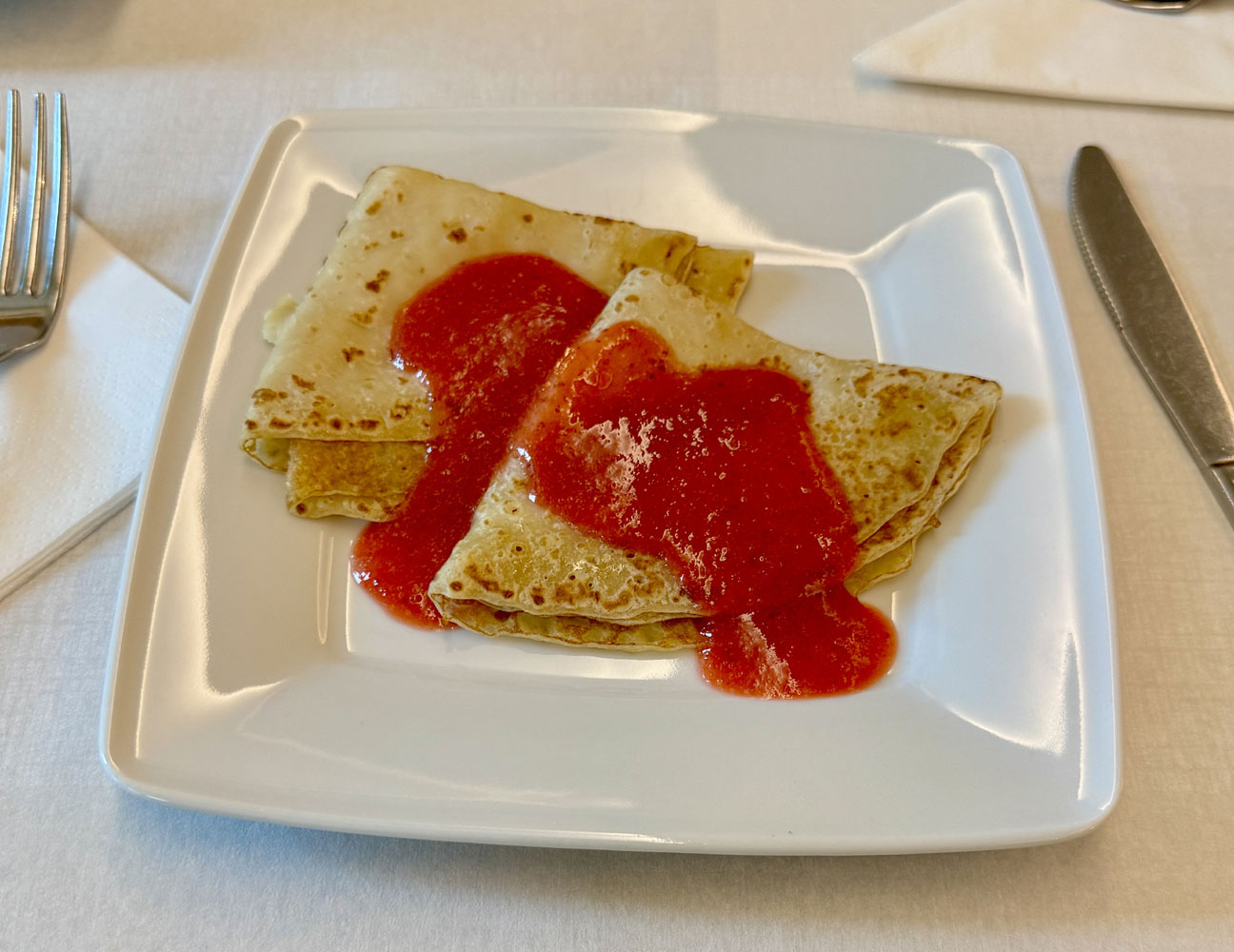
The hotel's breakfast
buffet was excellent. In addition to all of the standard
breakfast buffet offerings, there were local specialities
available, which Geoff decided to try. He enjoyed his
pancake with a plum sauce...
|
|
|
| |
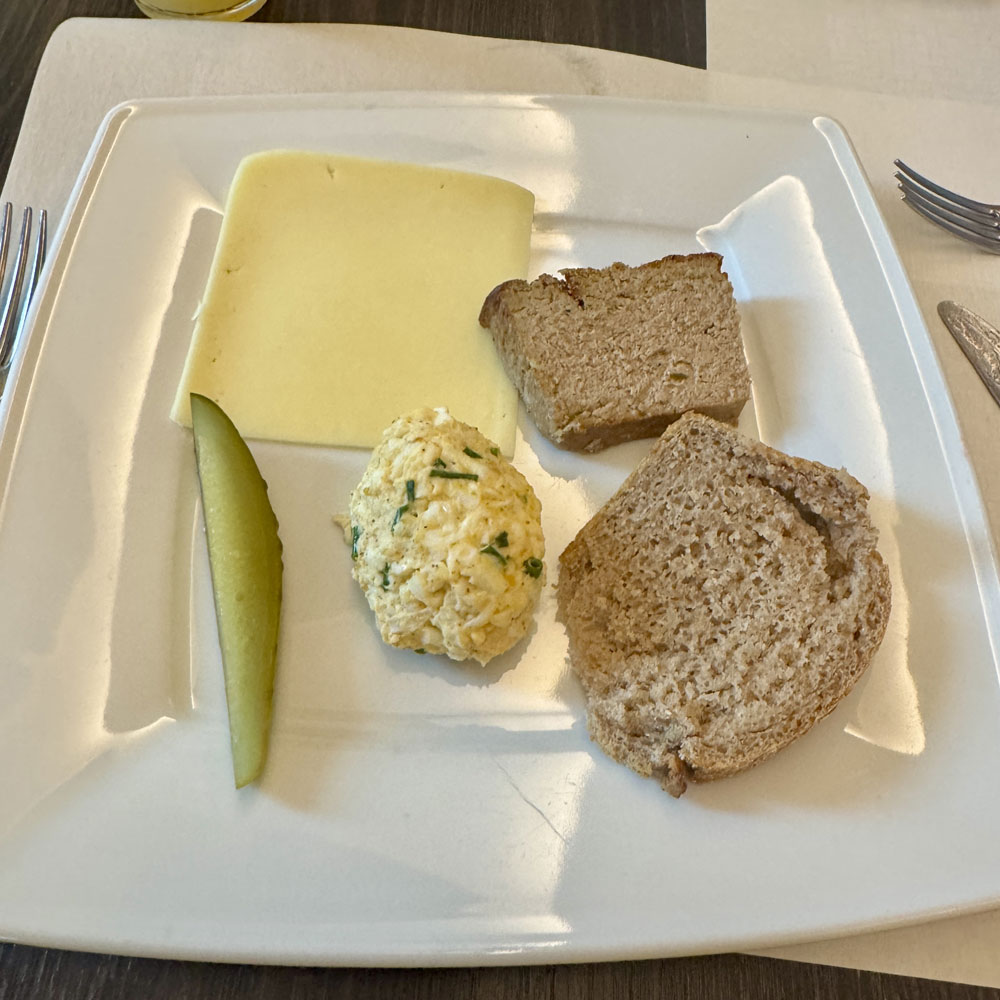
...as well as the egg
salad, bread and cheese. |
|
|
| |
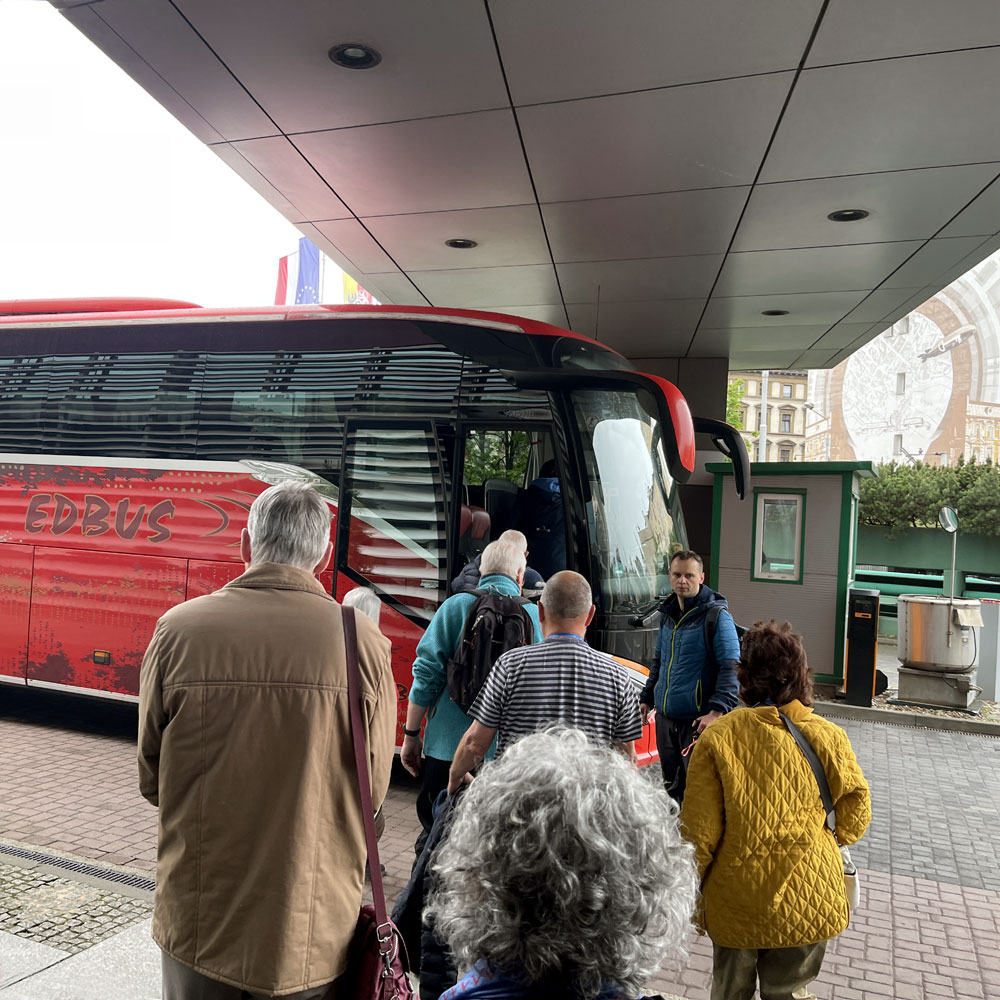
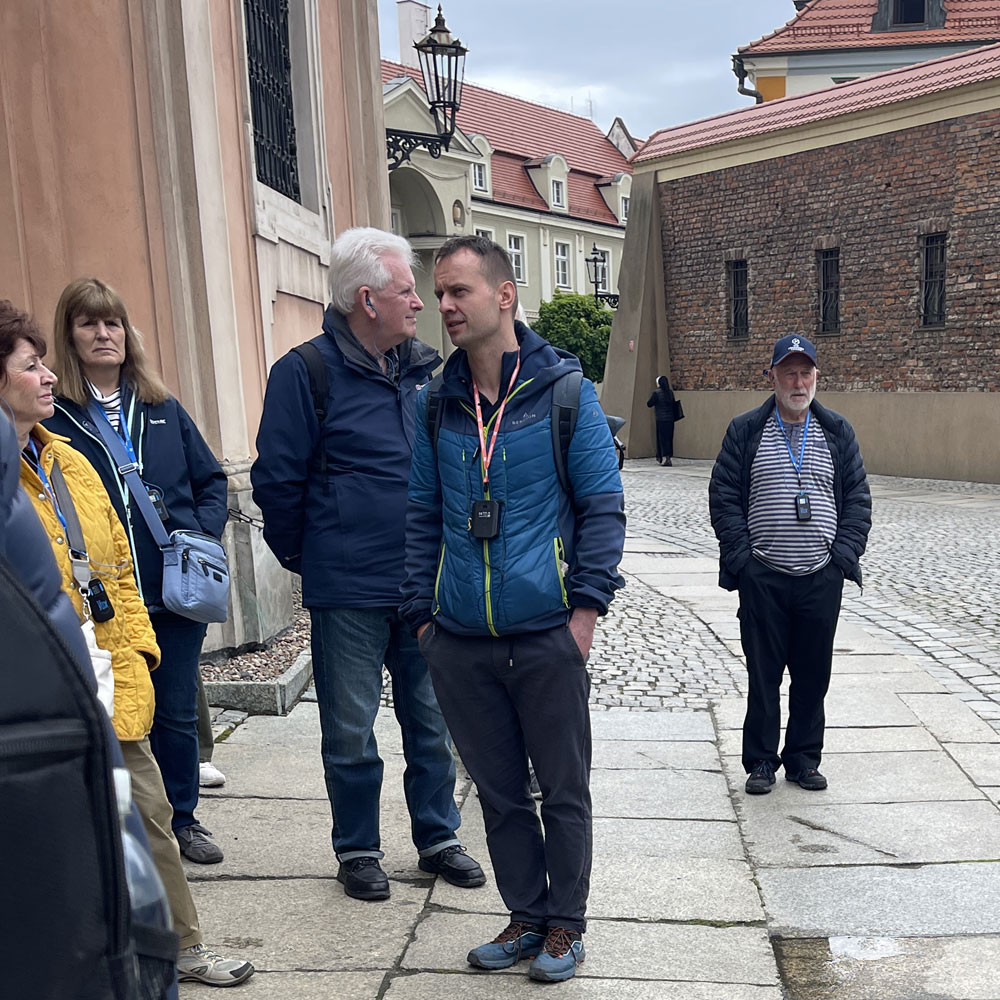
A local guide escorted
us today and we began the tour by coach, shortly after breakfast. |
|
|
| |
Wroclaw
(pronounced VROTS-wah) has an incredibly complicated history.
Our guide summarised it for us, but it was only after
we got home and did some research for ourselves that we
really began to understand it all, summarised as follows:-
10th century: It
began as a Slavic settlement and became part of the early
Polish state under the Piast dynasty.
Middle Ages: The city prospered as a
trading centre and later came under the rule of the Kingdom
of Bohemia.
1526: Control passed to the Habsburg
Monarchy when the Bohemian crown was inherited by the
Austrian Habsburgs.
1741: Following the First Silesian War,
it became part of Prussia and was known by its German
name, Breslau.
1871–1945: Breslau was a major
city in the German Empire and later Germany. During the
Second World War it was declared a fortress, leading to
a prolonged siege in 1945 that left much of the city destroyed.
After 1945: Under the post-war Potsdam
Agreement, the city became part of Poland again and was
renamed Wroclaw. Most of the German population was expelled
or fled, and the city was repopulated mainly by Poles,
many of whom had themselves been displaced from eastern
territories annexed by the Soviet Union.
Today: Wroclaw has been painstakingly
rebuilt and is now Poland's third-largest city. It is
renowned for its colourful Market Square, numerous bridges
and islands on the Oder River, thriving university, and
vibrant cultural life. In 2016 it was named the European
Capital of Culture.
Wroclaw's history is unusual because it has been ruled
by Poland, Bohemia, Austria, Prussia, Germany, and Poland
again, leaving a rich architectural and cultural heritage
that reflects all of these influences.
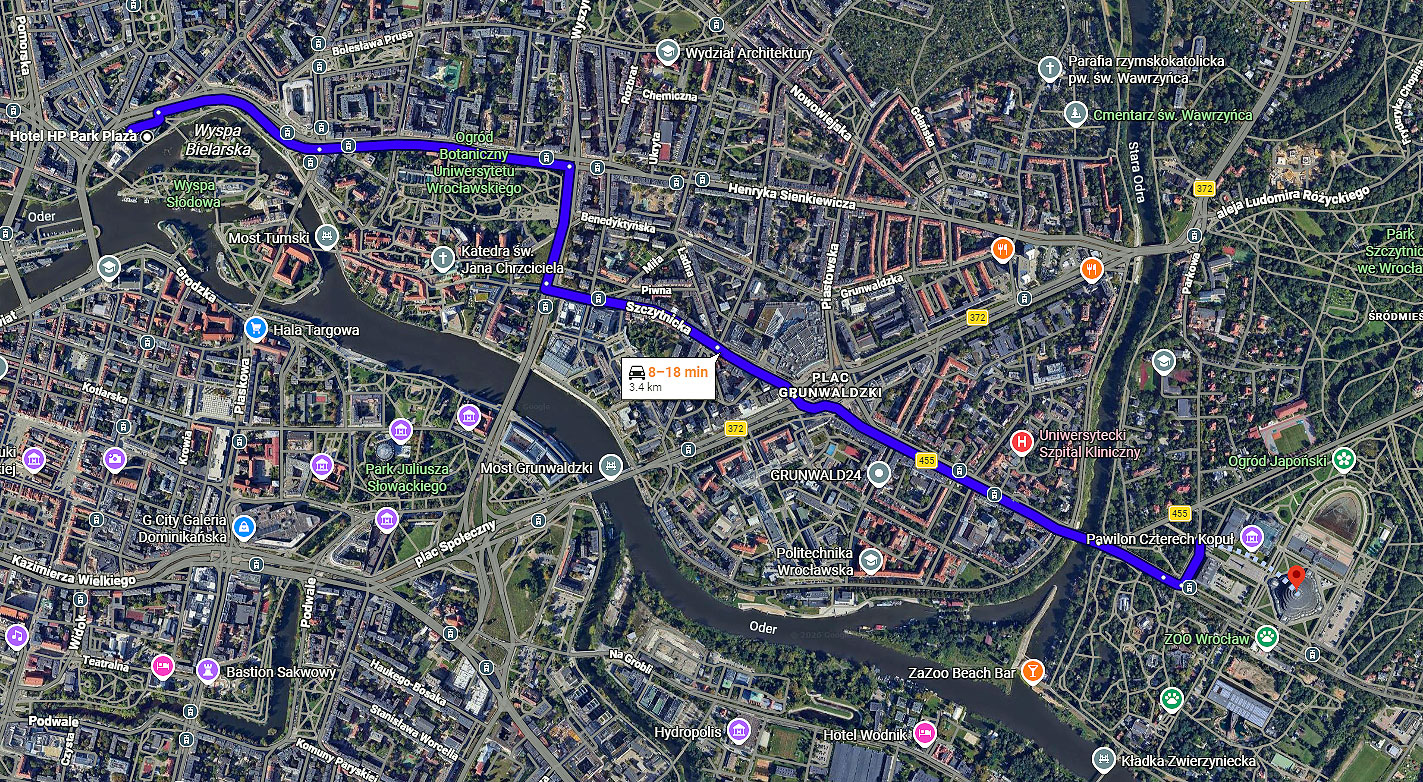
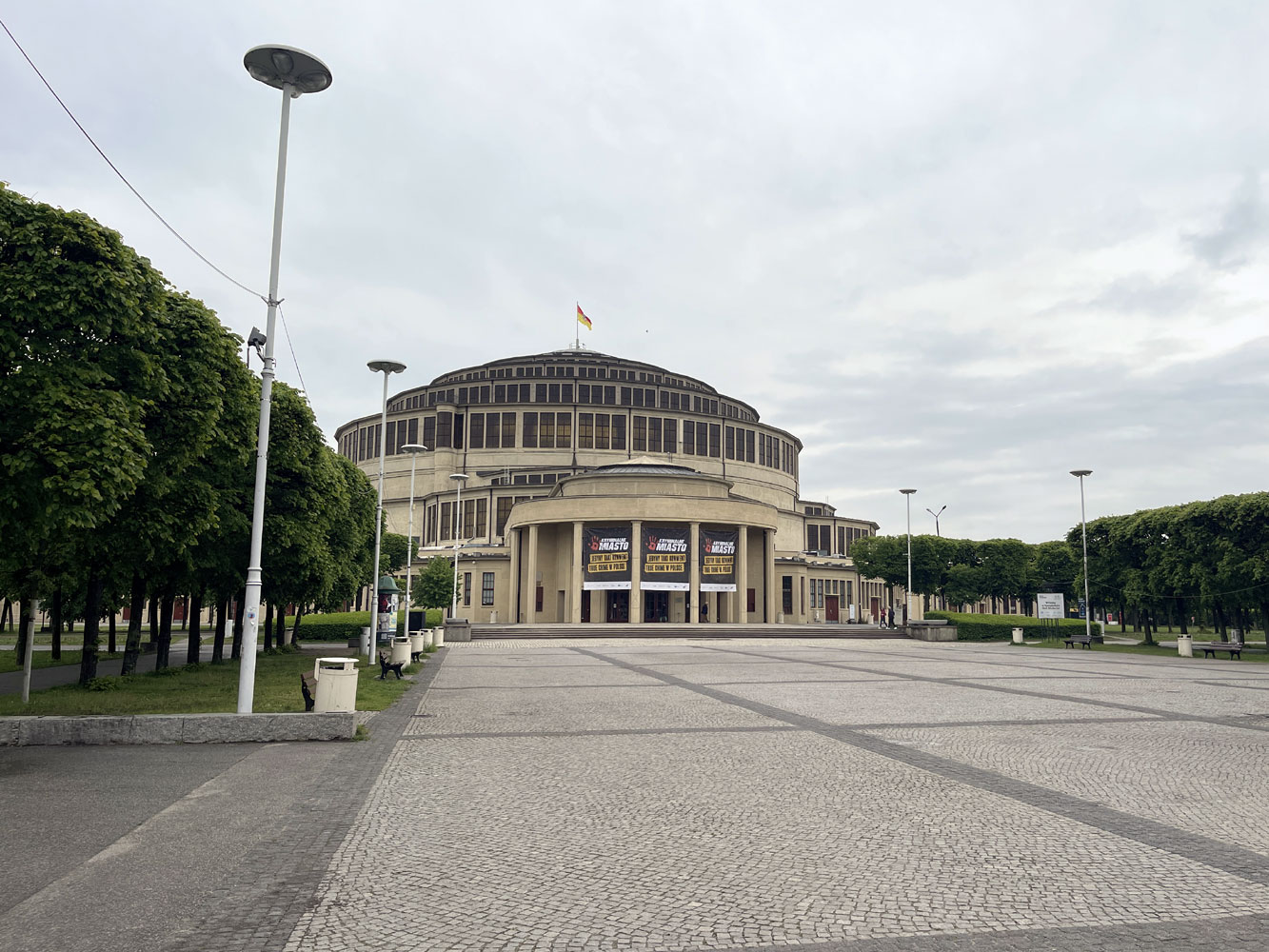
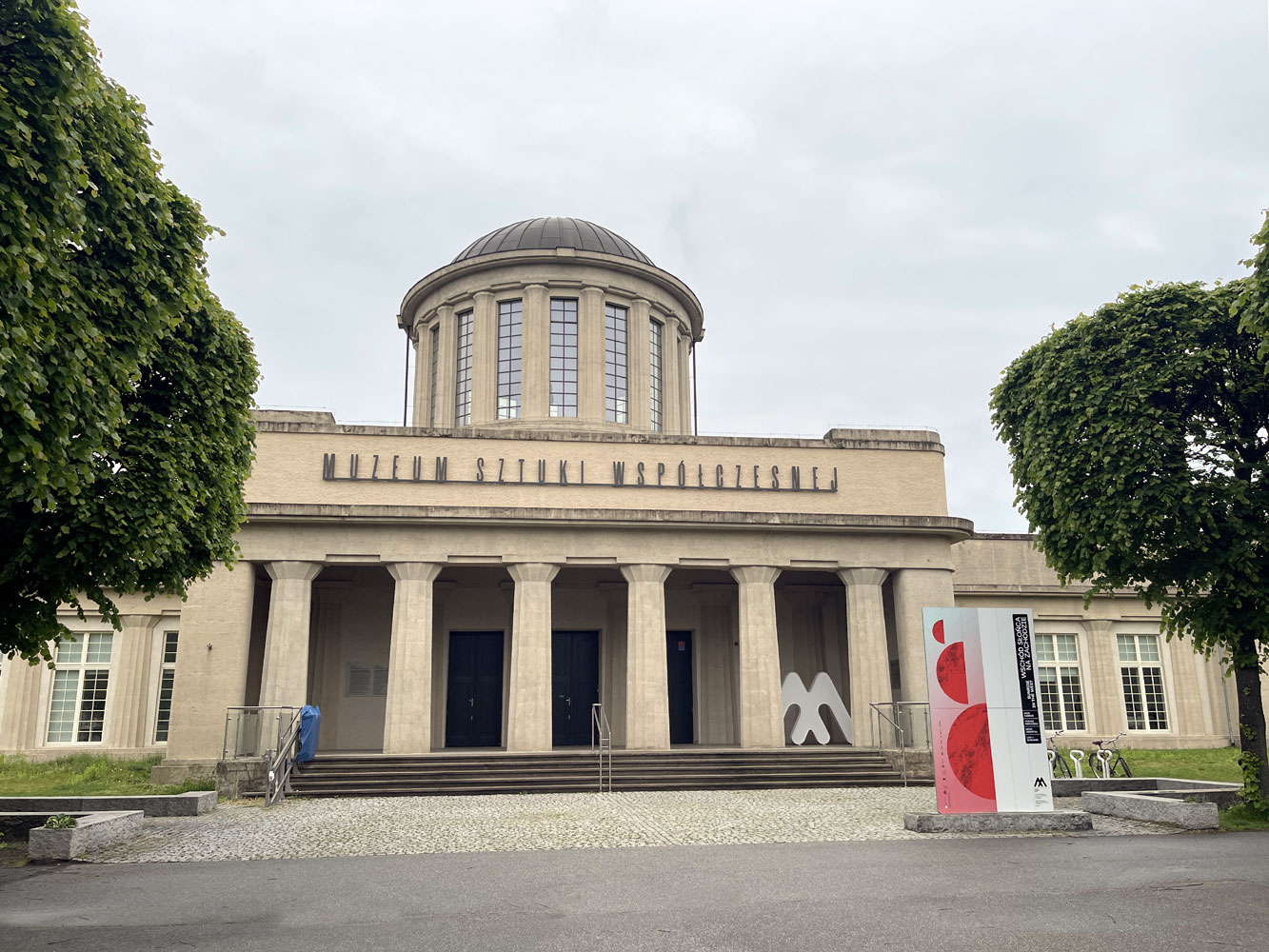
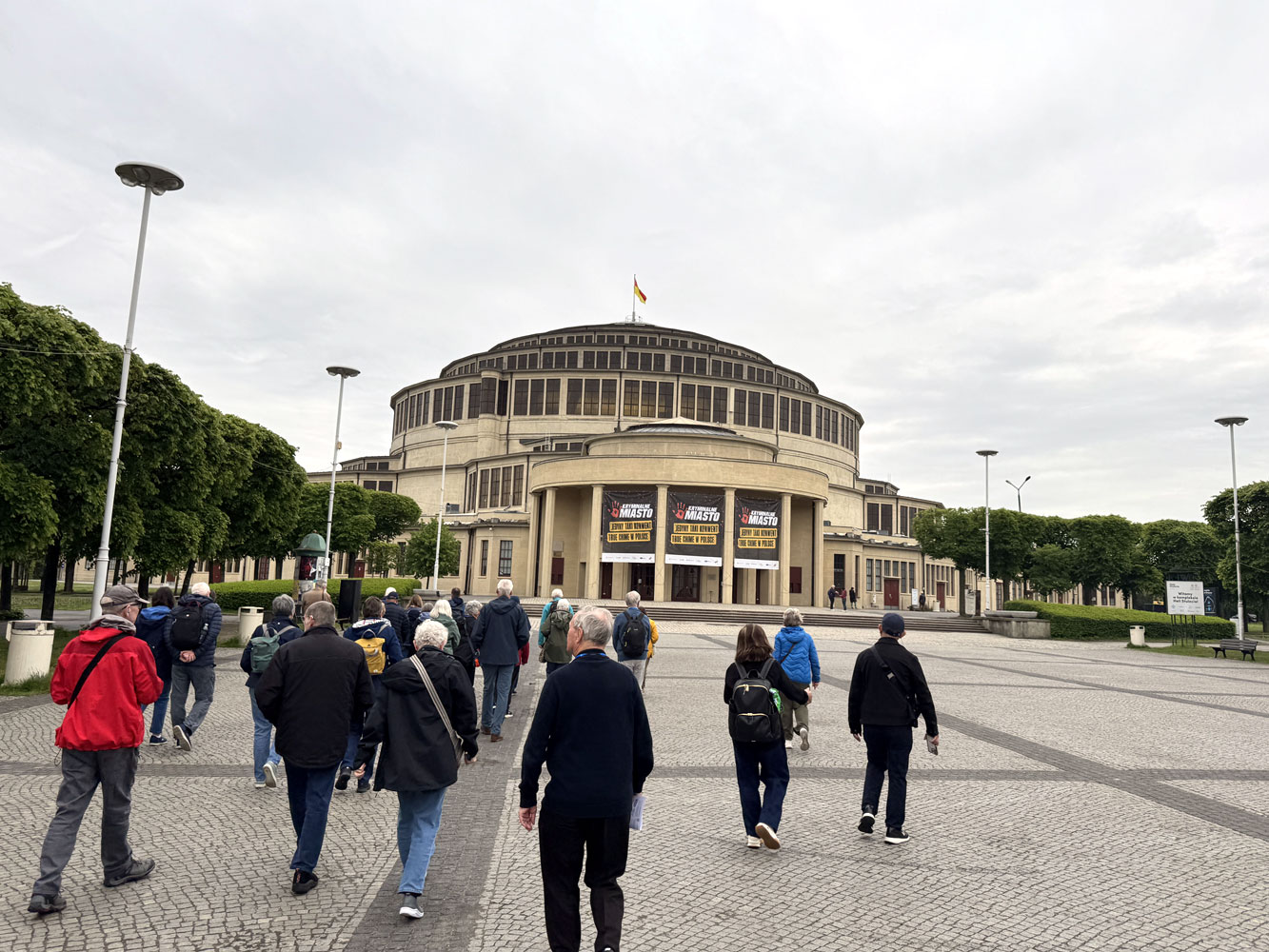
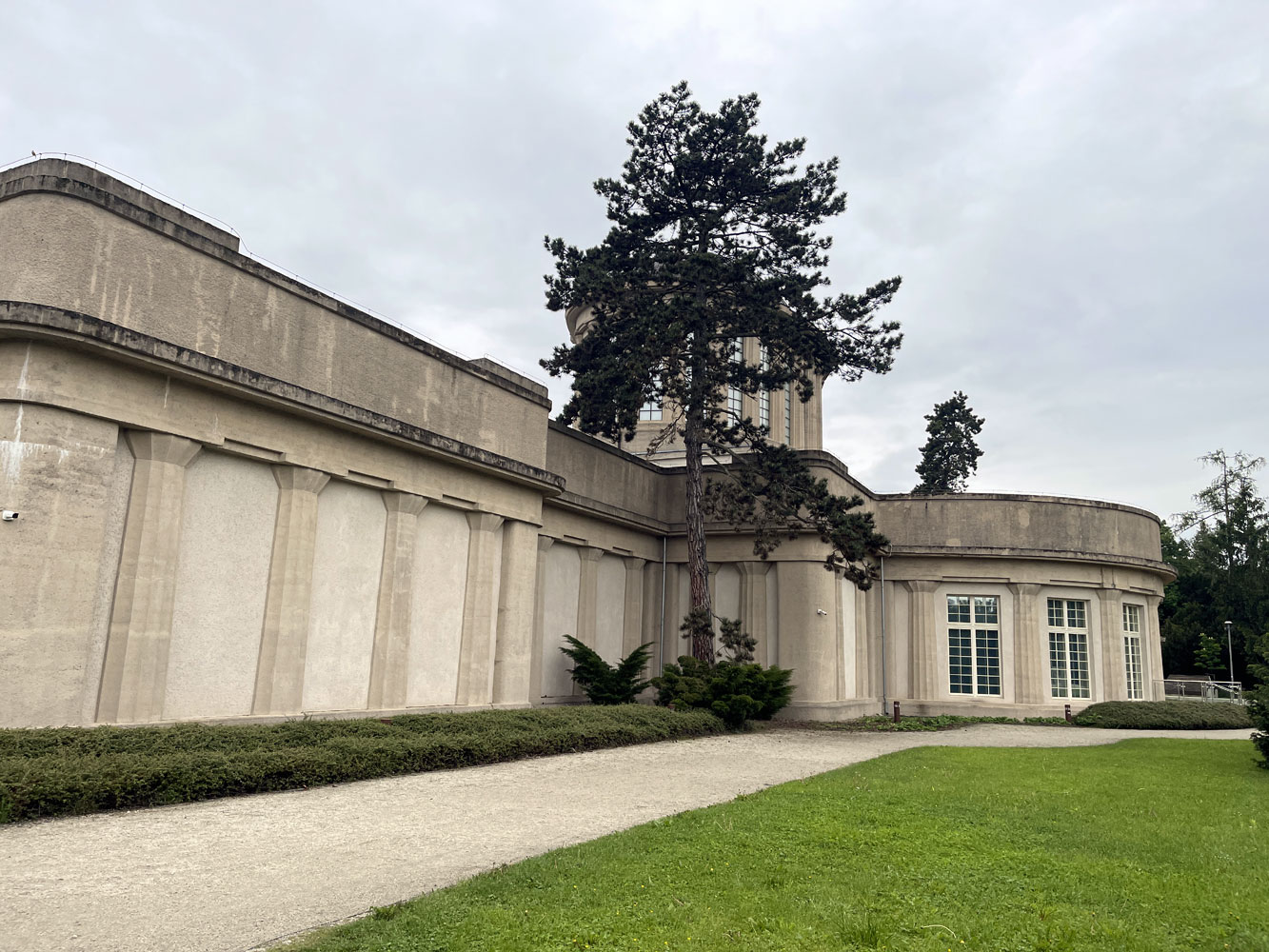
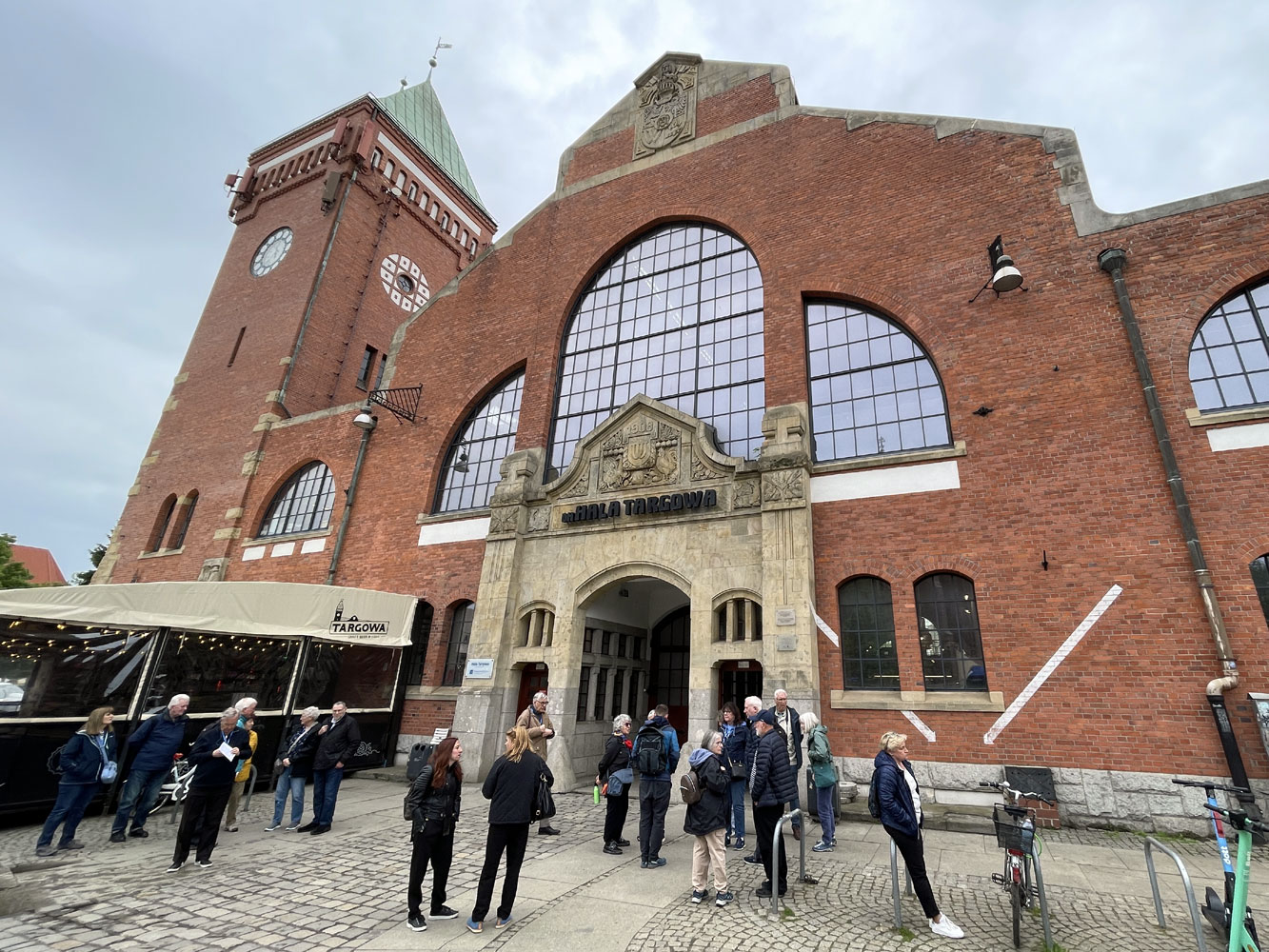
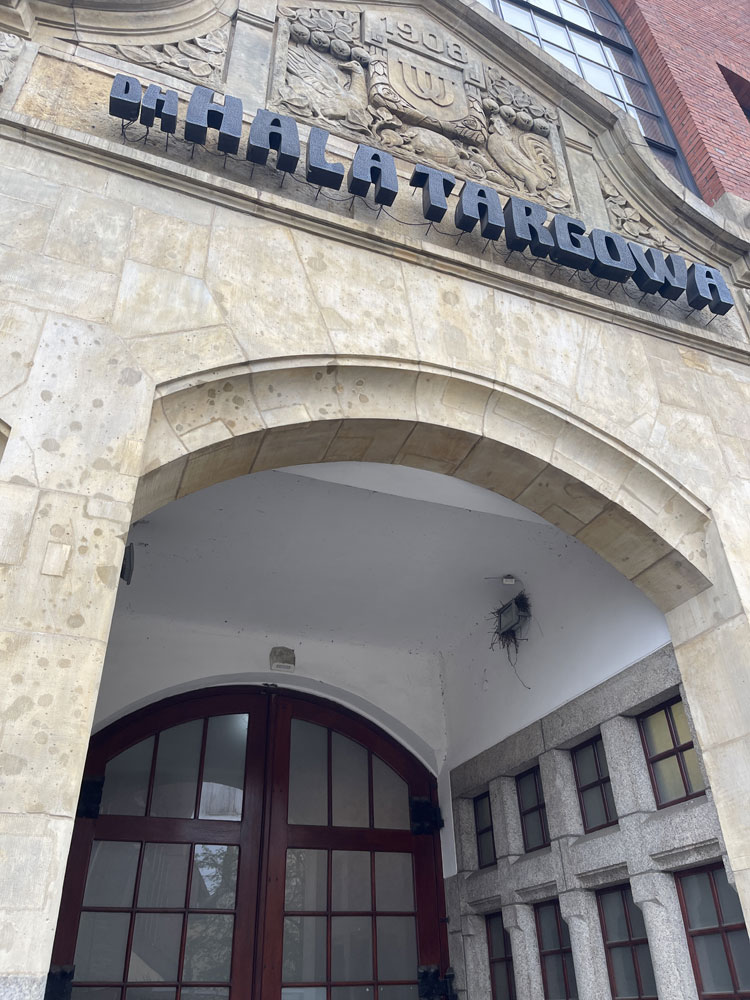
After driving for around
twenty minutes, we arrived at our first destination...
|
|
|
| |
|
|
| |
|
| |
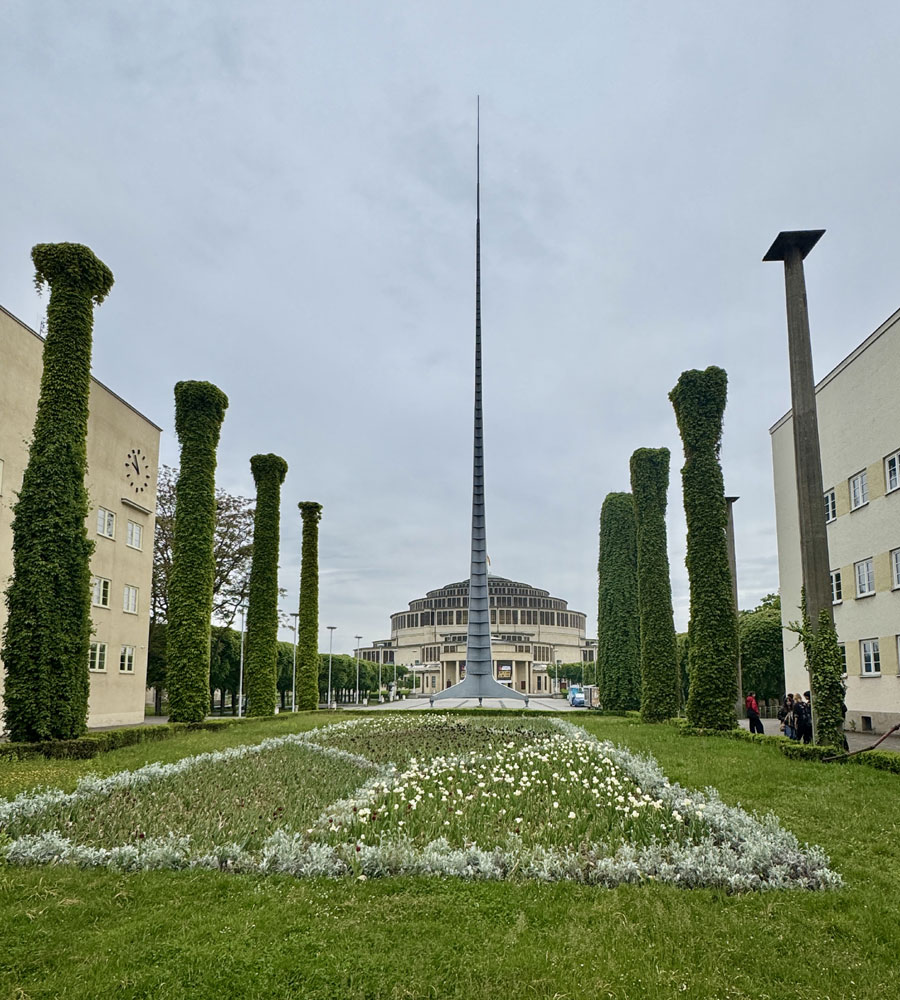
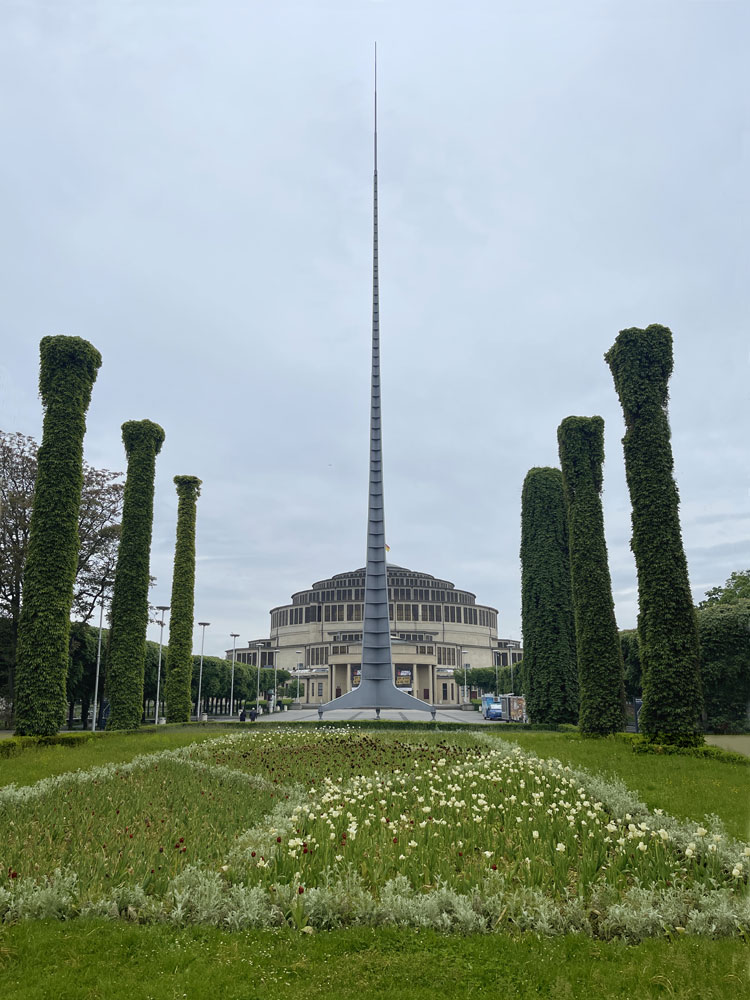
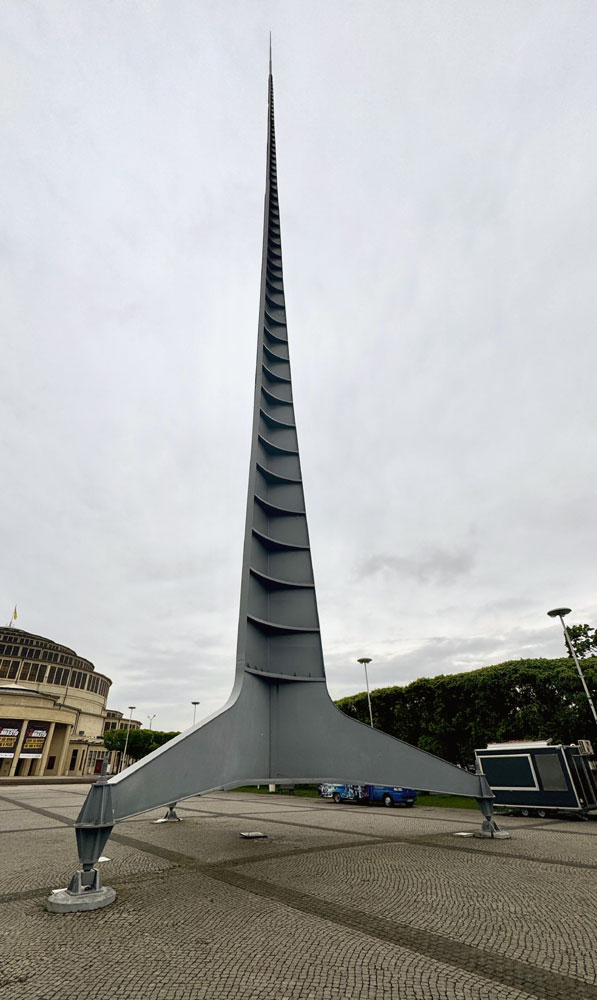
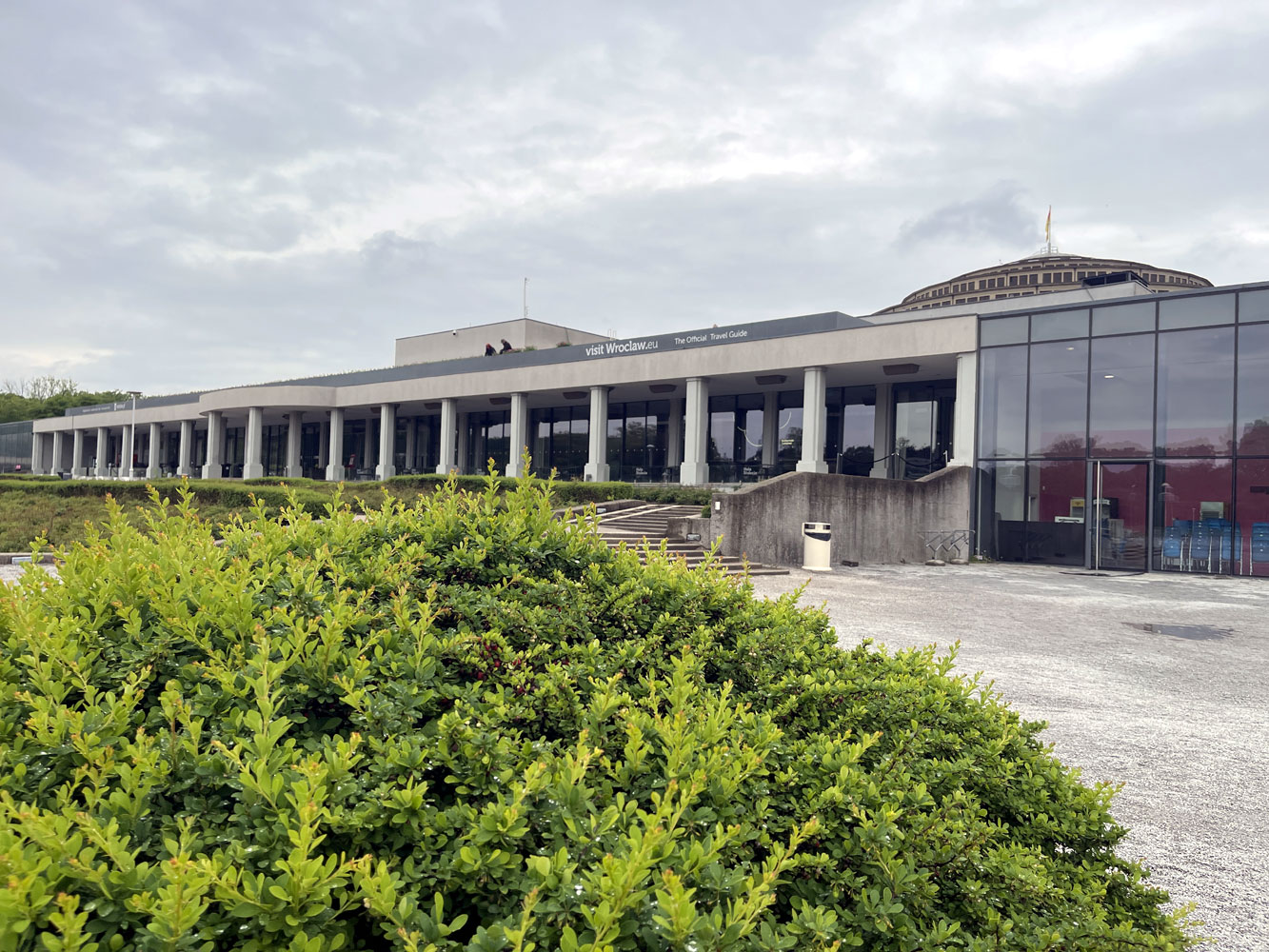
In front of the hall
is Iglica, a forty ton structure erected in 1948 on the
occasion of the Regained Territories Exhibition. It highlights
the efforts of the citizens of Wroclaw in rebuilding the
city which was destroyed during World War II and the siege
towards the end of the war. |
|
|
| |
The
three legs of the base of Iglica represent the united social
classes – workers, peasants and the so-called working
intelligentsia in the struggle for the common national good. |
|
|
| |
|
| |
|
| |
|
| |
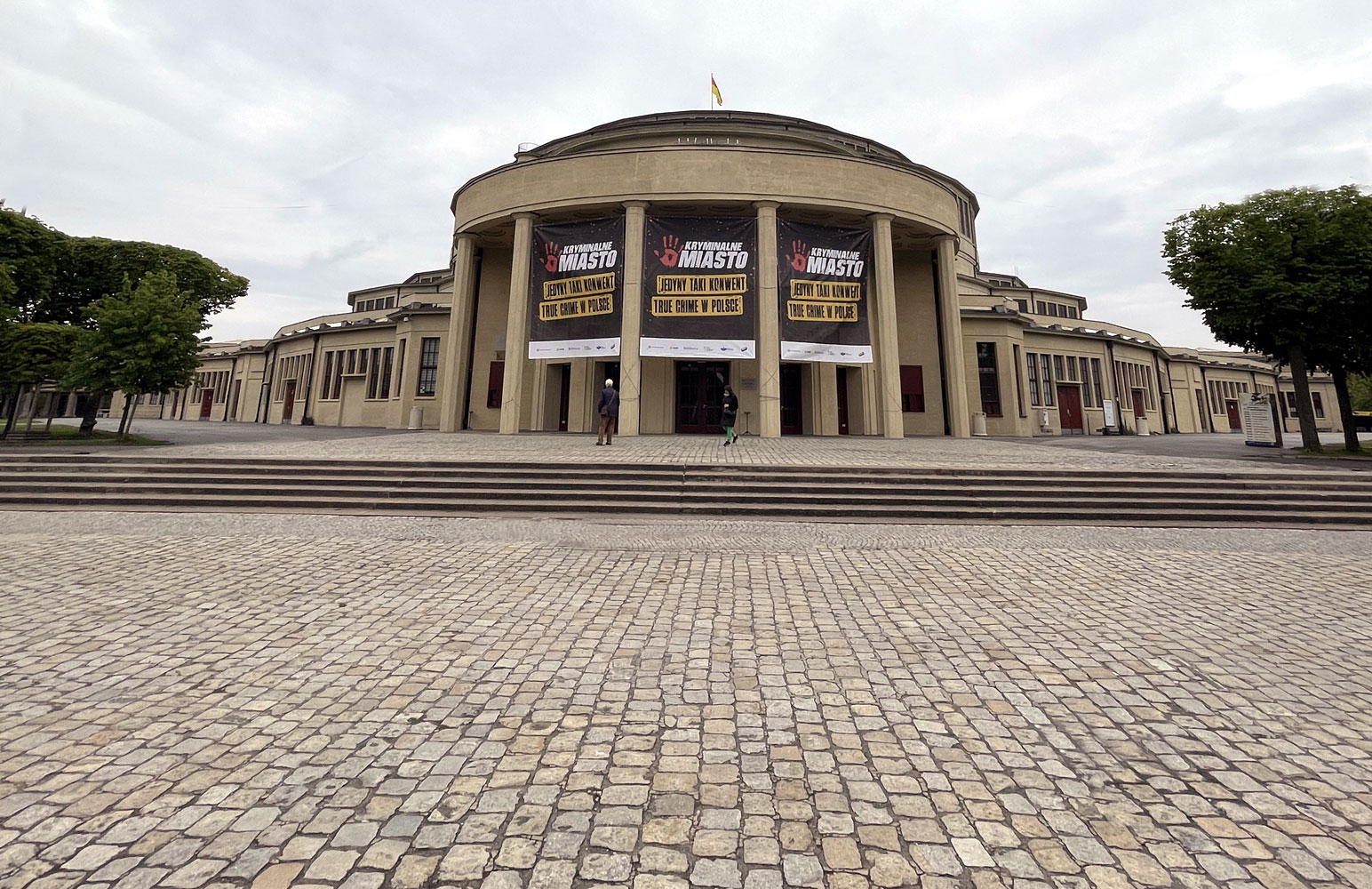
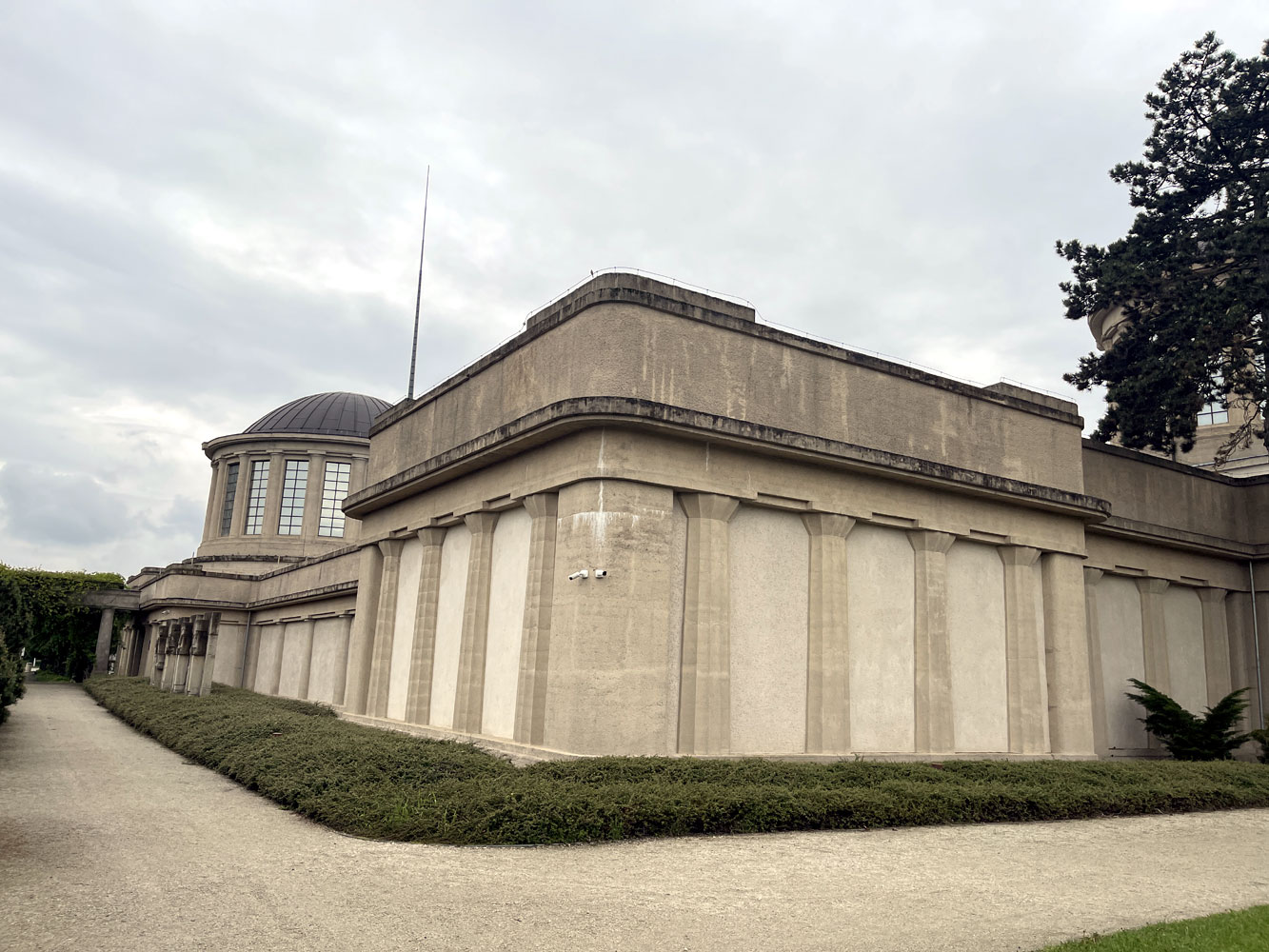
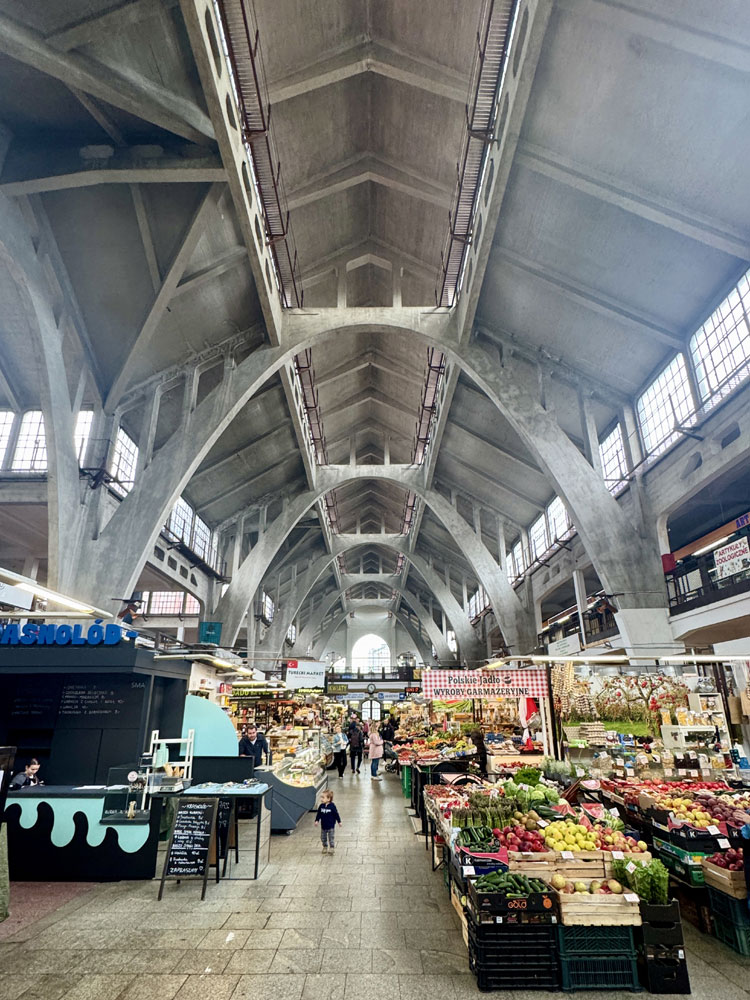
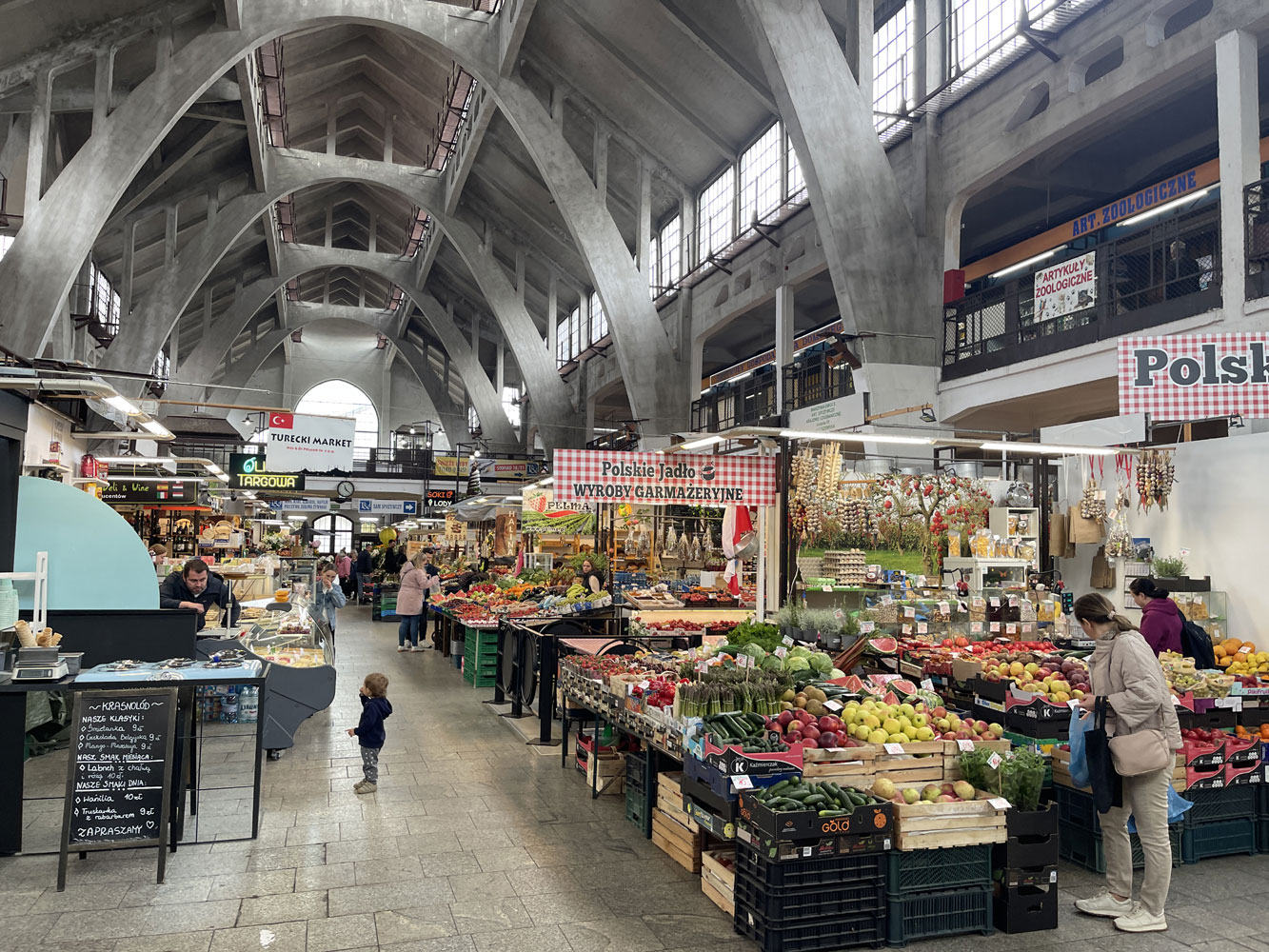
Unfortunately, the hall
was closed to visitors today. |
|
|
| |
| |
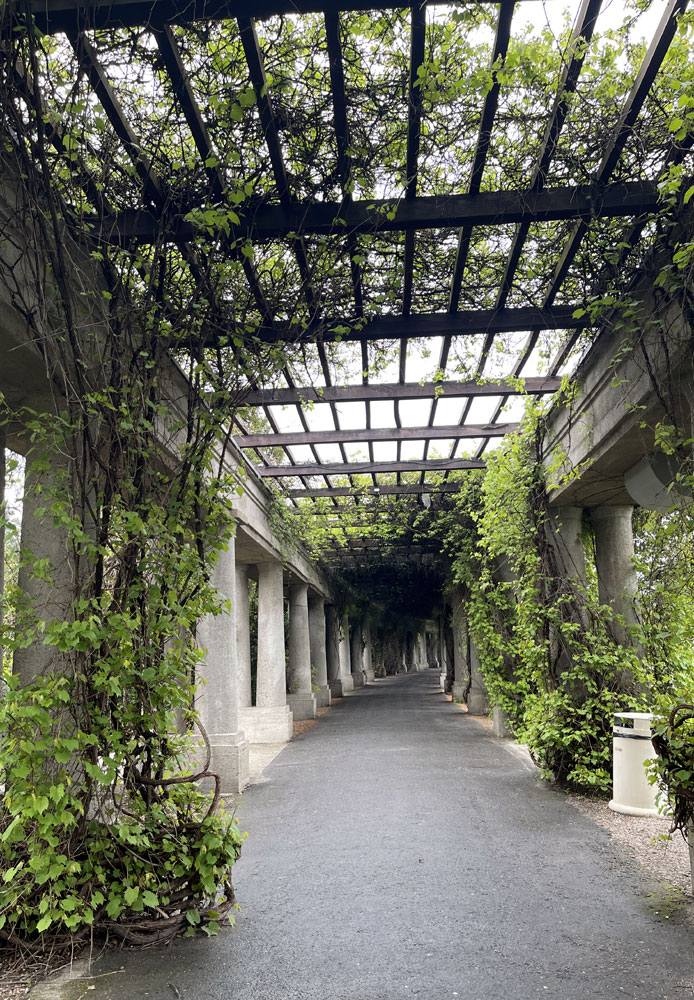
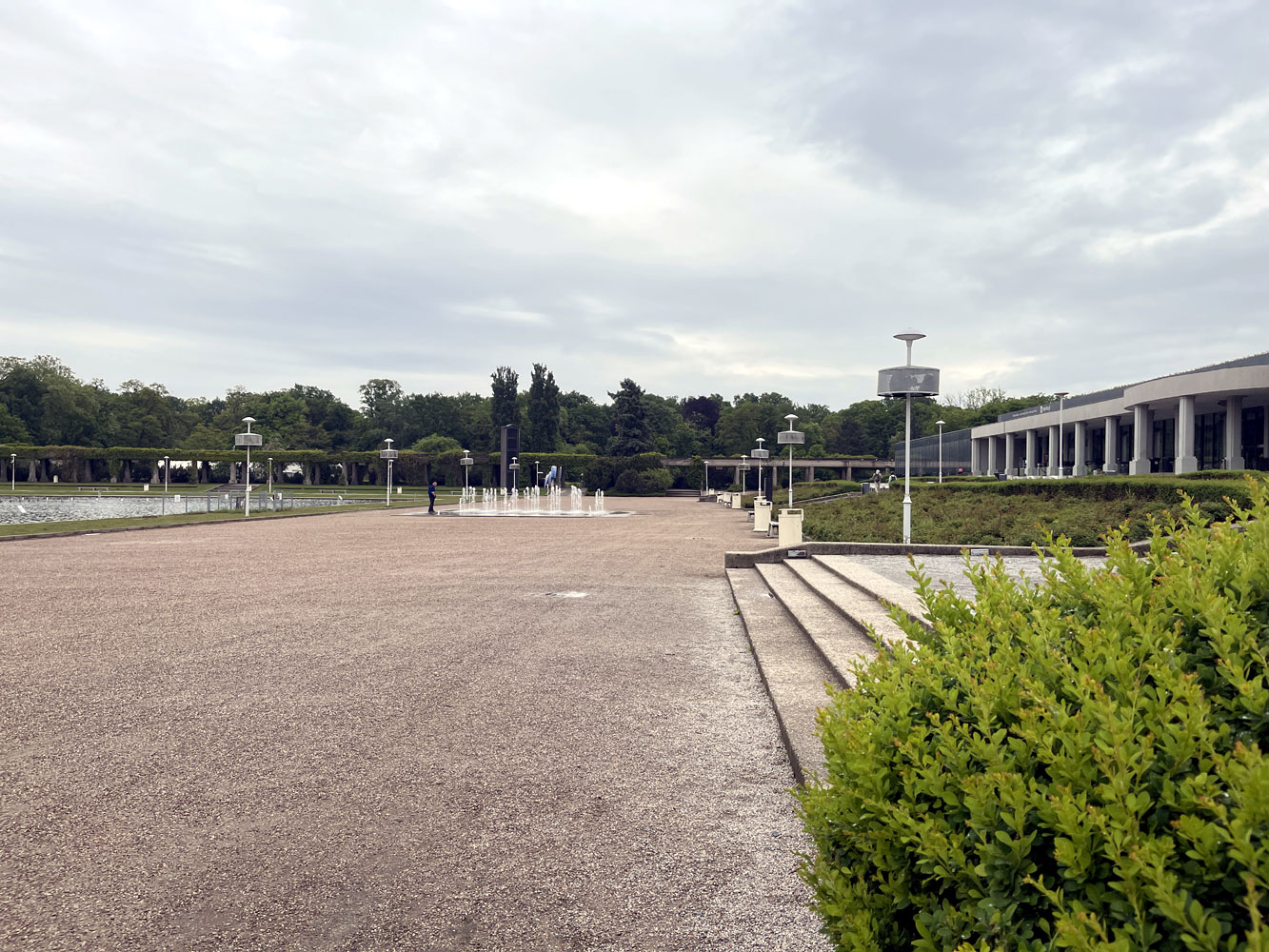
Walking through the
pergola... |
|
|
| |
|
|
| |
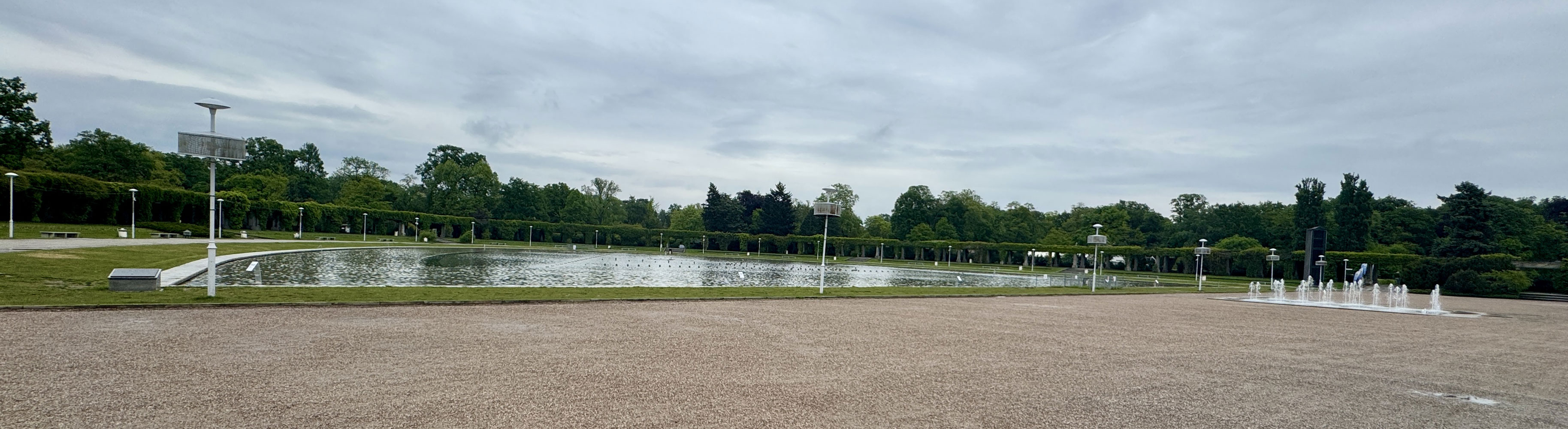
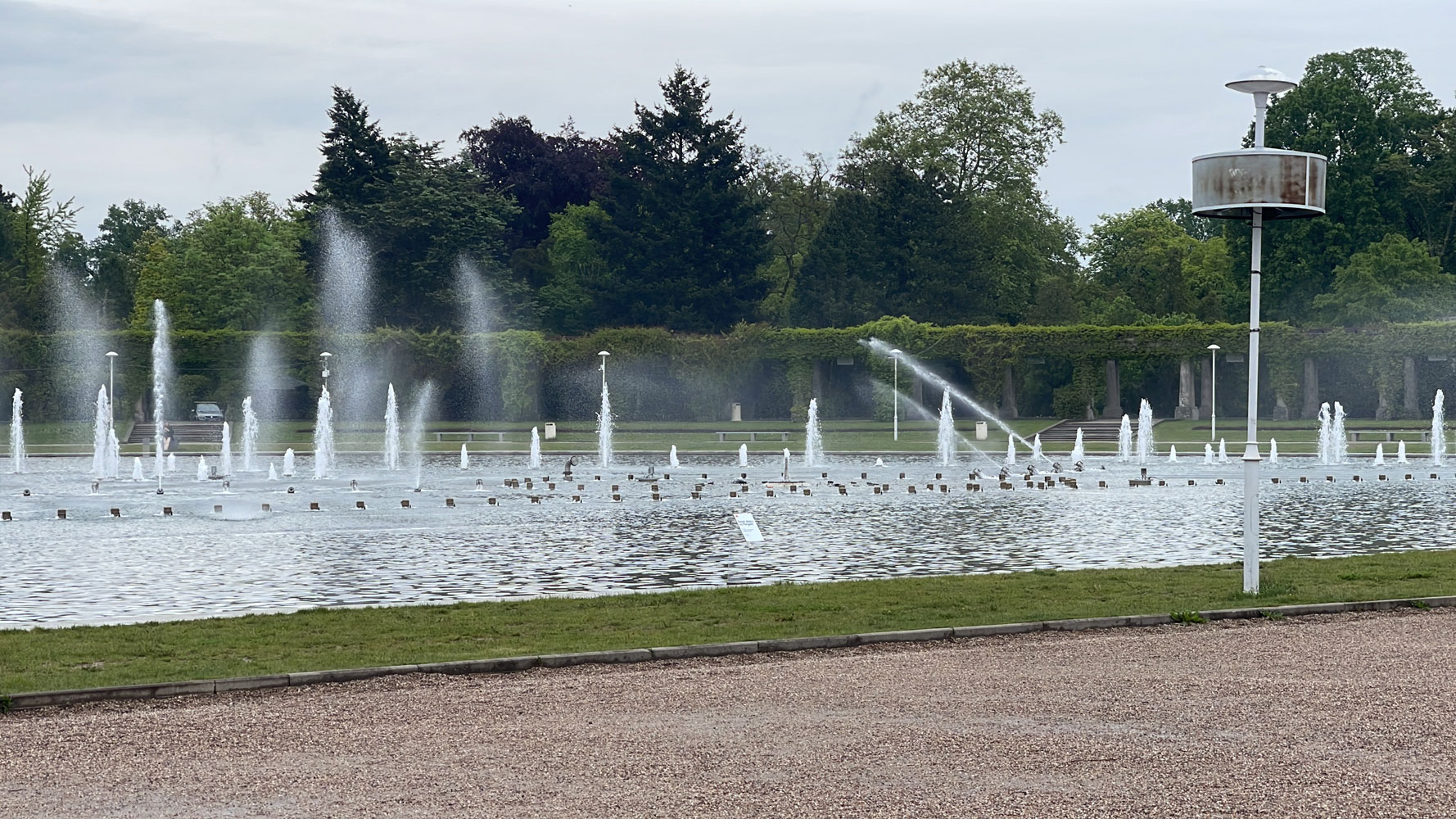
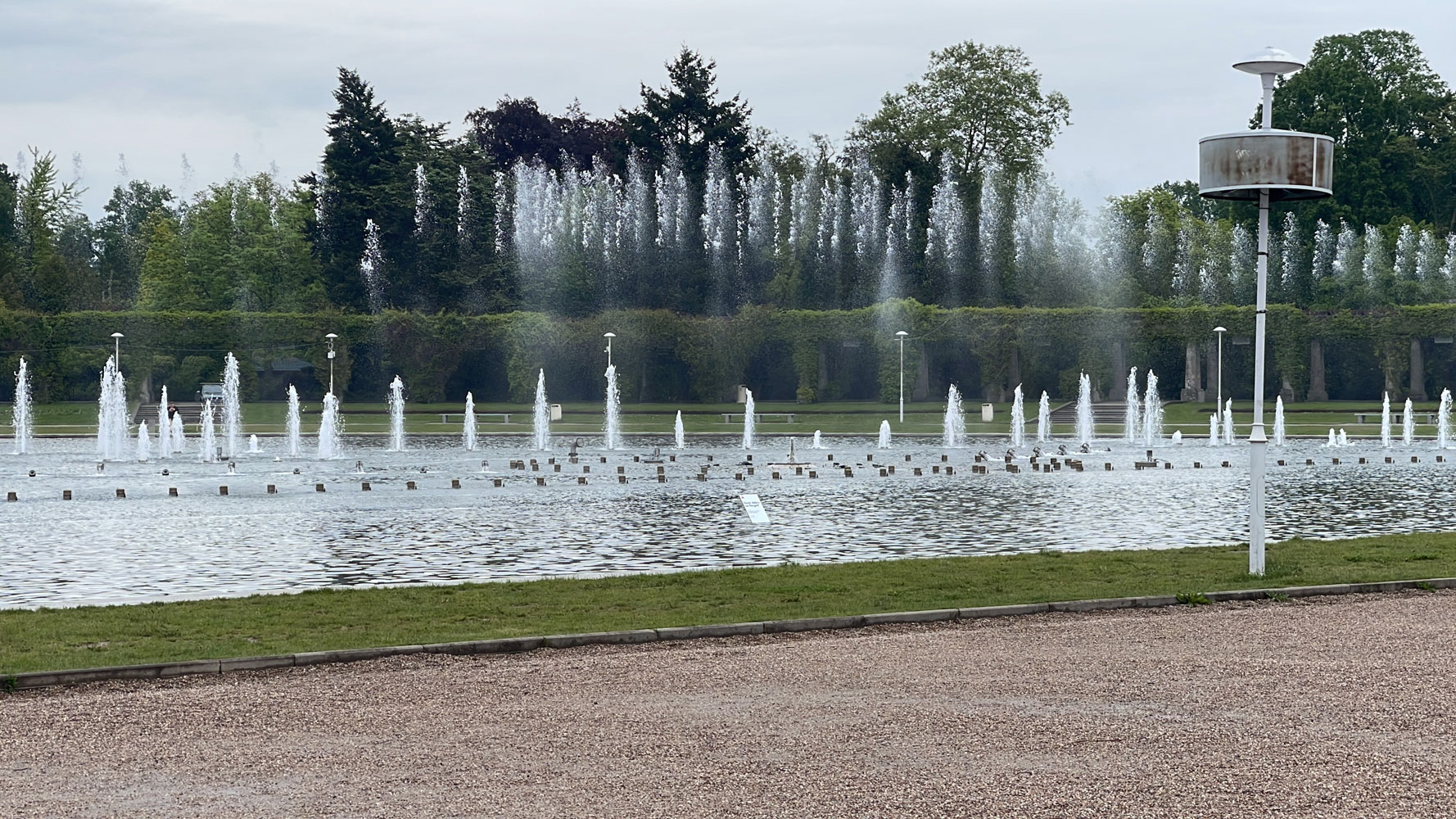
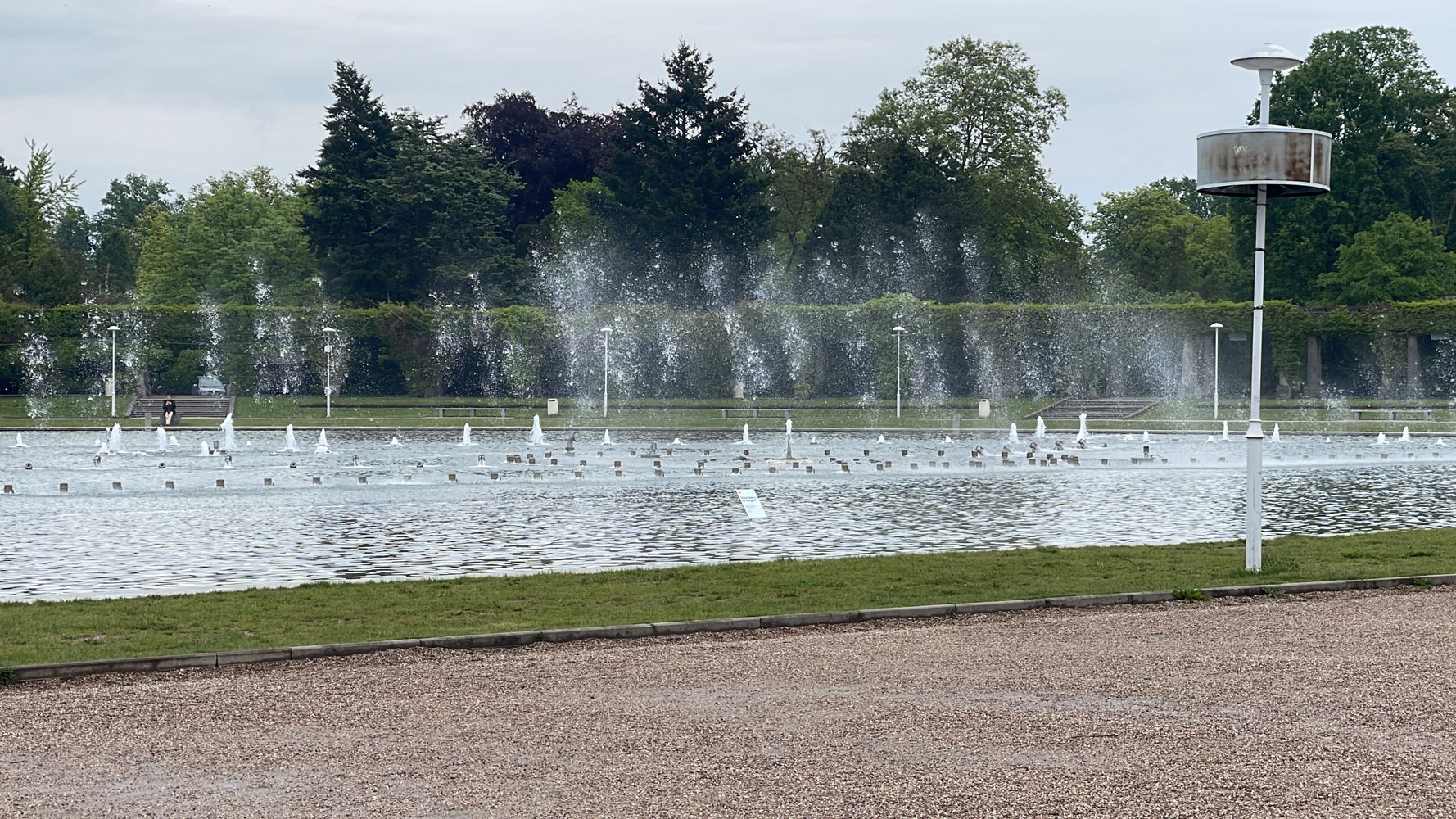
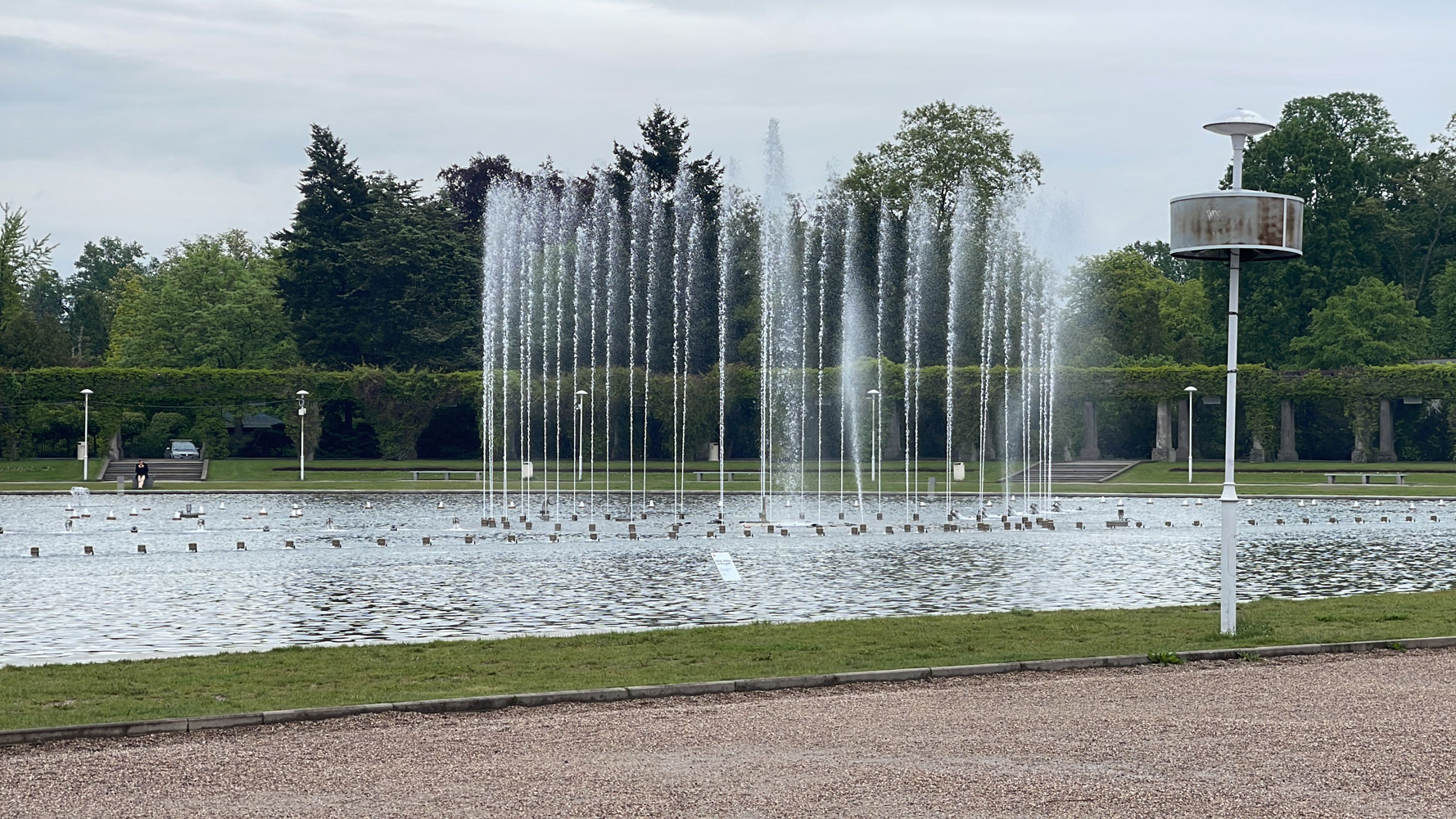
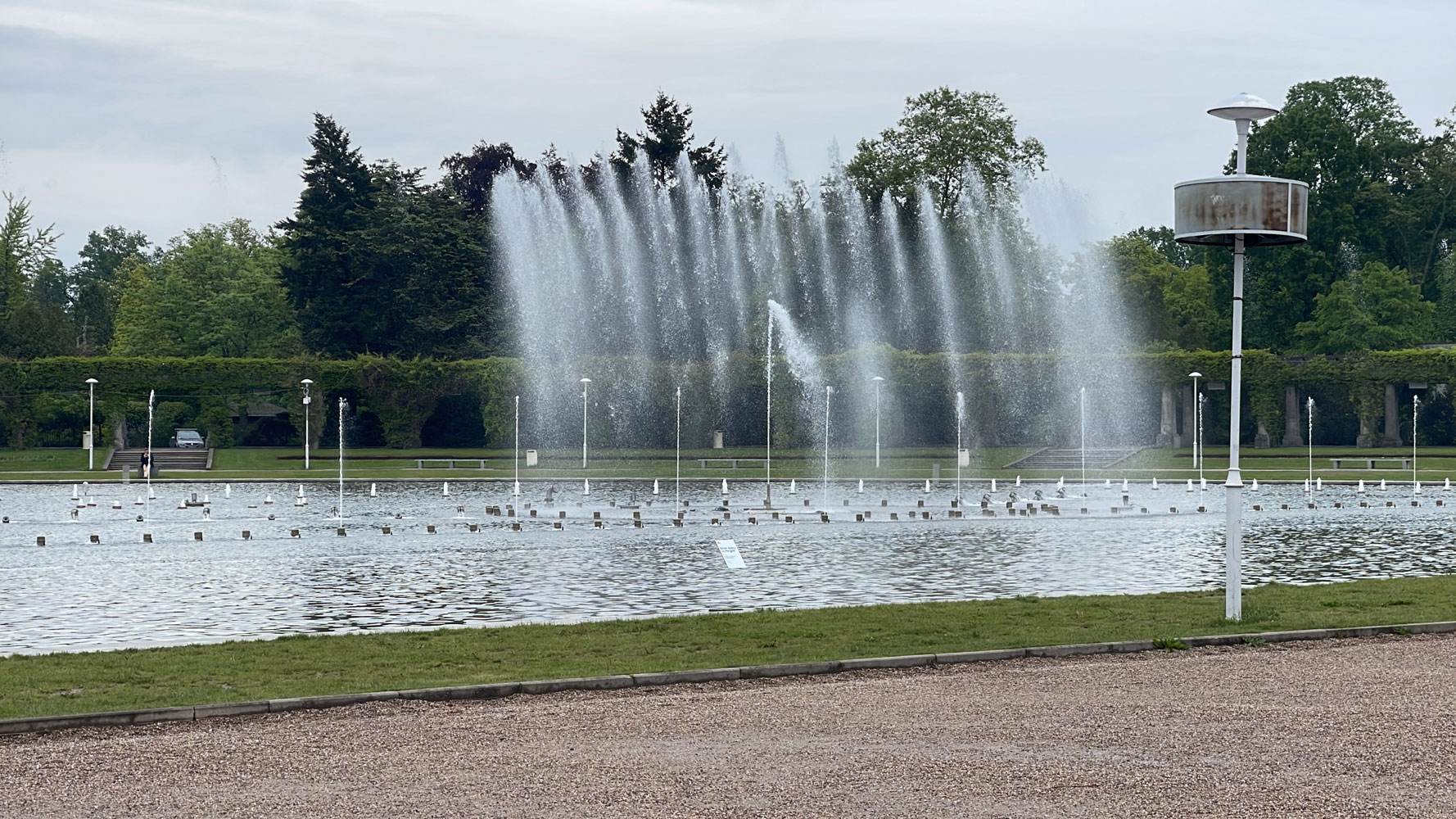
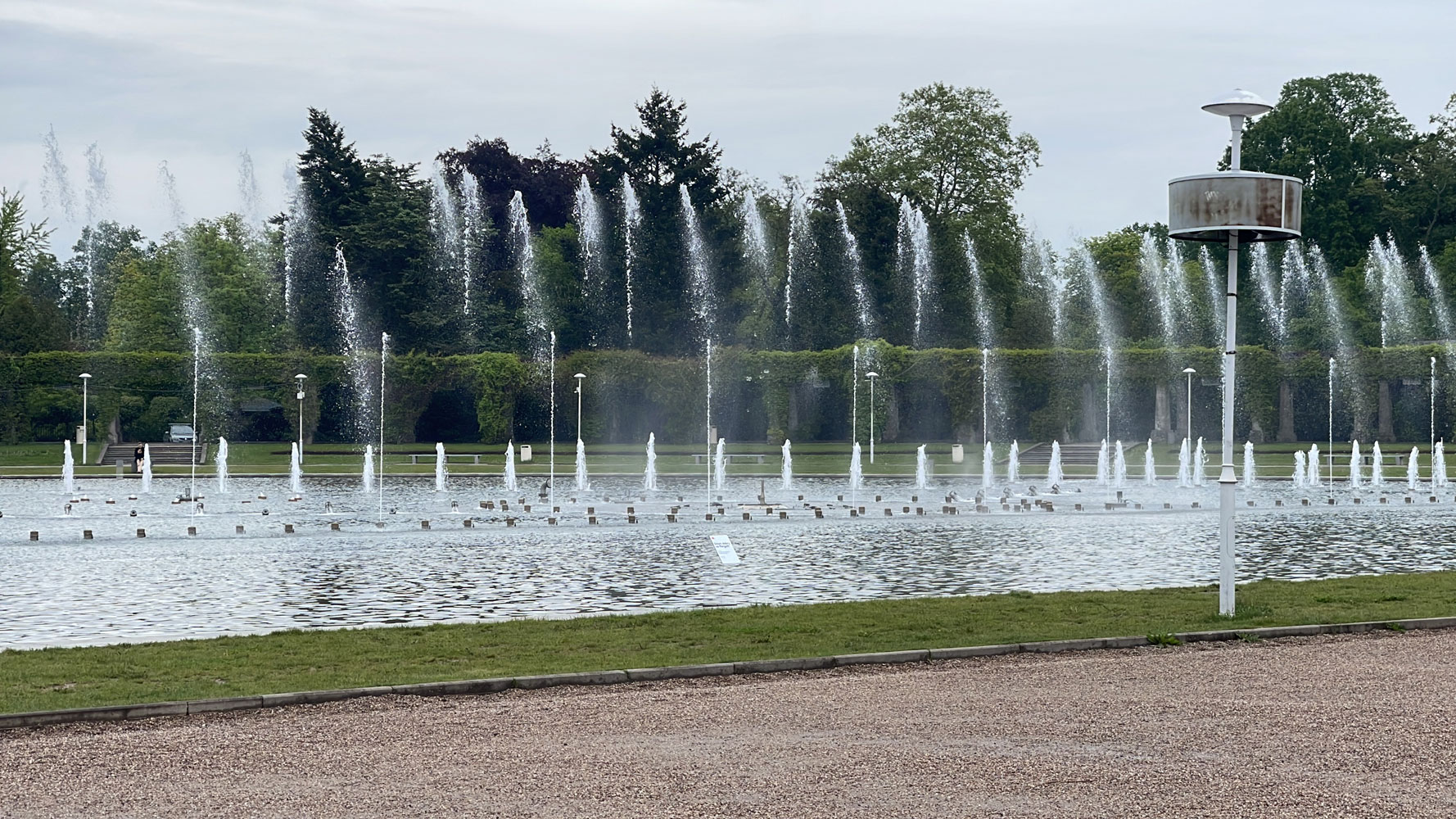
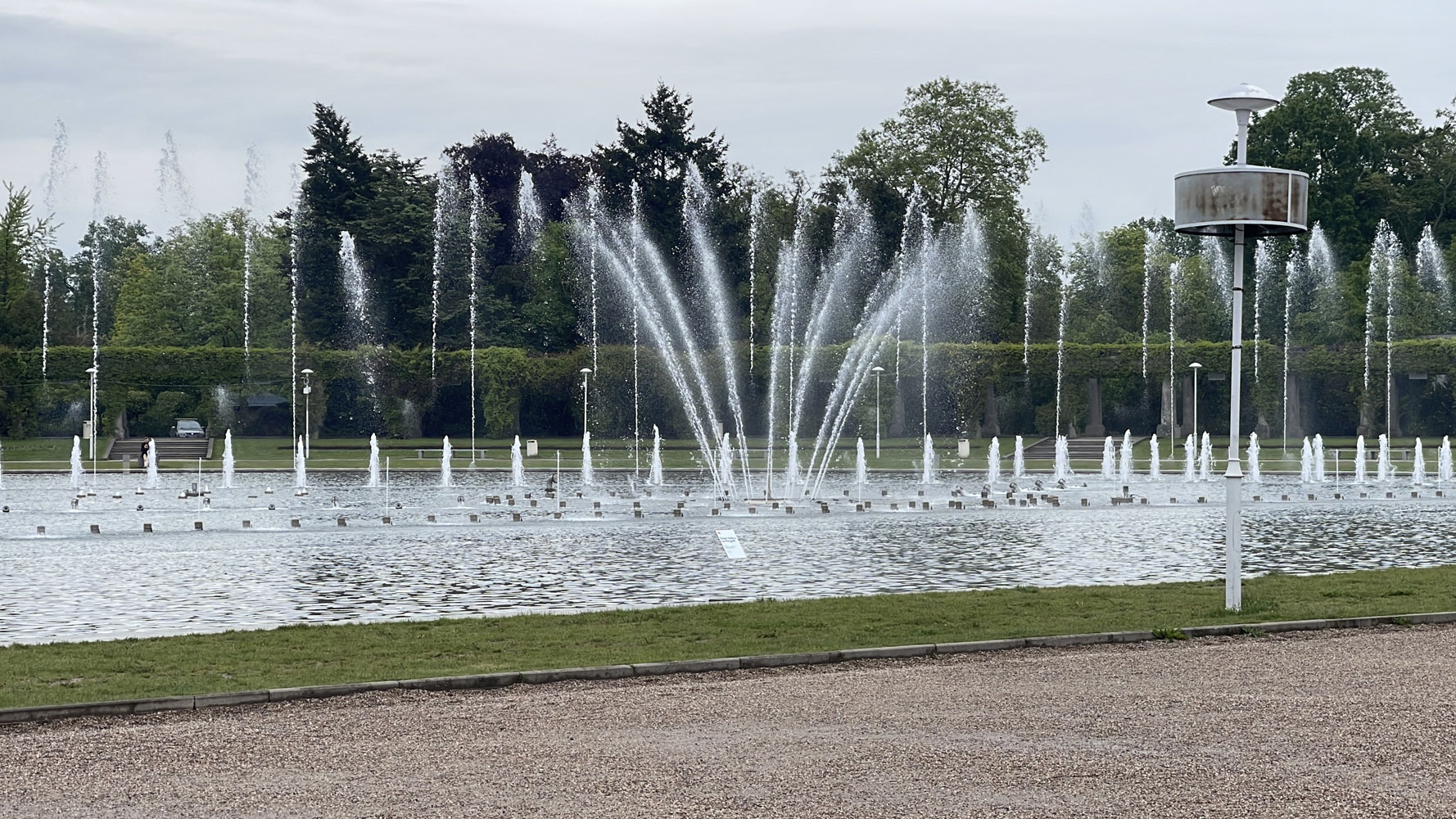
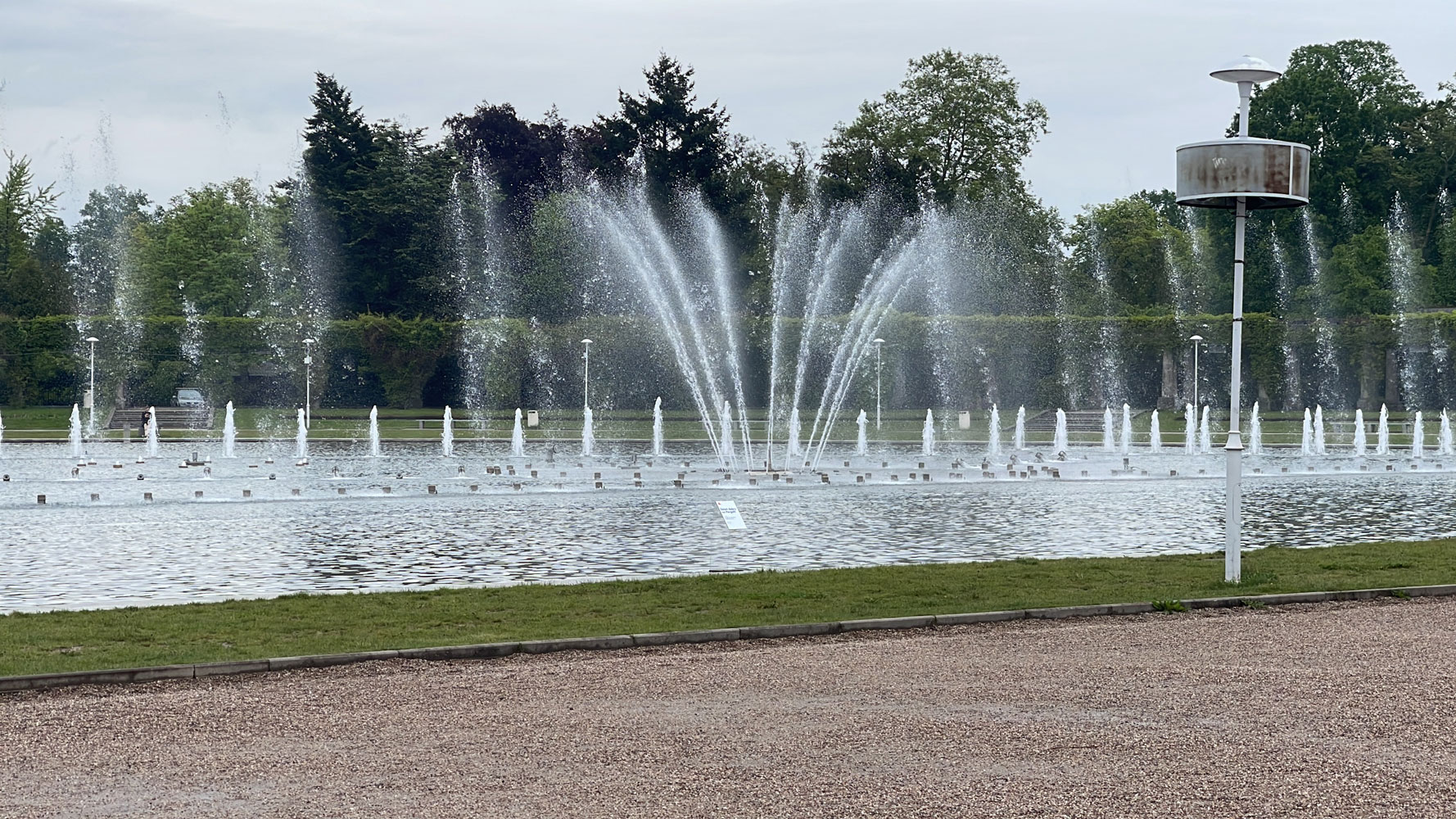
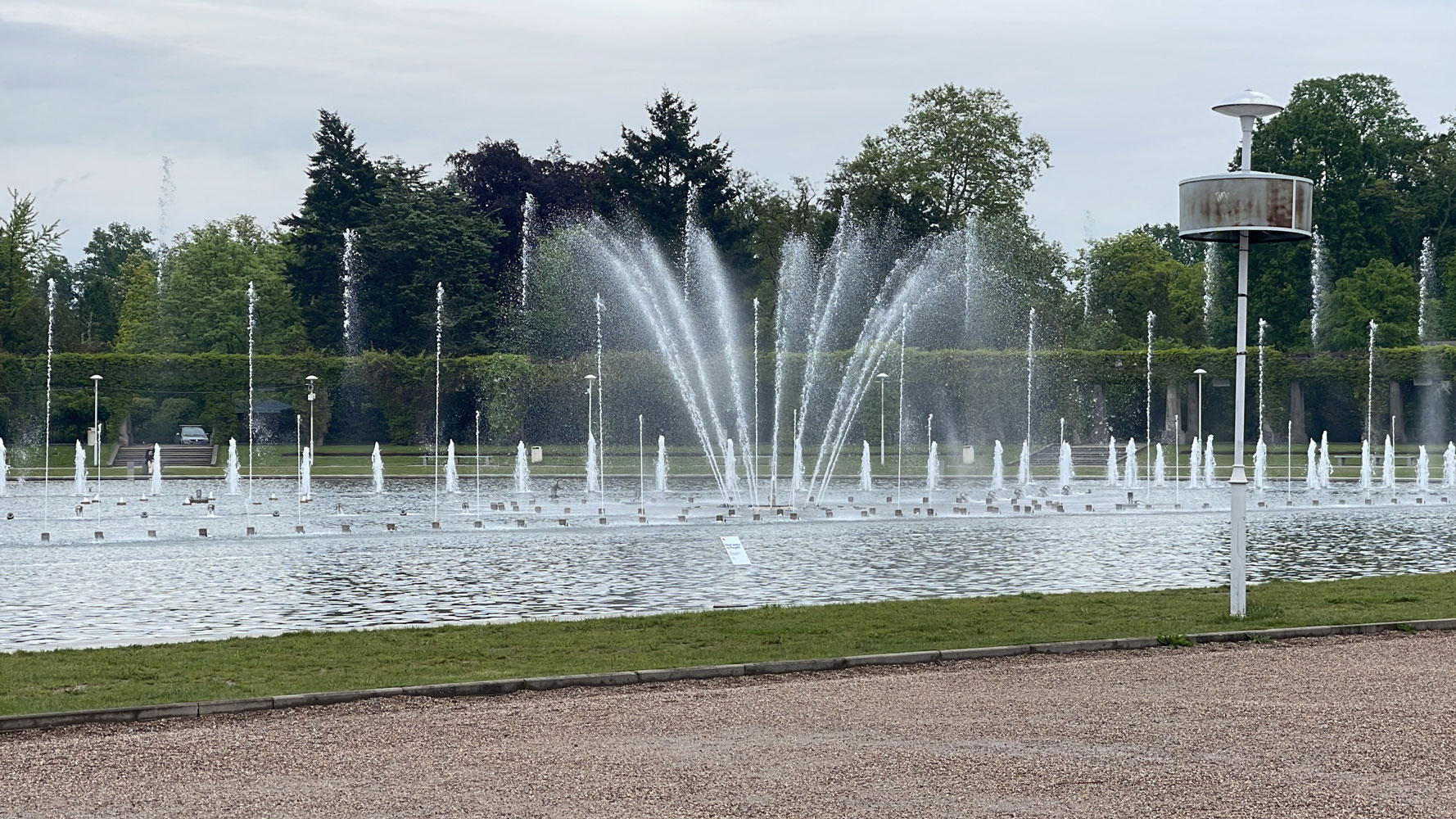
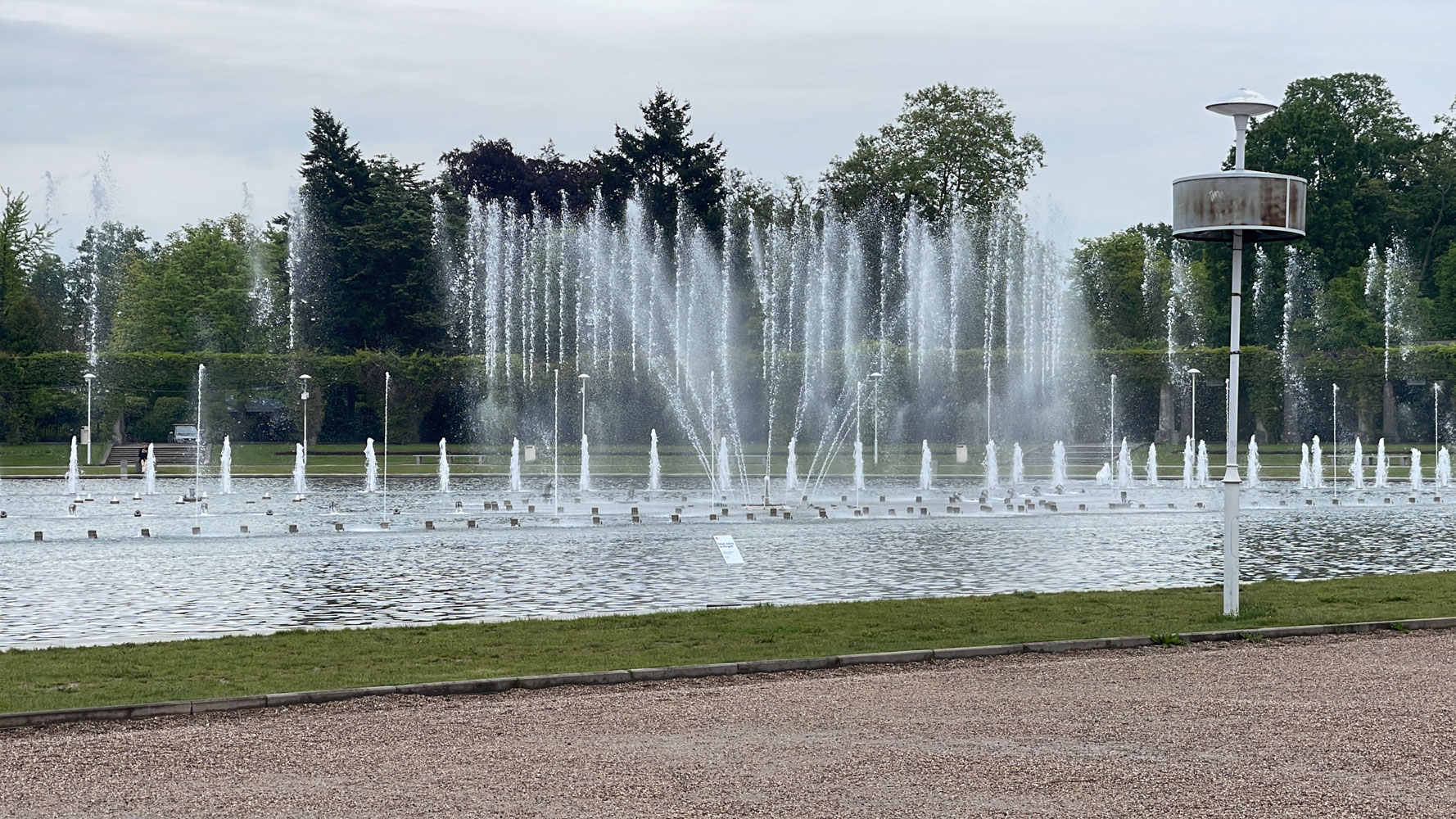
We were treated to a
private viewing of the dancing fountains, which were lovely,
although probably would have been even more spectacular
at night. |
|
|
| |
Some still images captured
while taking the video. |
|
|
|
|
|
|
|
|
|
|
|
| |
|
|
| |
|
|
| |
|
| |
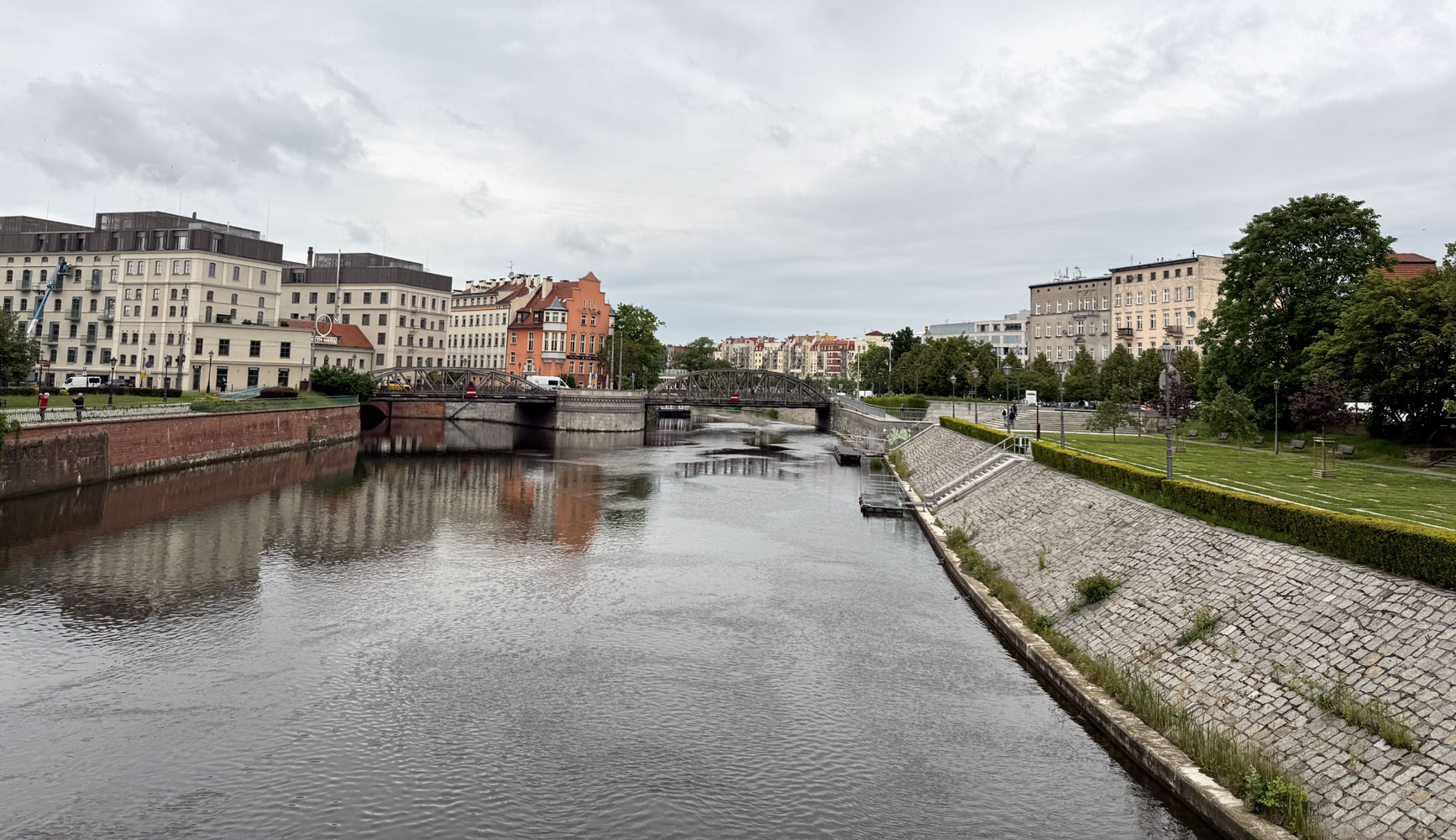
Afterwards, we drove
back towards our hotel. The coach dropped us off before
we got there (at Mill Bridge) and the rest of the tour was
done on foot. See also Wroclaw
Islands and Bridges: The Historic Heart of the City
- this website provides quite a good overview of the islands
and bridges (for as long as the link remains active, that
is). |
|
|
| |
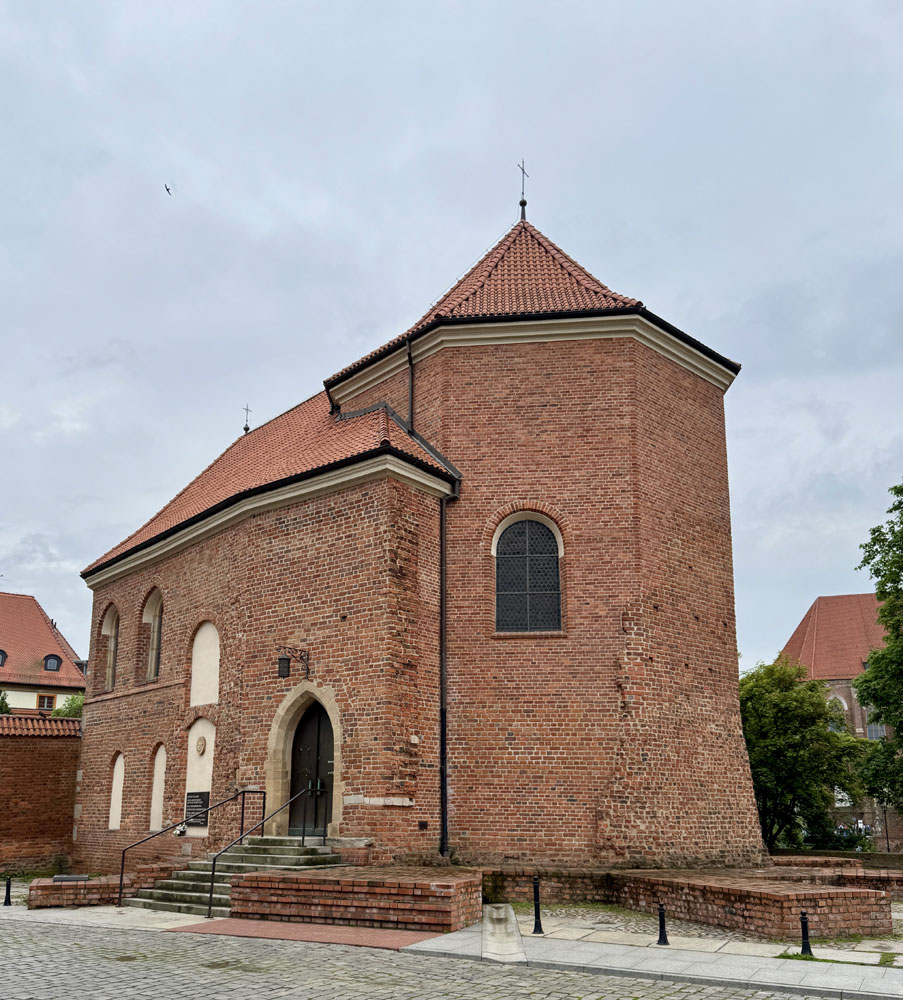
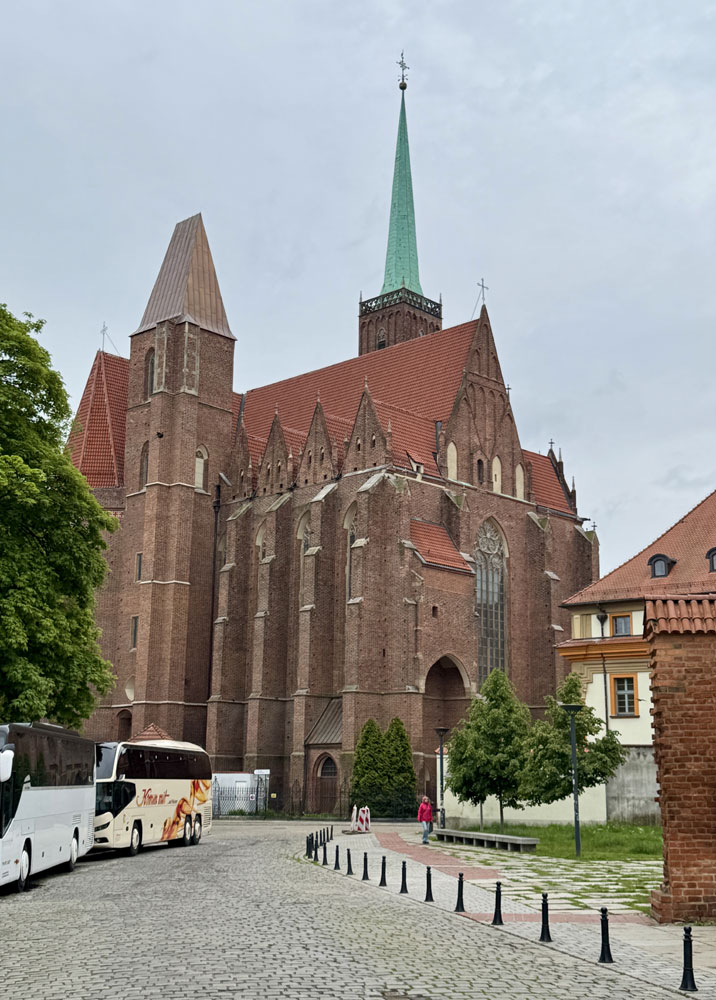
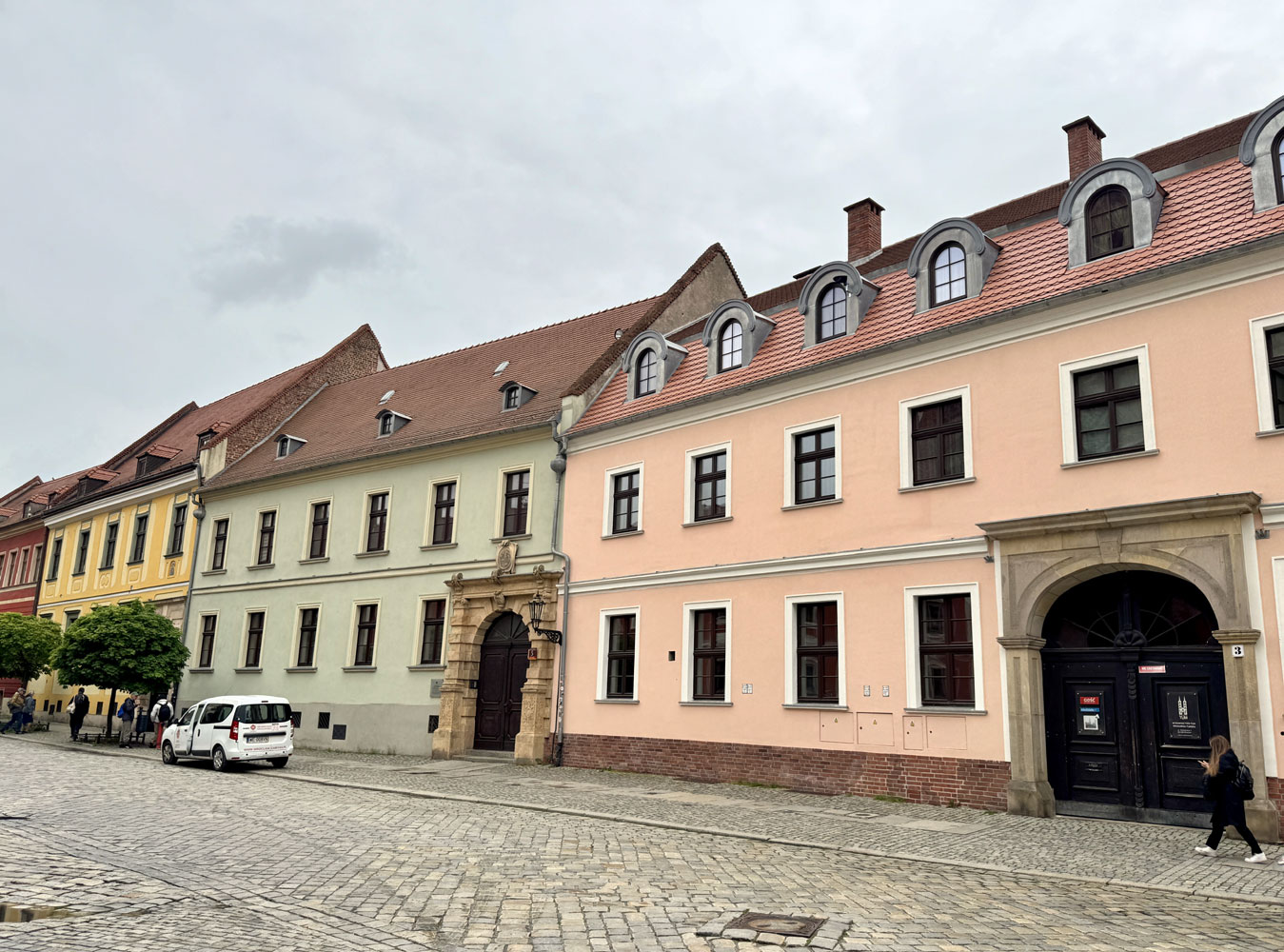
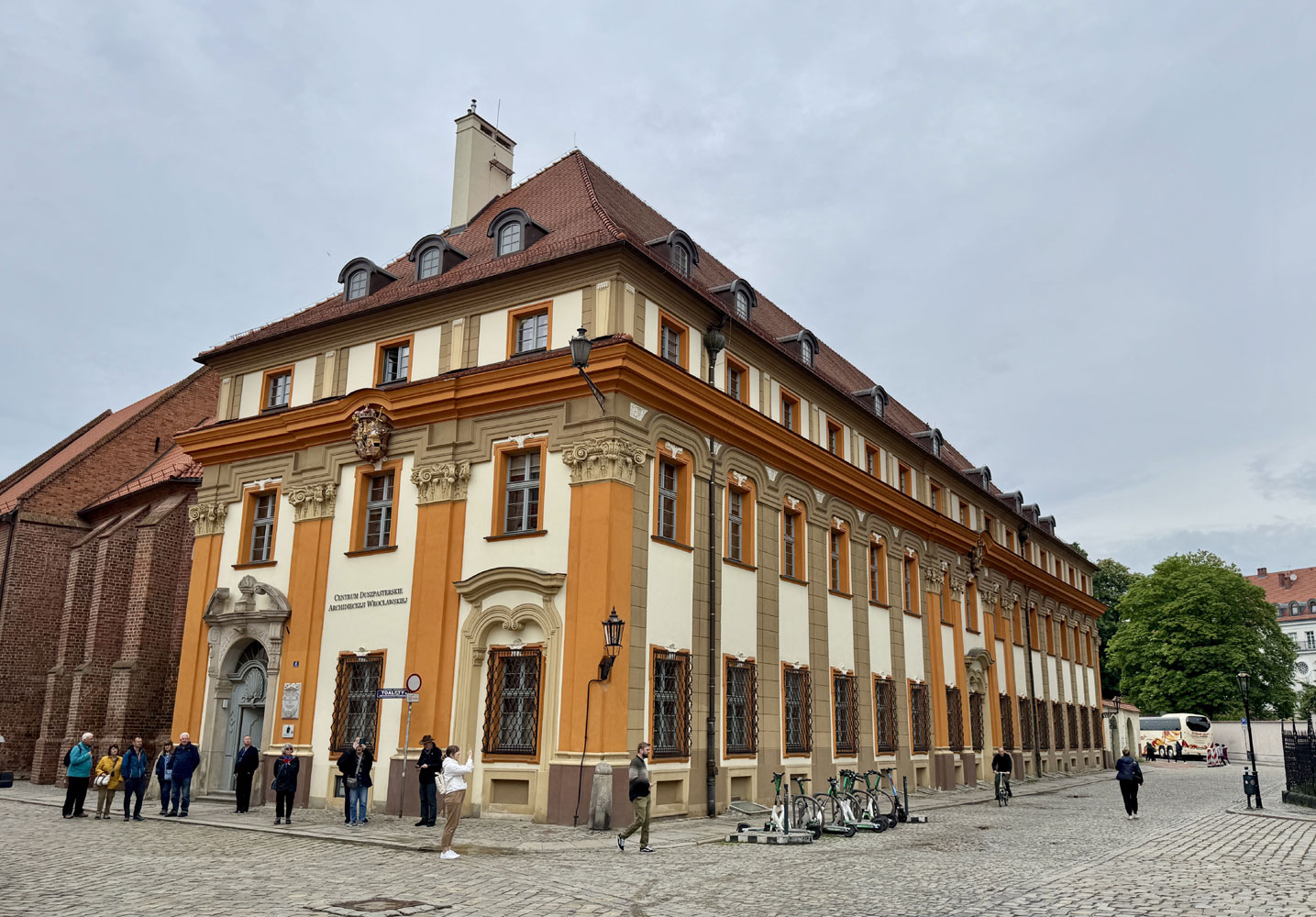
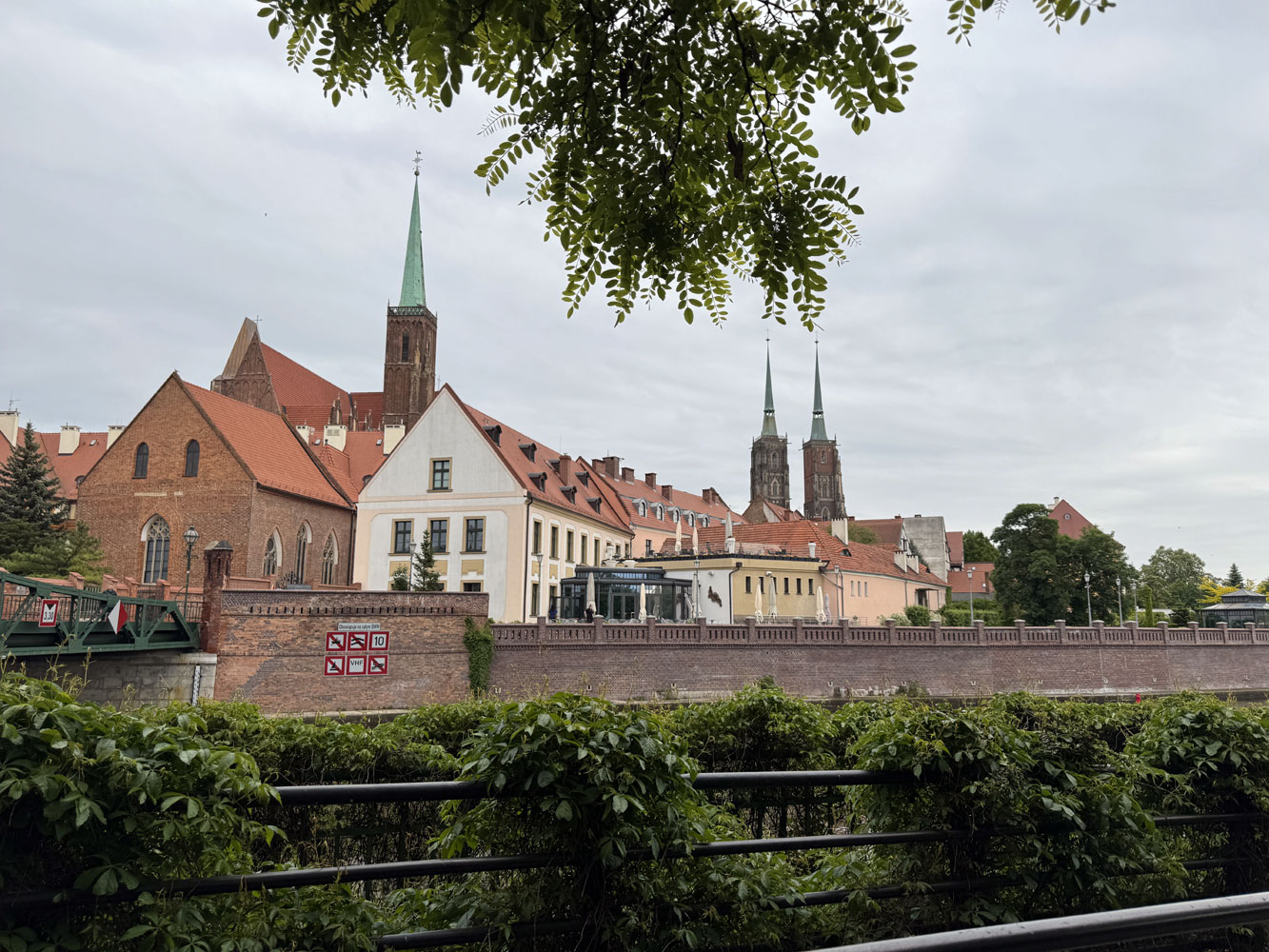
We had arrived at what
was formerly an island, Ostrów Tumski (Cathedral
Island), which is the oldest part of Wroclaw, dating
from the 10th century.
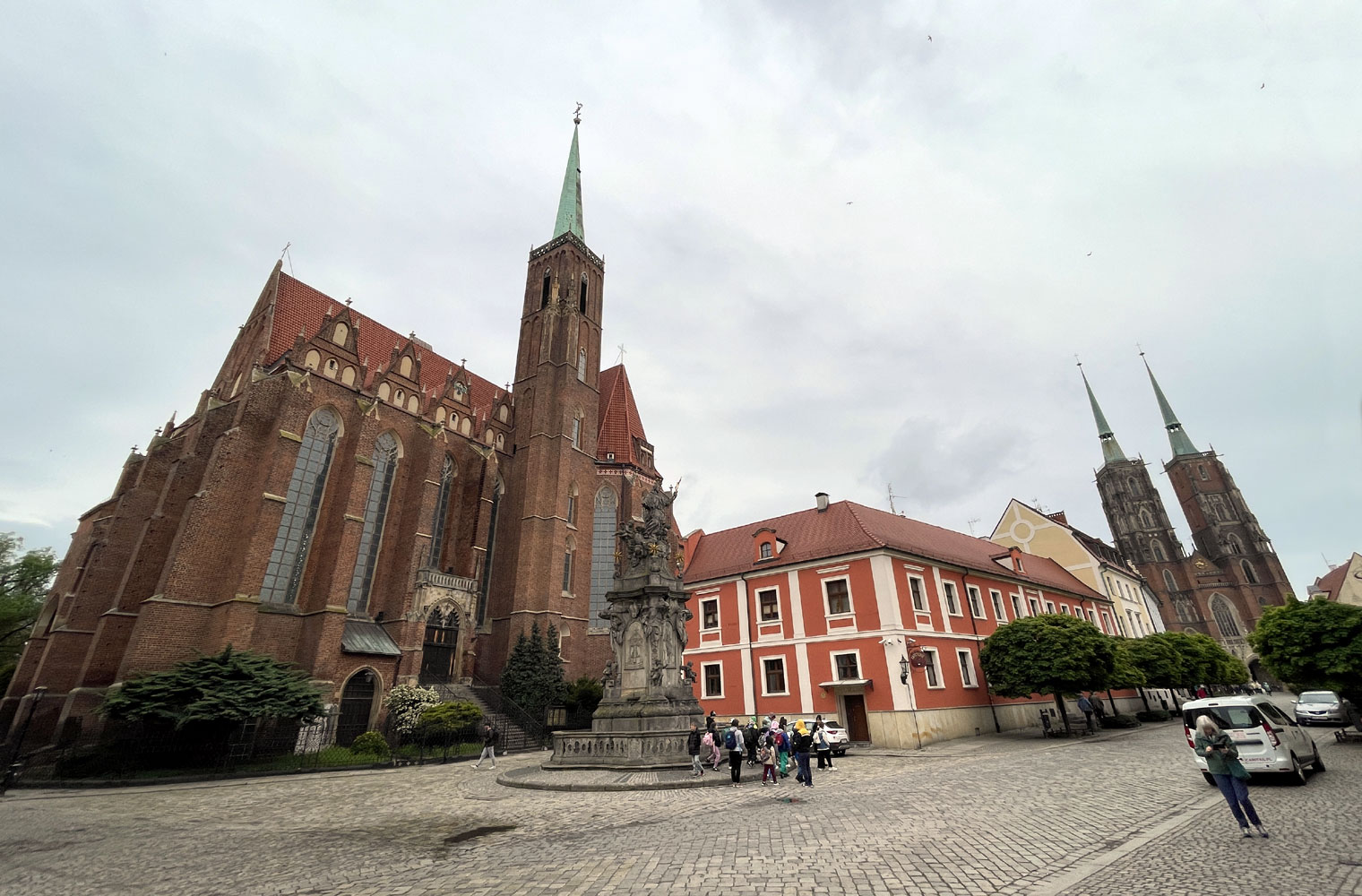
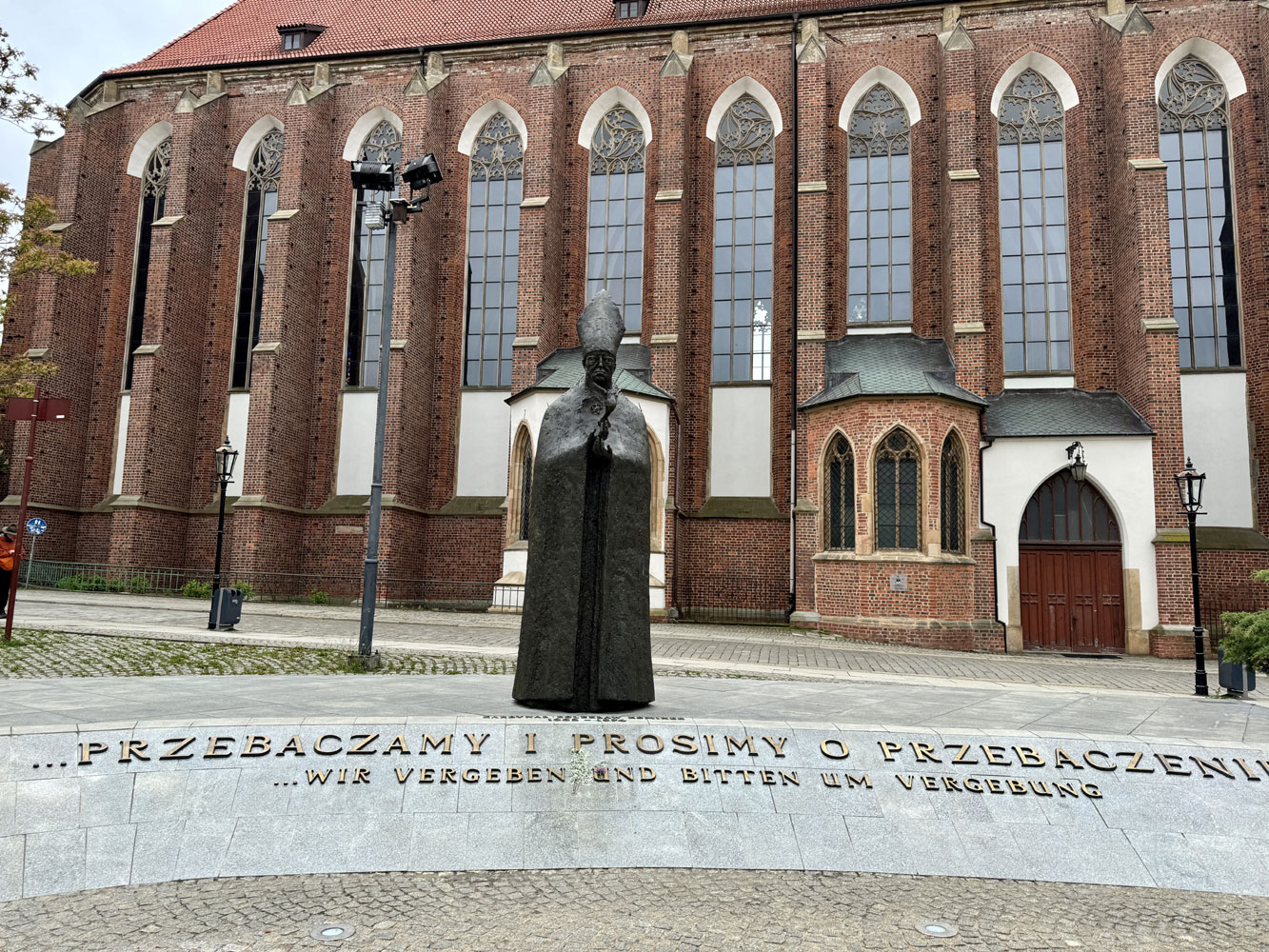
We walked past the Church of St. Martin.
|
|
|
|
|
|
| |
|
| |
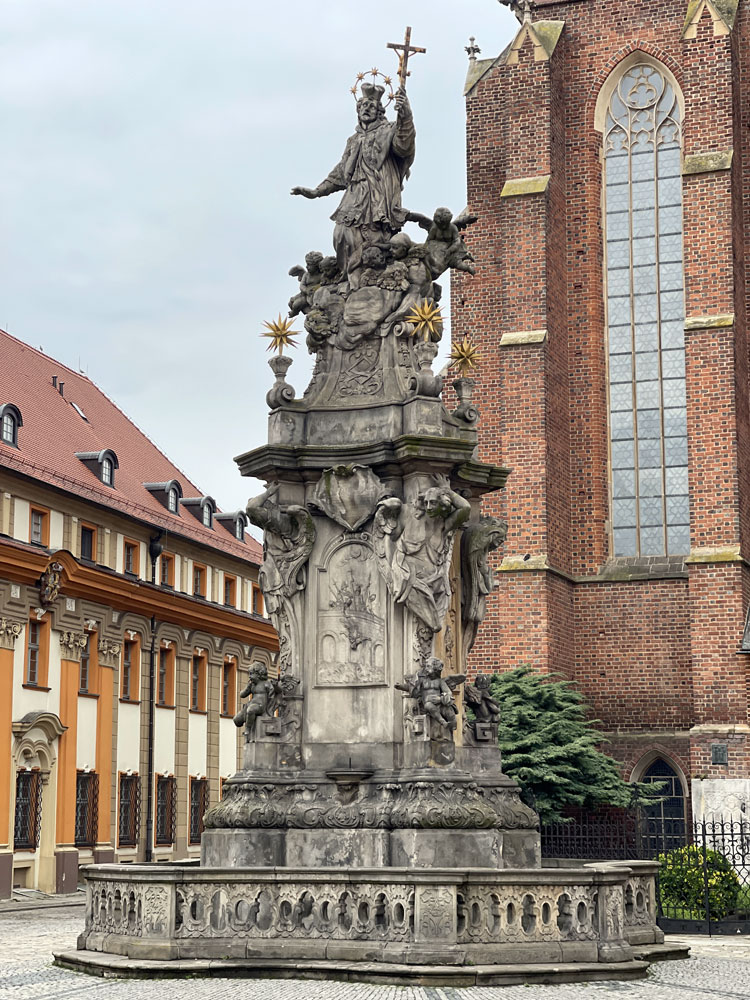
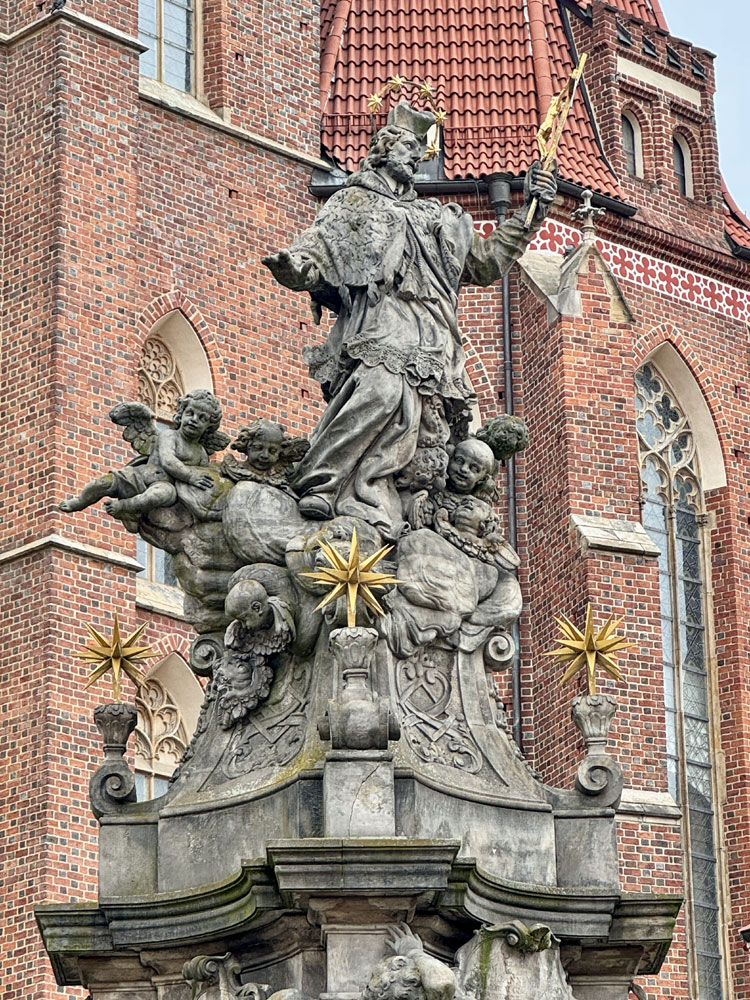
Statue of St. John Nepomunk. |
|
|
|
| |
|
| |
|
| |
|
| |
|
| |
|
| |
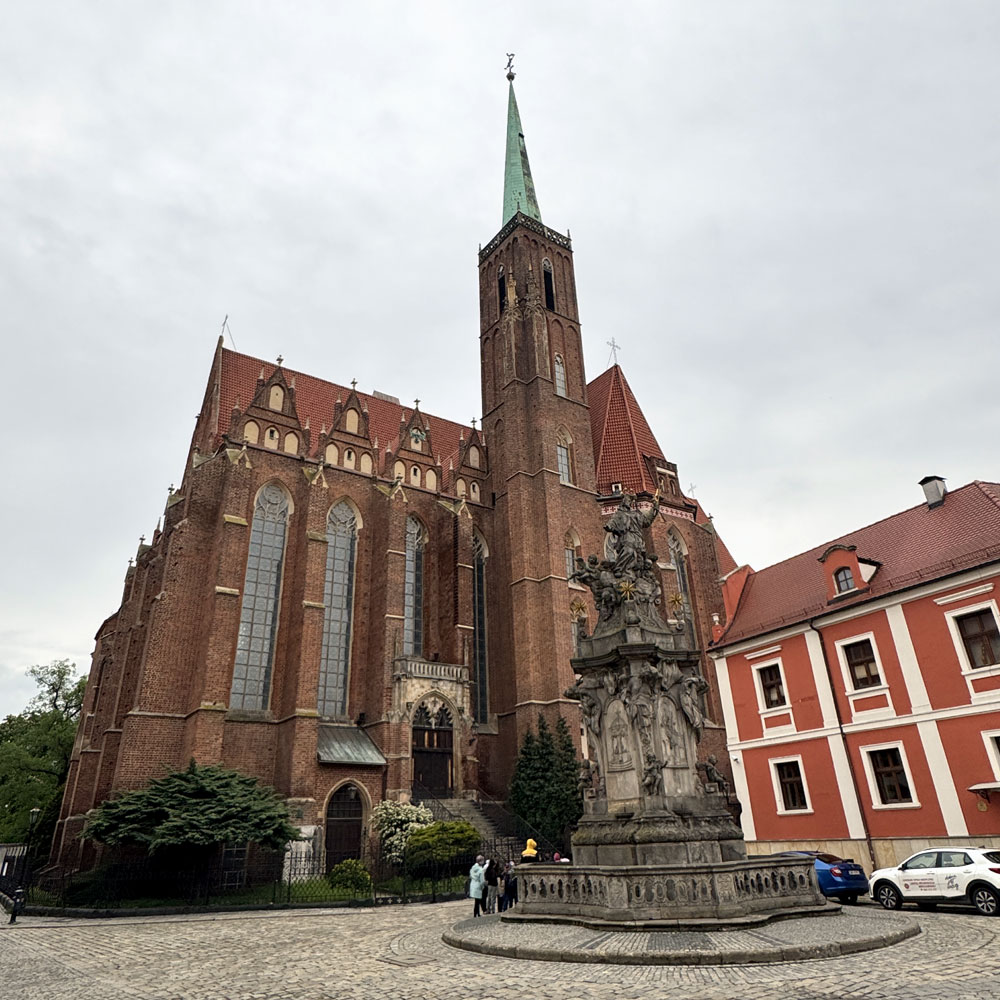
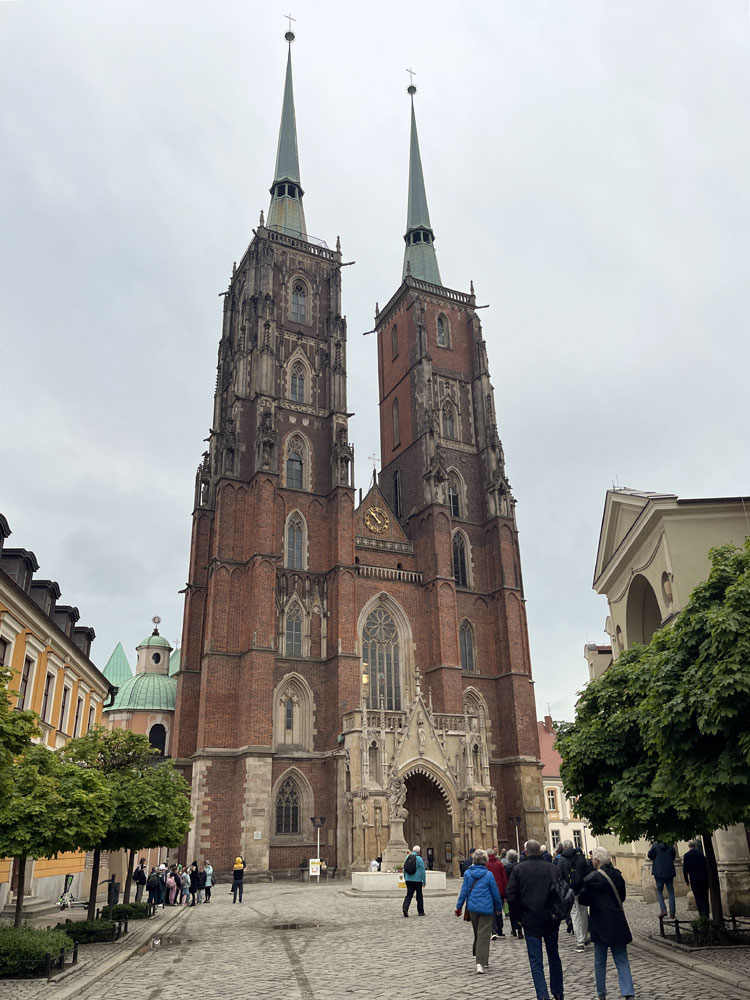
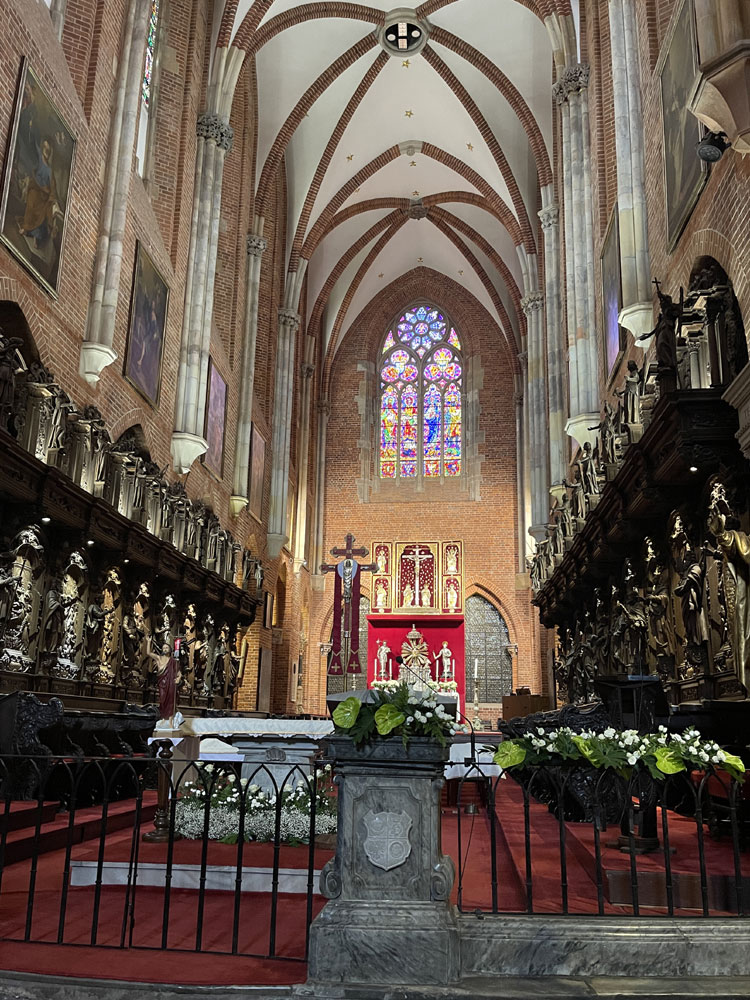
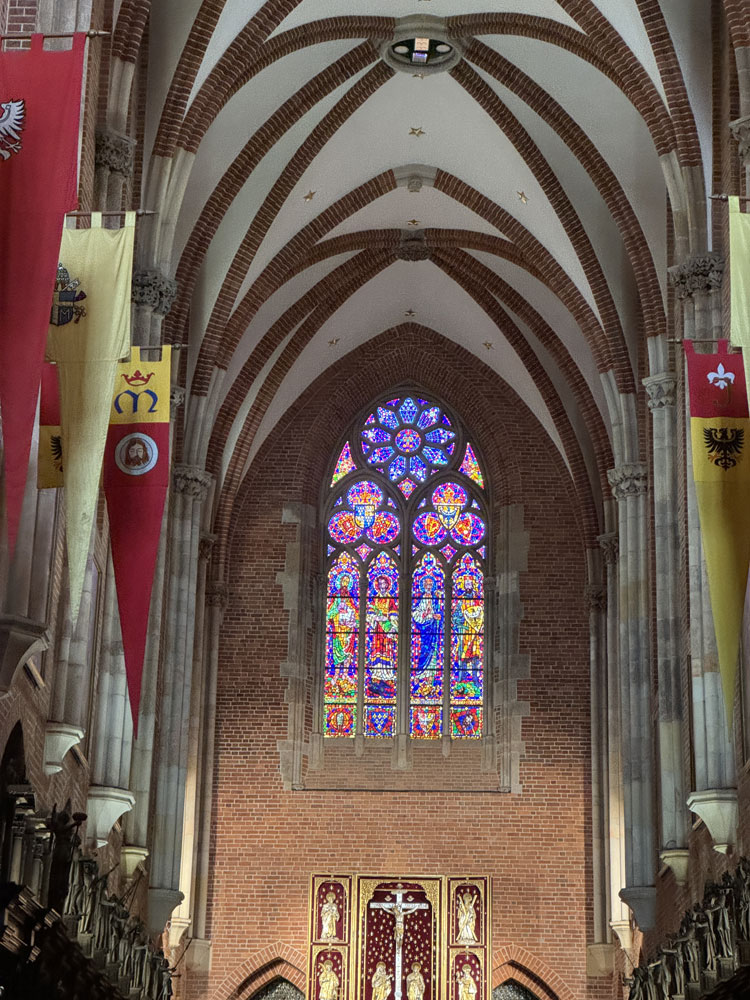
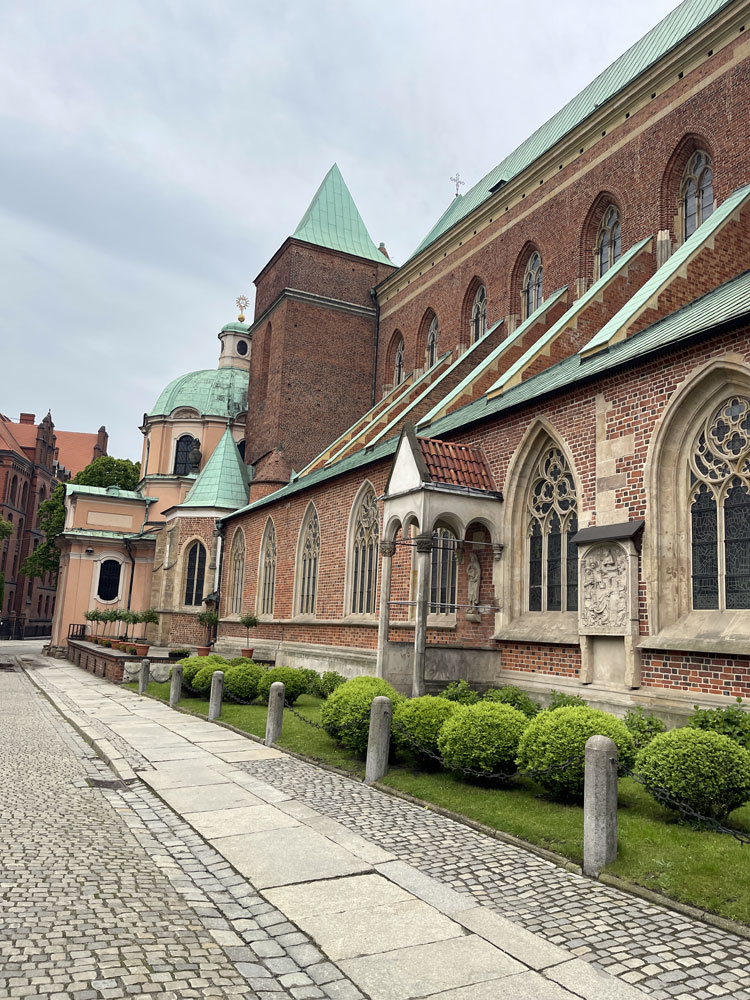
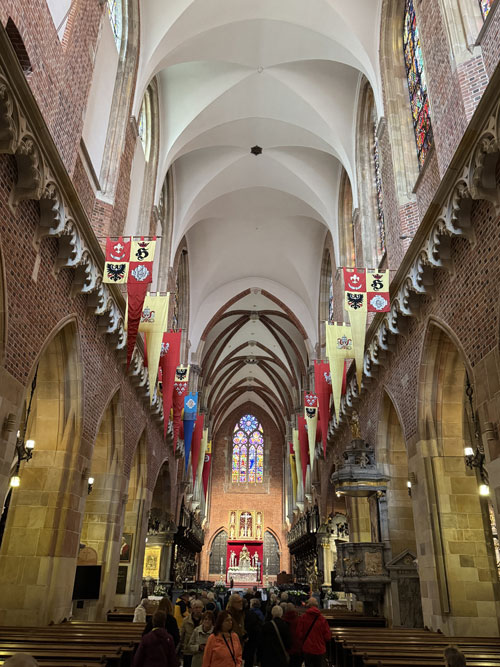
Wroclaw
Cathedral, (St. John the Baptist Archcathedral), built
in the 13th century, is centrally located and surrounded
by museums, monuments, gardens, and churches. |
|
|
| |
 |
|
| |
|
|
| |
|
|
| |
|
| |
|
| |
|
|
| |
|
|
| |
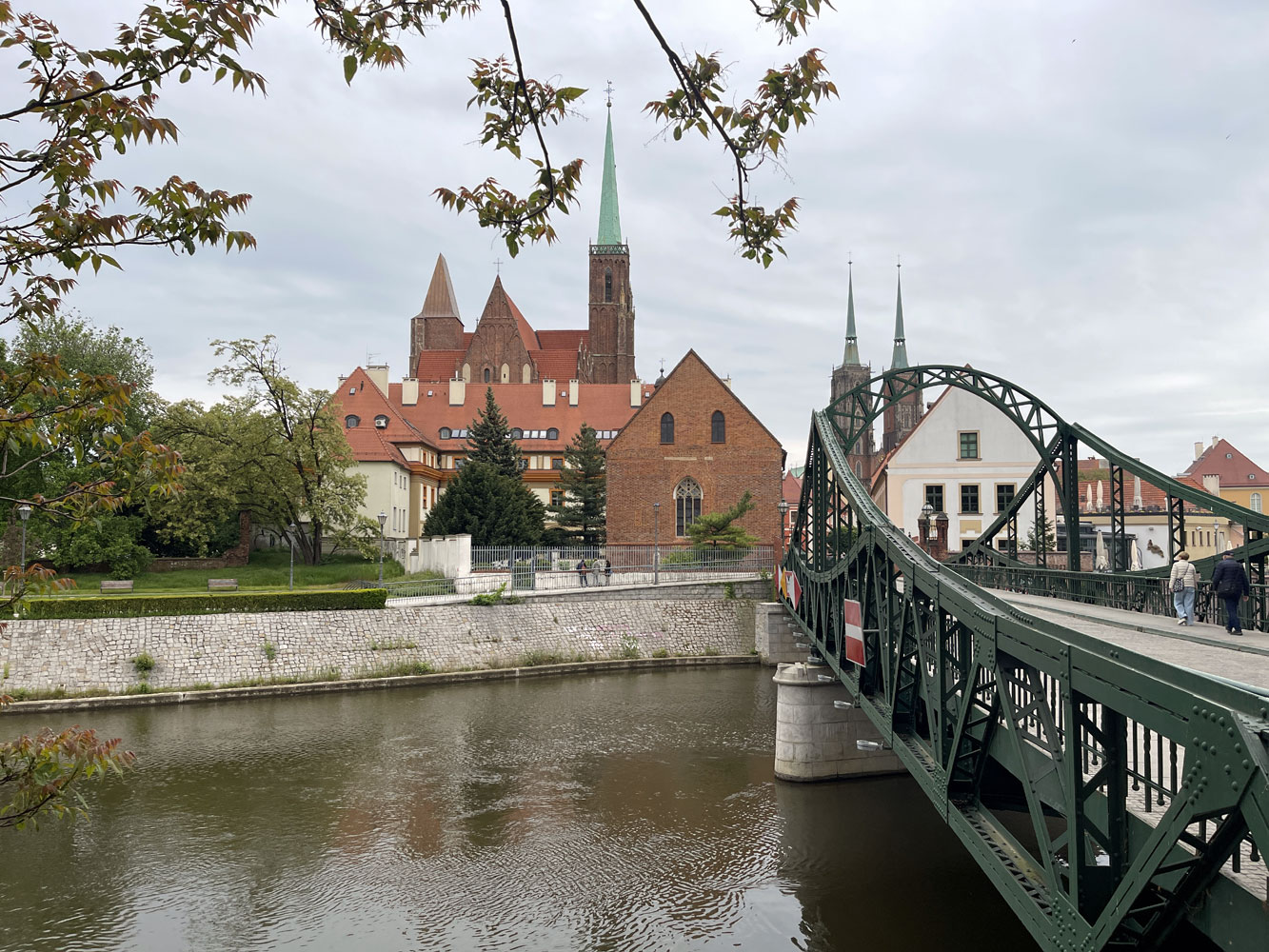
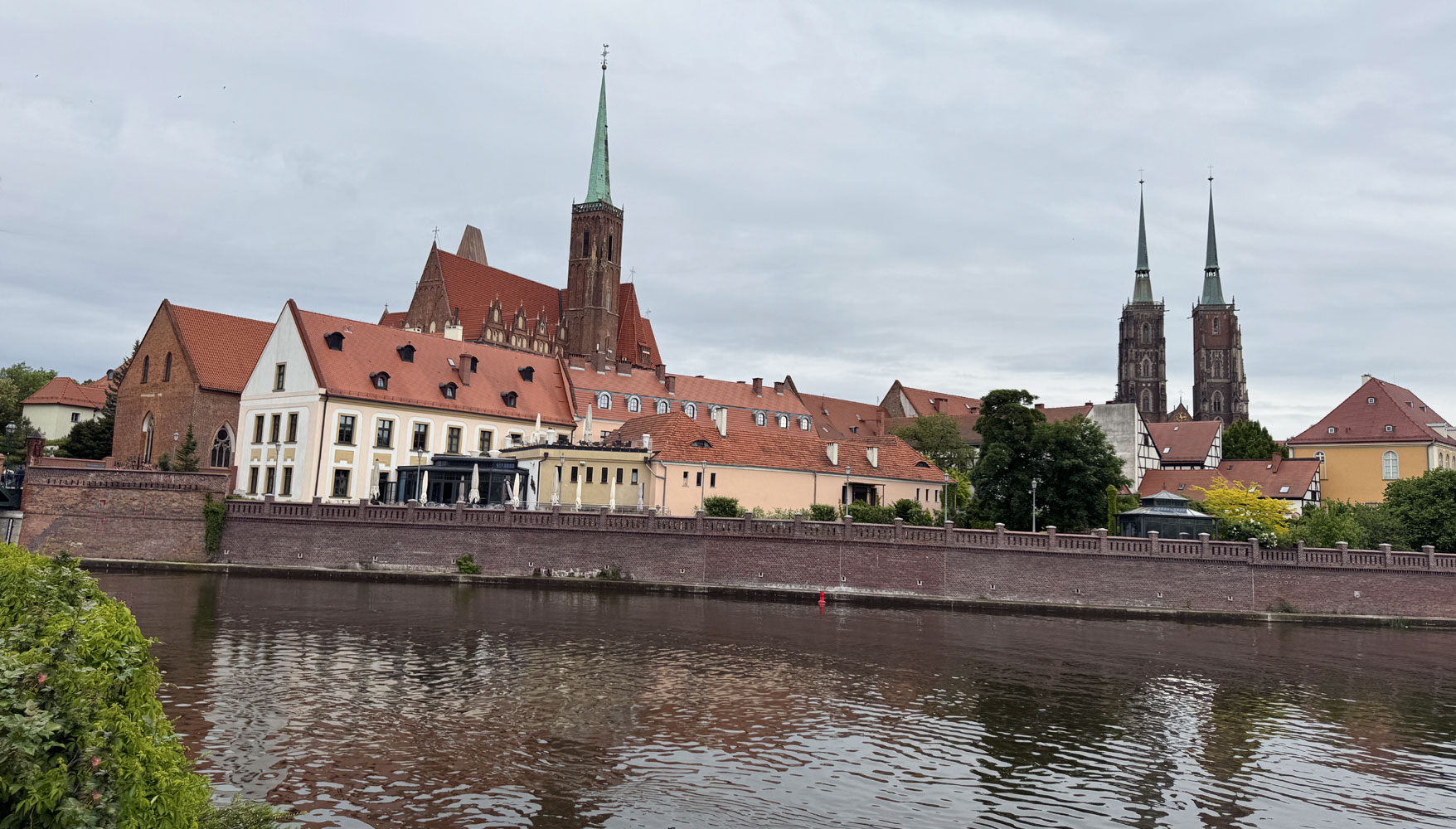
Taken from Tumski
Bridge (Most Tumski) as we left Cathedral Island. |
|
|
| |
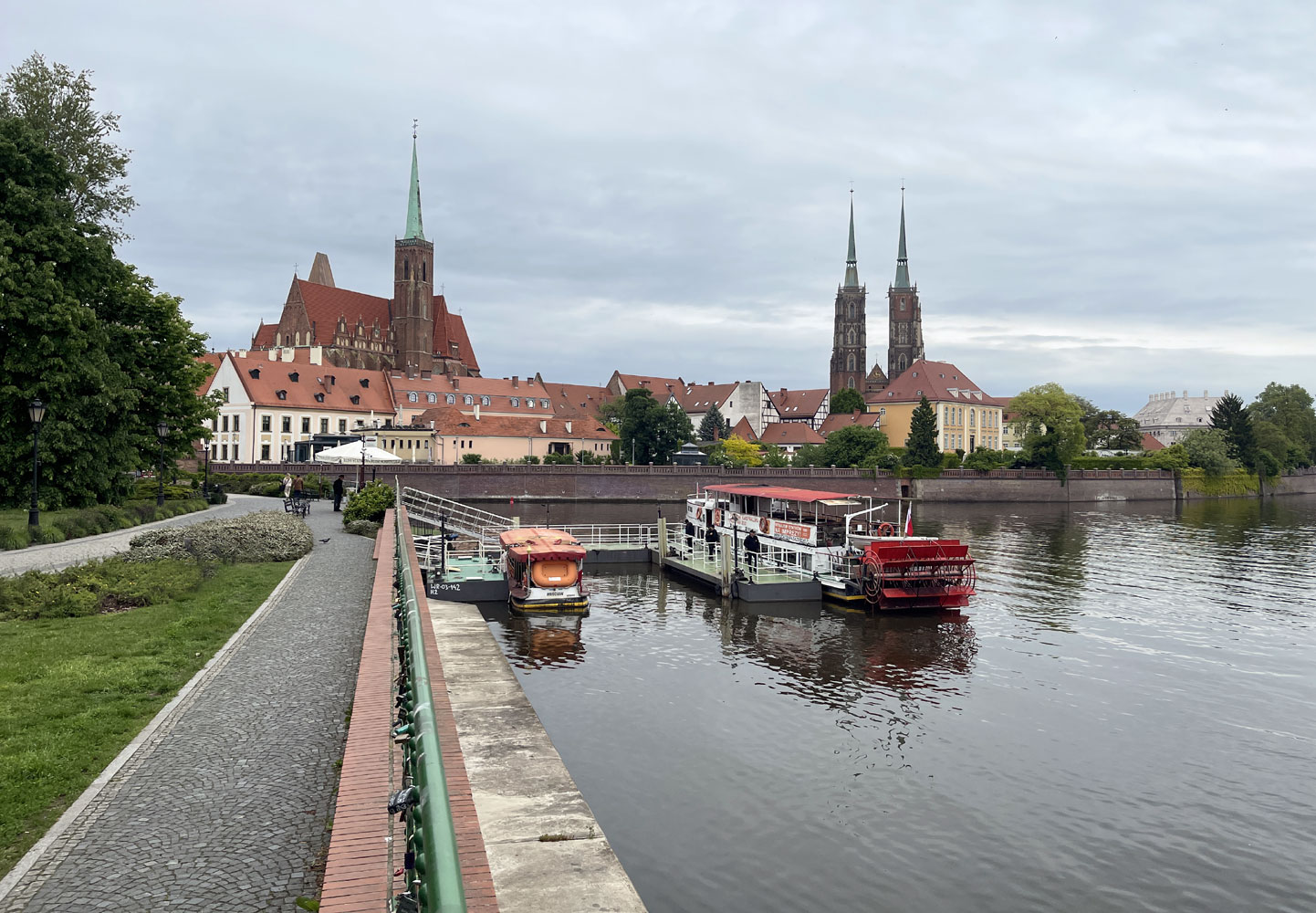
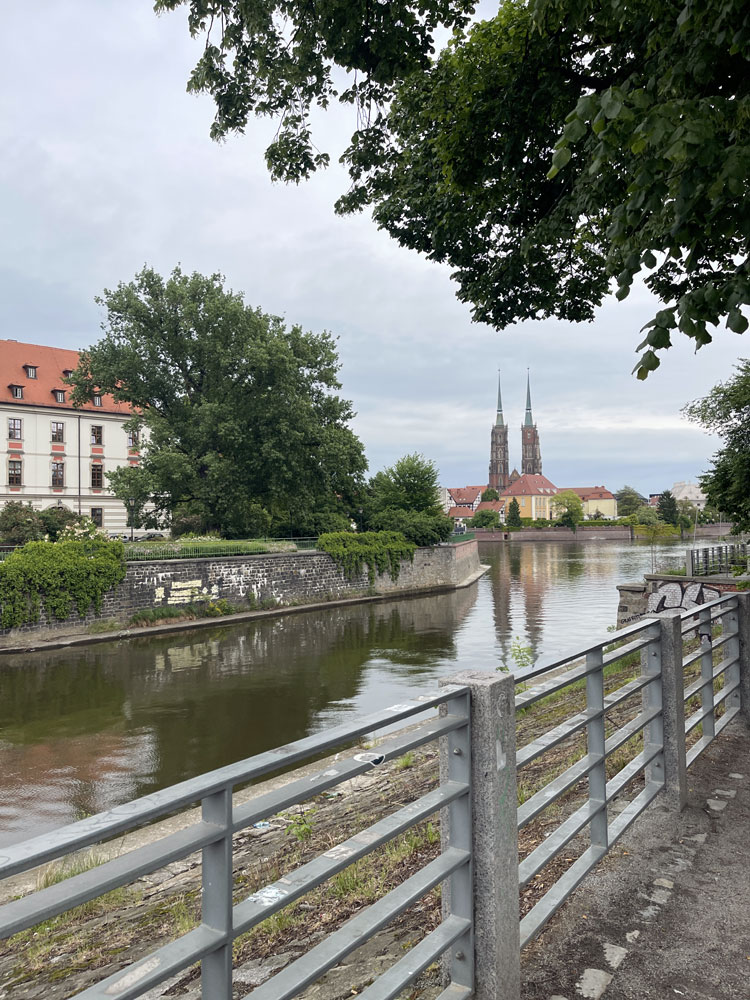
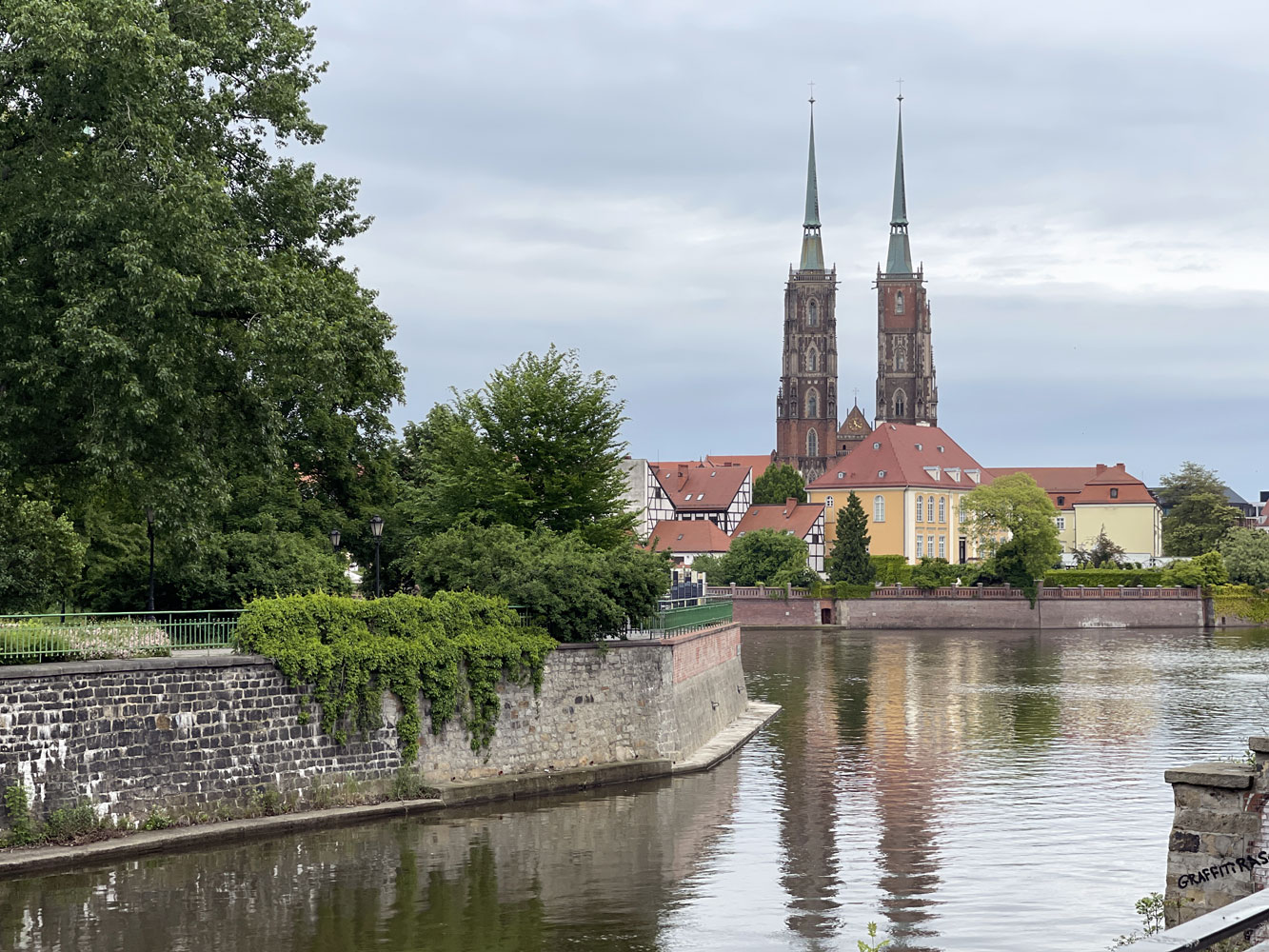
Looking back at Cathedral
Island after crossing Tumski Bridge onto Sand Island. |
|
|
| |
|
|
| |
We took a scenic walk
around part of Sand
Island (Wyspa Piasek). |
|
|
| |
|
| |
|
| |
|
| |
|
| |
|
| |
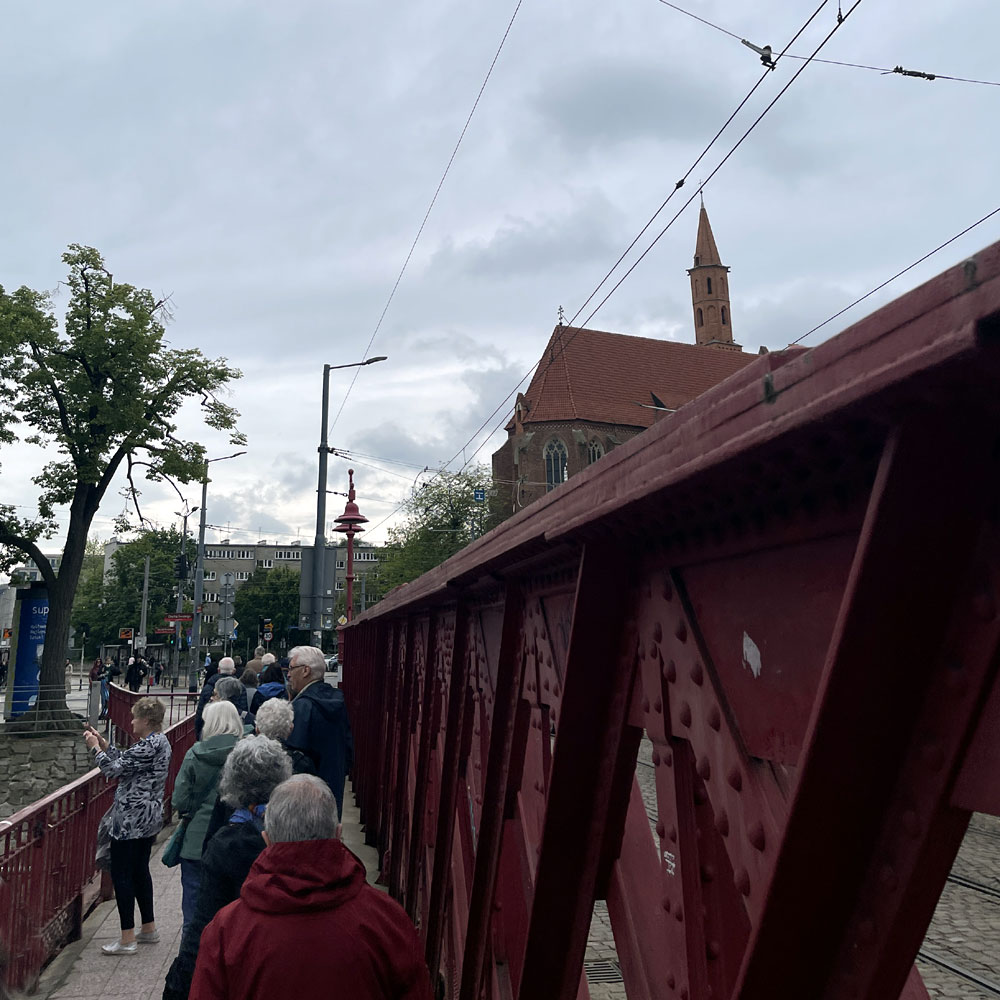
We left Sand Island via
the Piasek Bridge. |
|
|
| |
|
|
| |
|
|
| |
|
| |
|
| |
|
| |
|
| |
|
| |
|
| |
|
| |
|
|
| |
|
| |
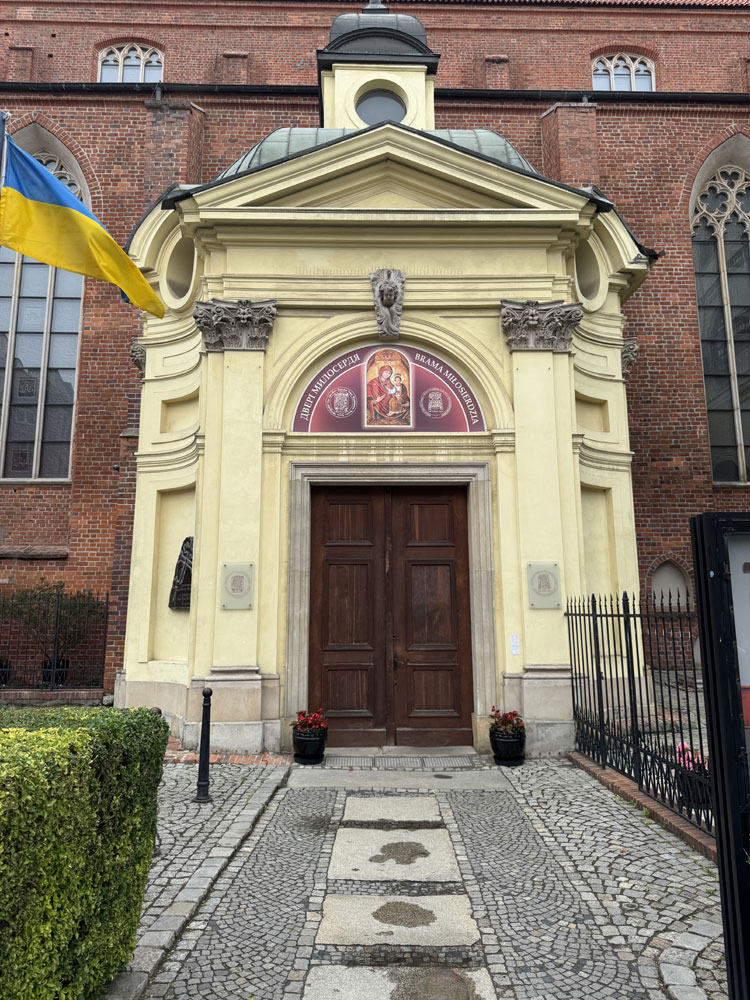
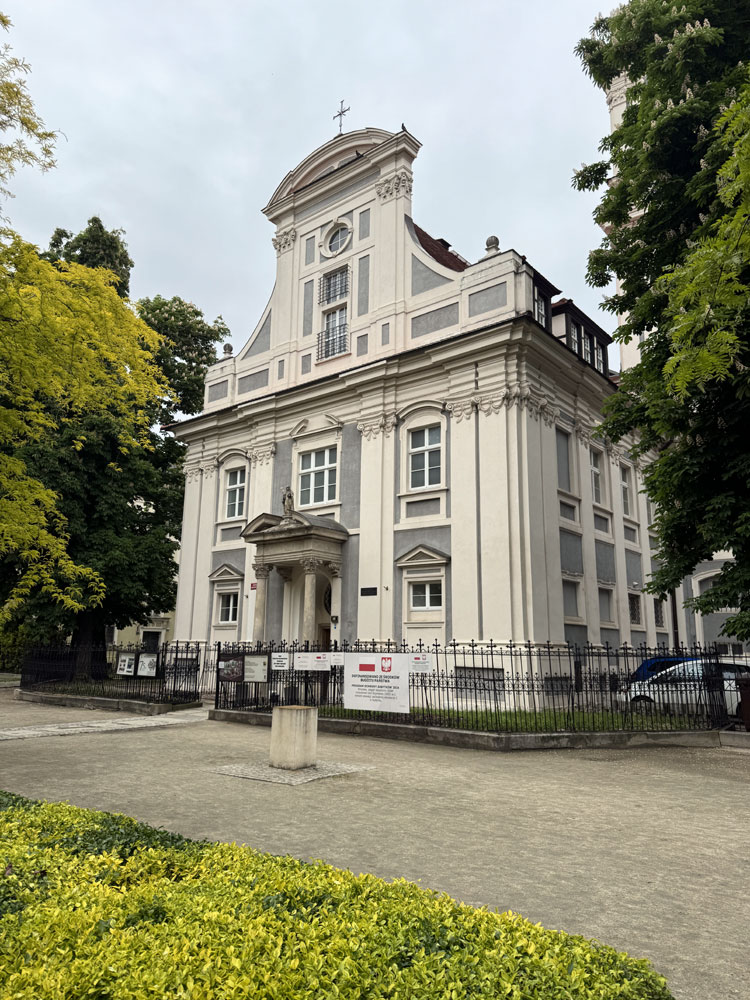
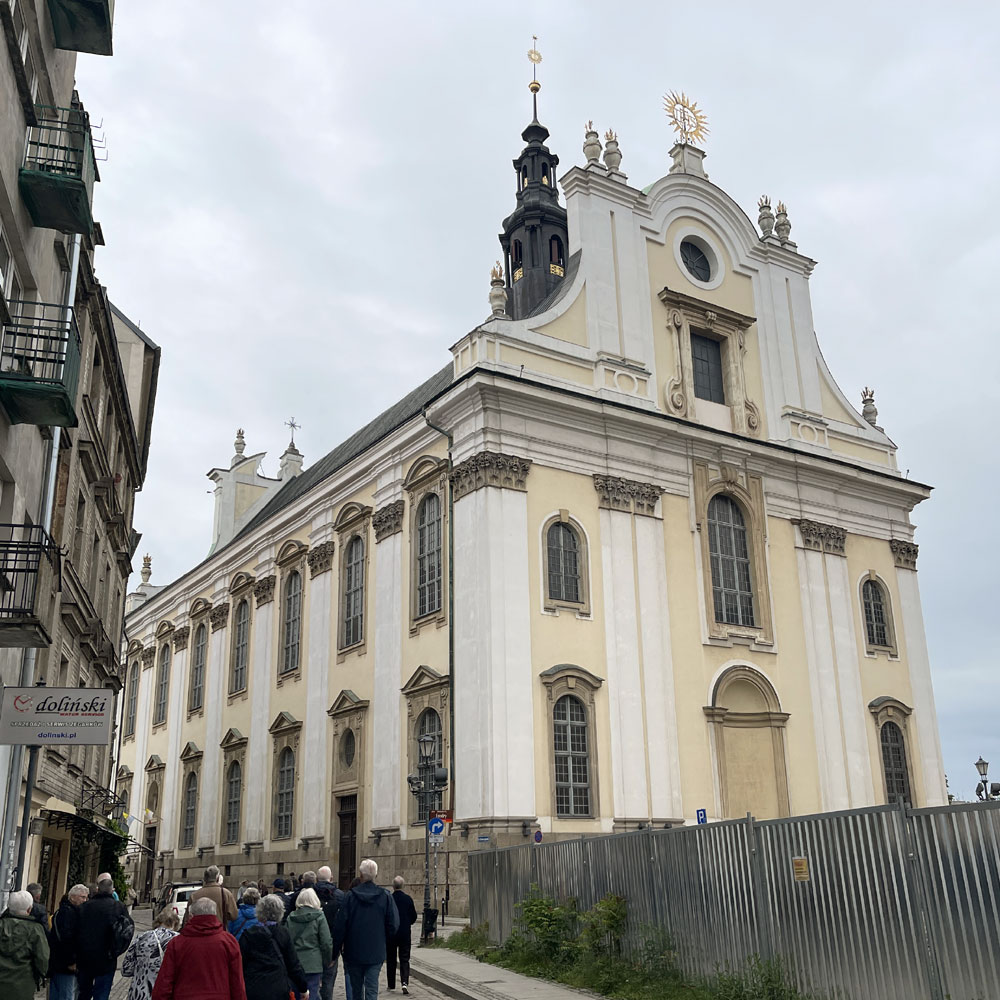
The Cathedral
of St. Vincent and St. James, seat of the Ukrainian
Catholic Eparchy of Wroclaw. It is one the burial sites
of Polish monarchs. Along with the Old Town of Wroclaw,
it is listed as a Historic Monument of Poland. |
|
|
| |
The Wroclaw Mausoleum
of Silesian Piasts is a museum that showcases the history
and legacy of the Silesian Piasts, the first historical
ruling dynasty of Poland dating back to the 9th century. |
|
|
| |
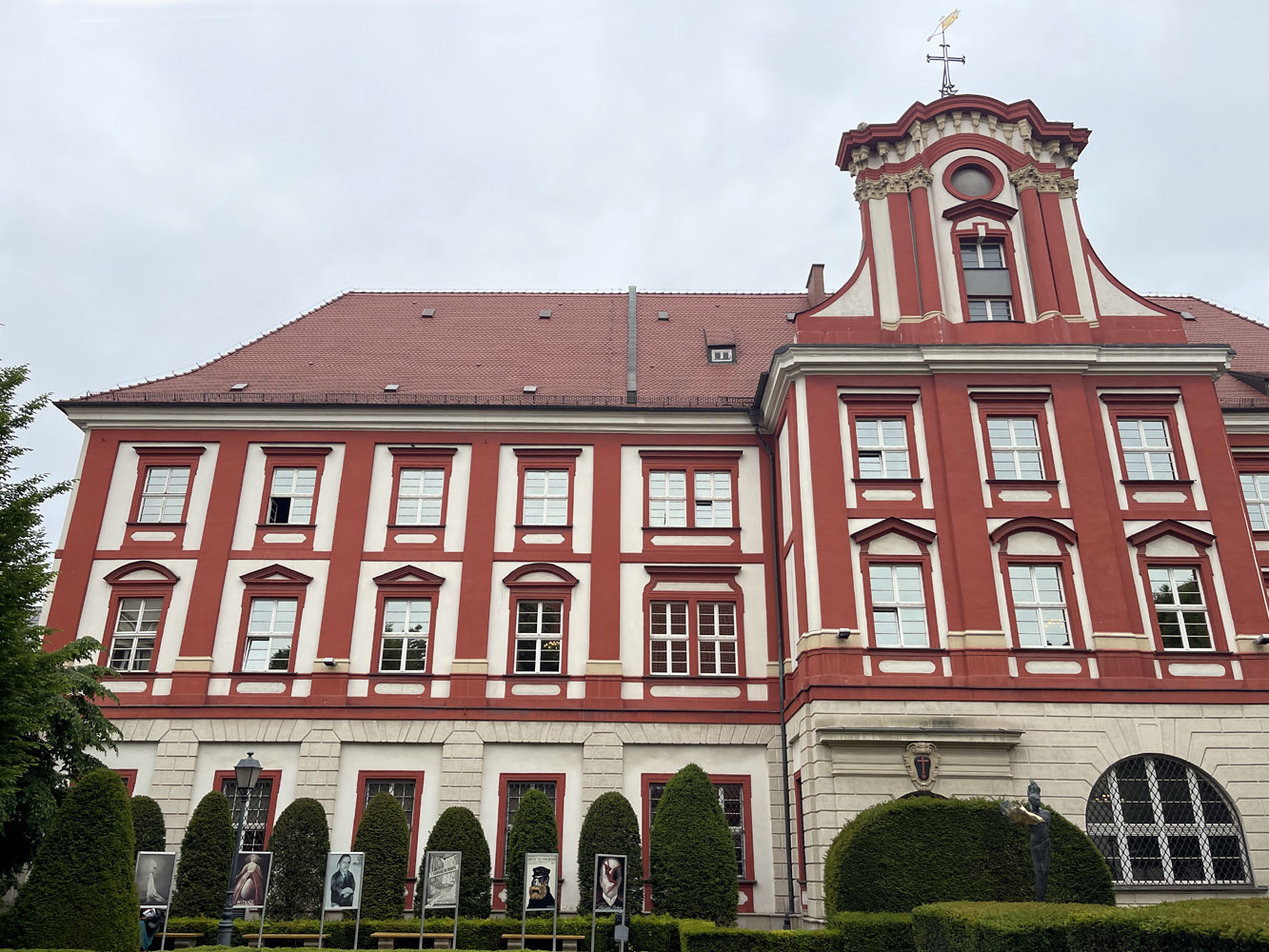
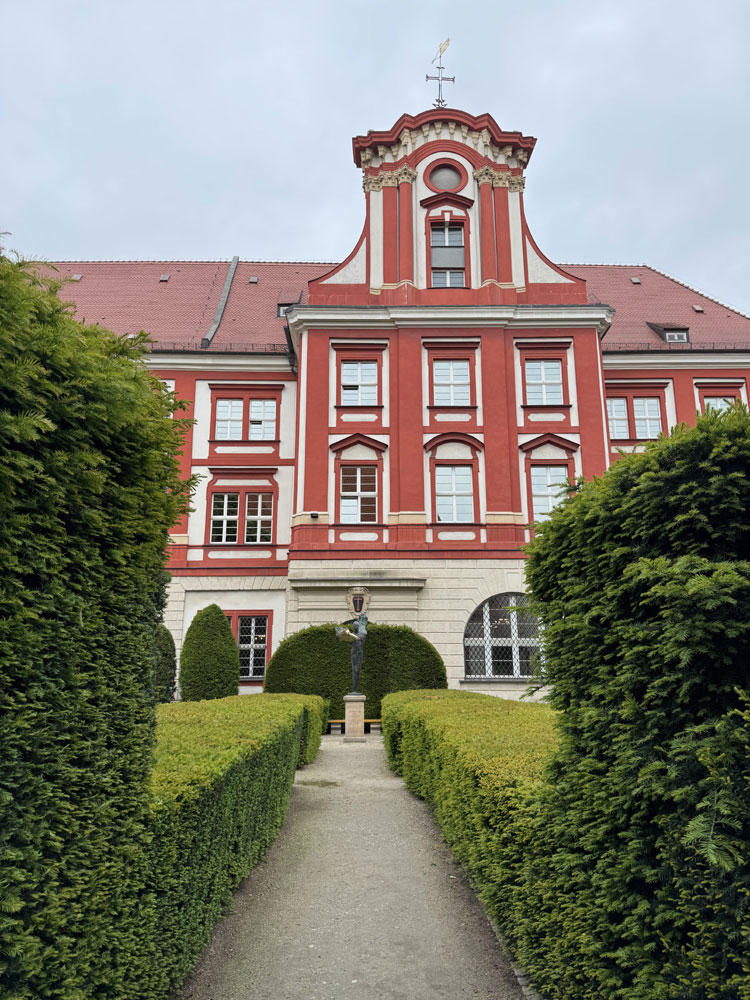
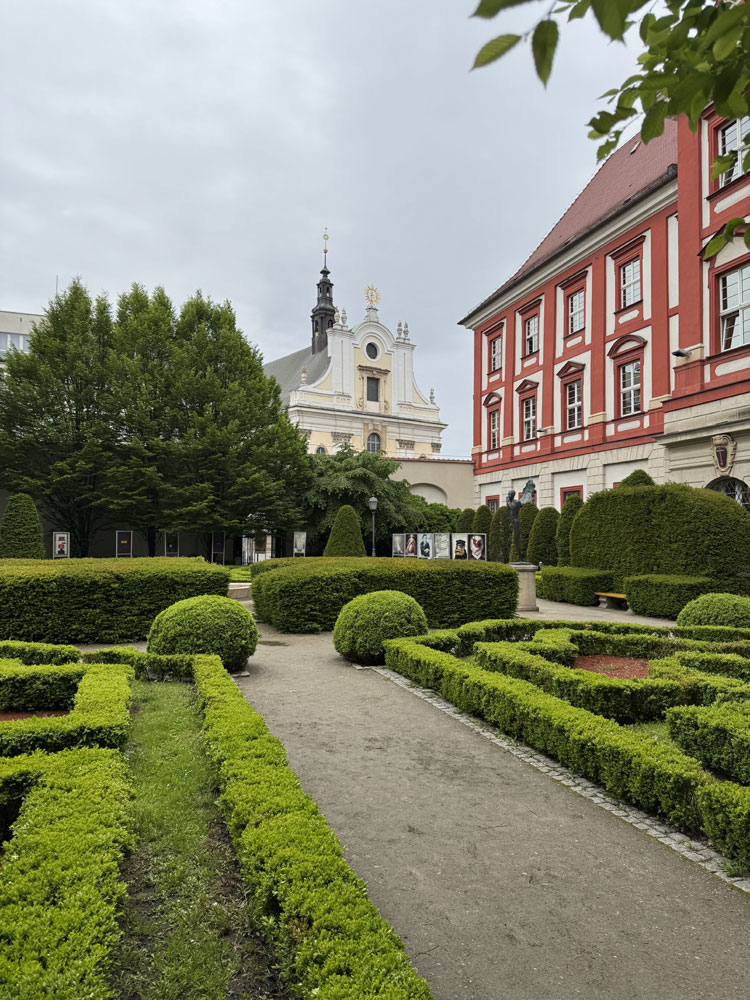
We walked through the
peaceful garden of the Ossolinski National Institute, more
commonly known as the Ossolineum,
which is a Polish cultural foundation, publishing house,
archival institute and a research centre of national significance
founded in 1817 in Lwów (now Lviv). It has been located
in the city of Wroclaw since 1947. |
|
|
| |
|
|
| |
|
|
| |
|
|
| |
|
| |
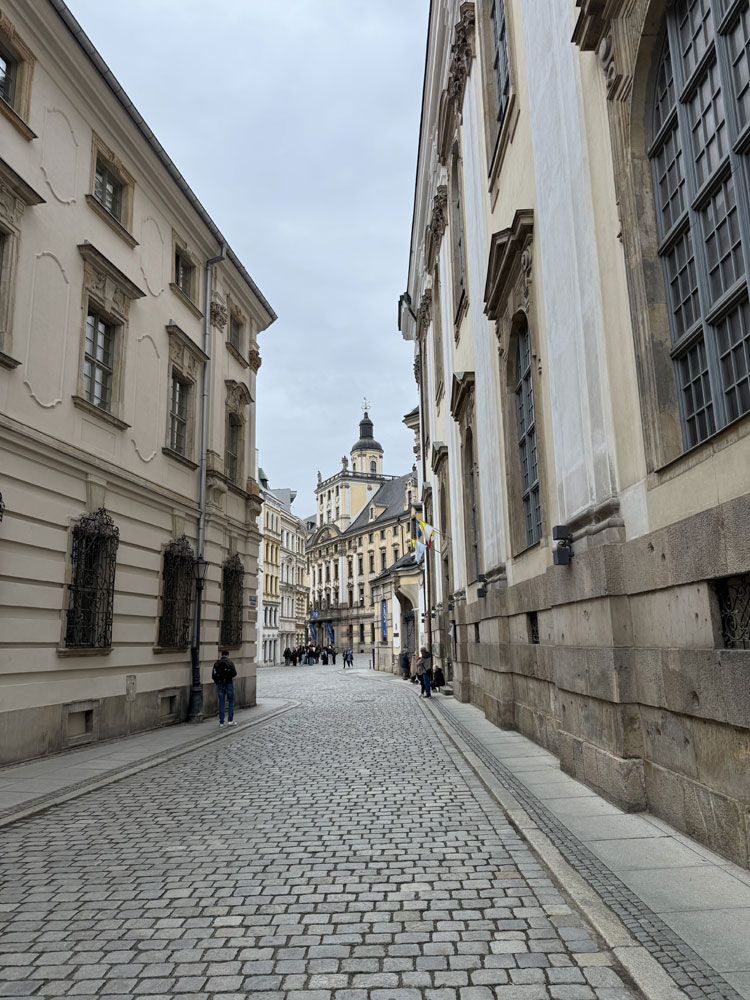
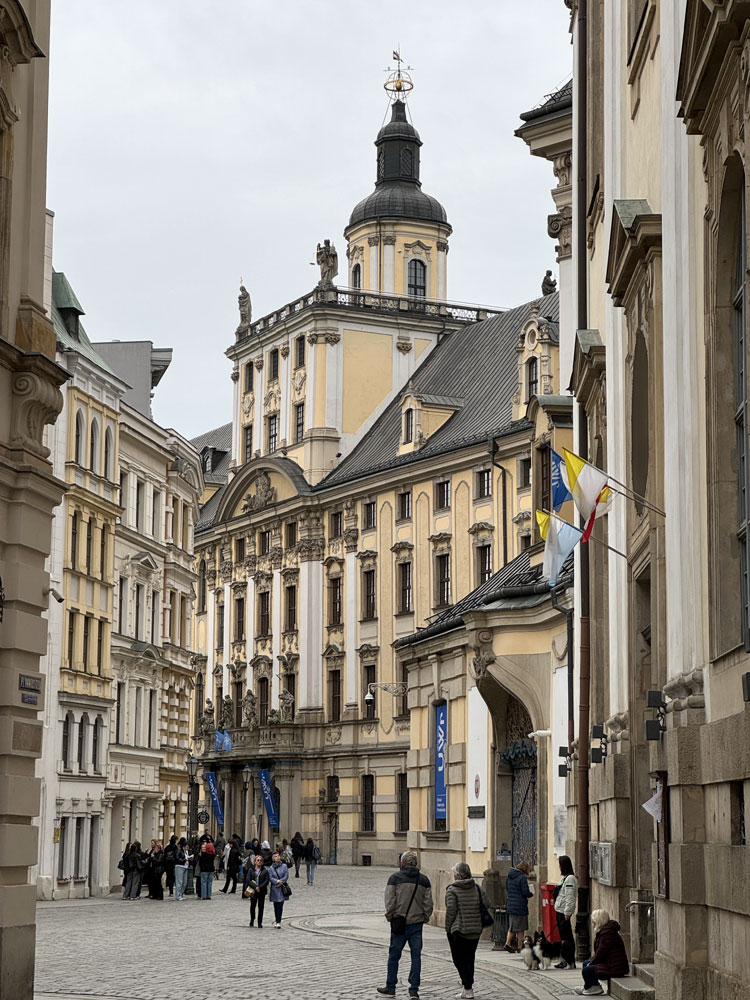
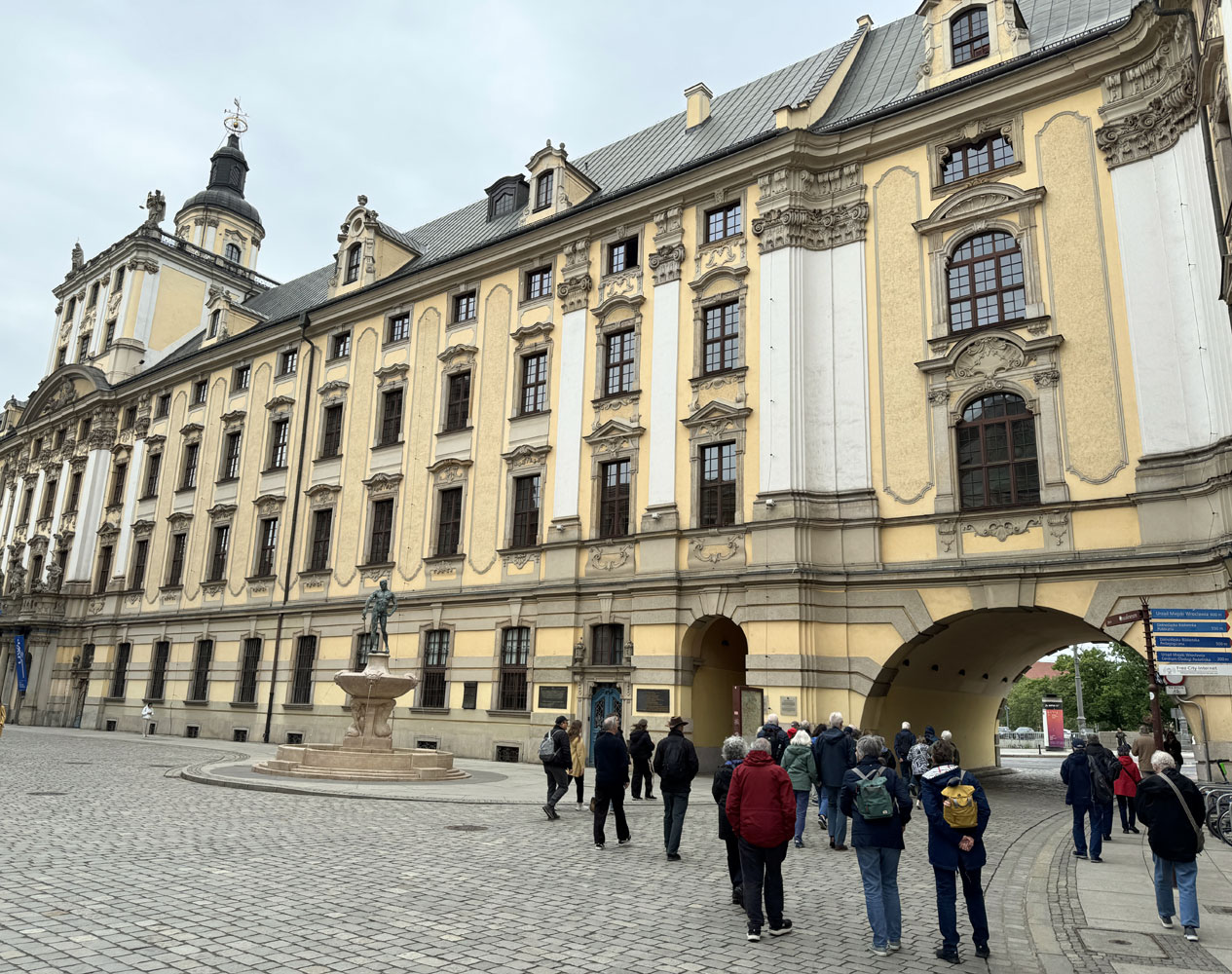
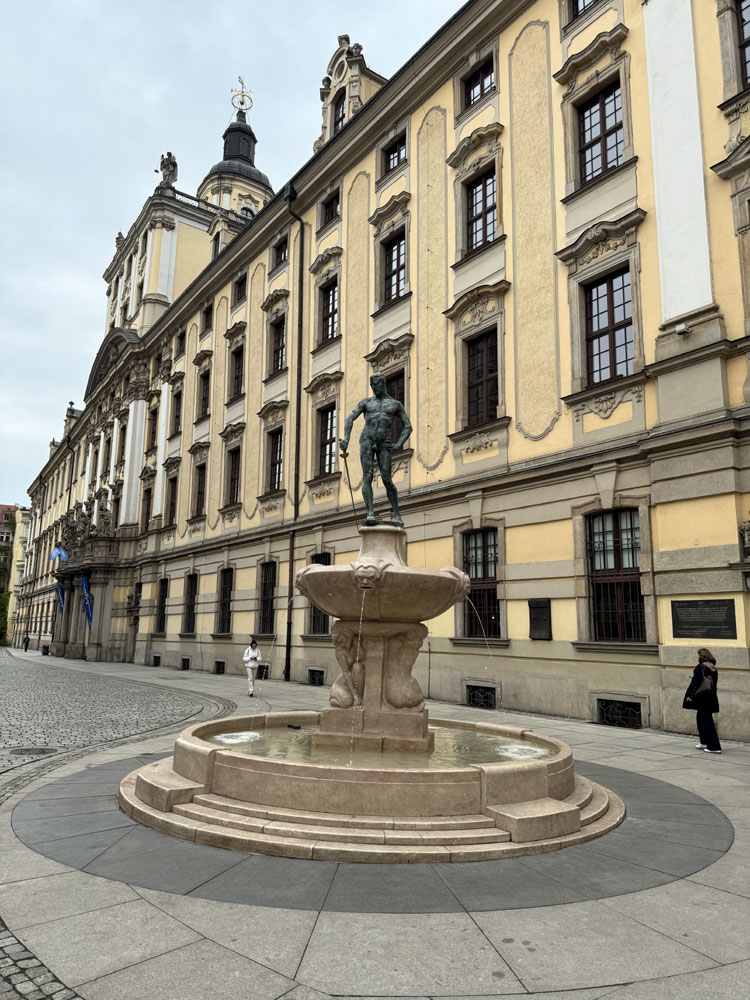
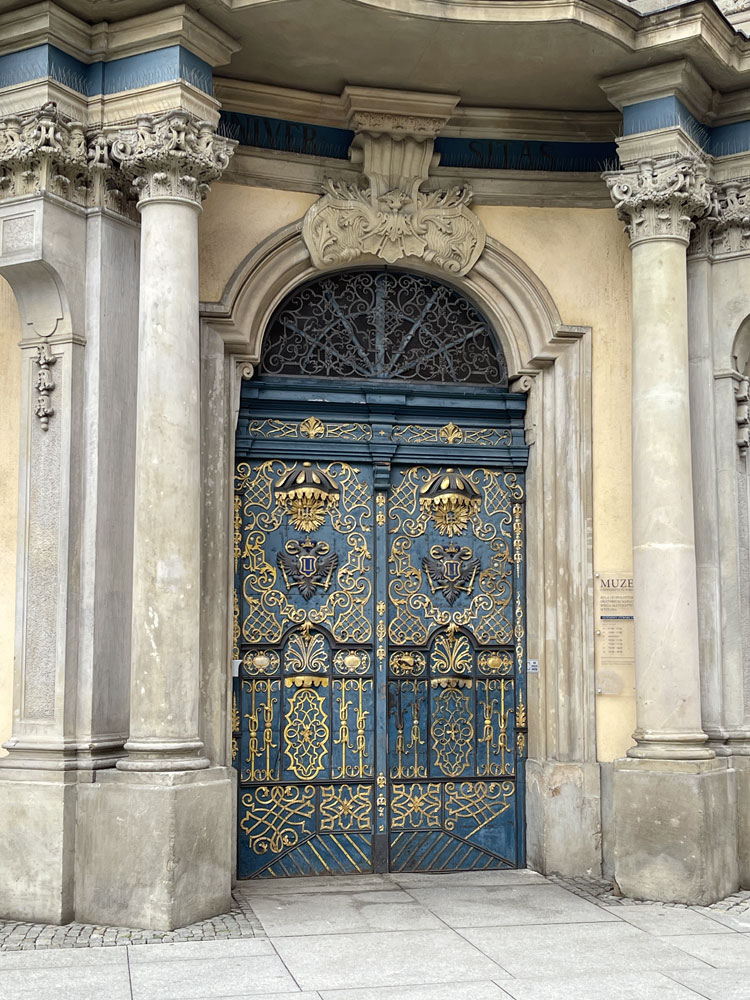
University
Square. We were told that the shortest way back to our
hotel was via the archway, but we weren't quite ready for
that yet, because we were making our way steadily towards
the market square, which we believed to be well worth visiting. |
|
|
| |
|
| |
|
|
| |
|
| |
|
| |
|
| |
|
| |
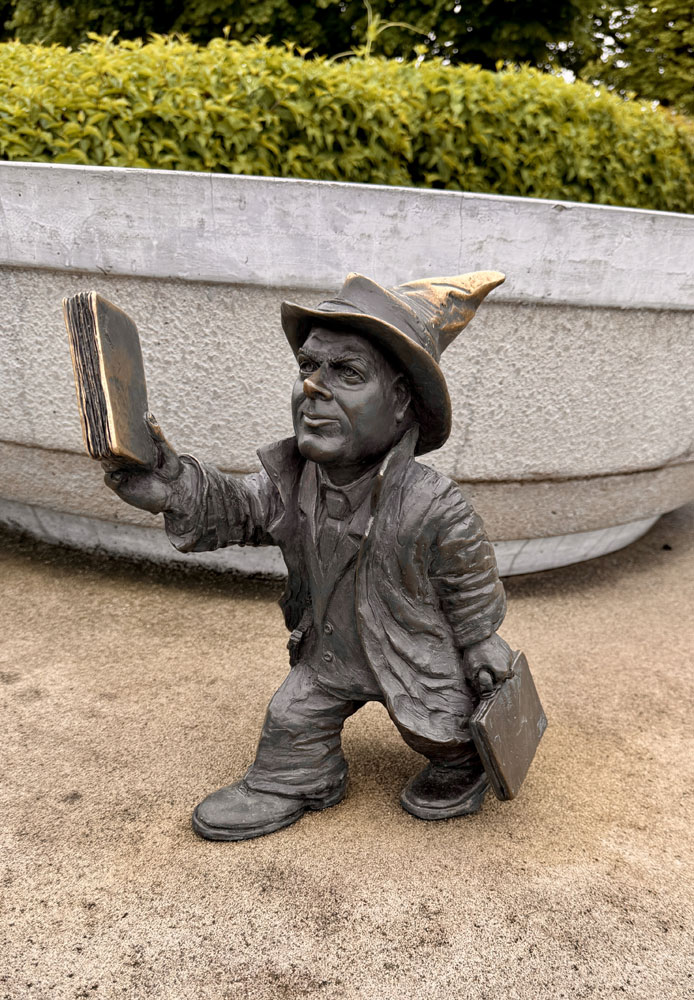
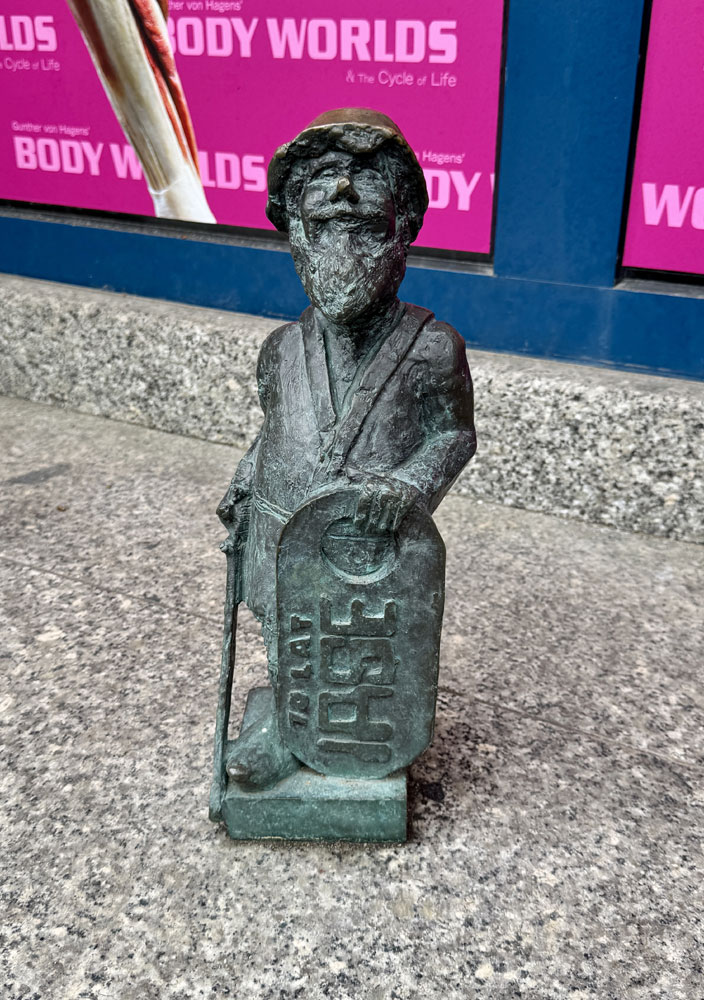
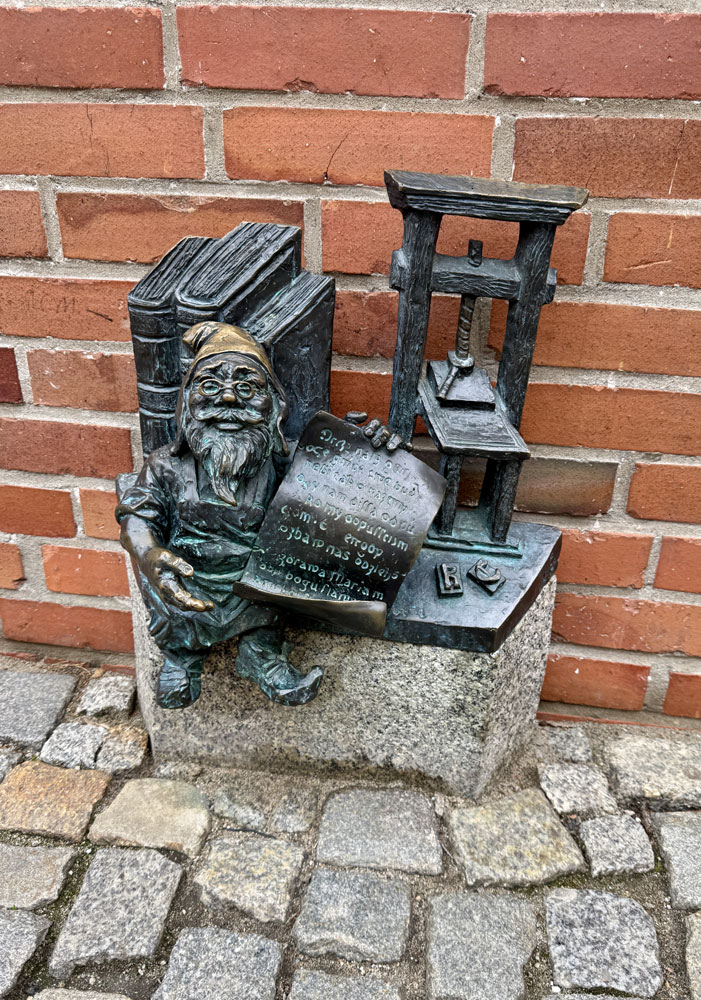
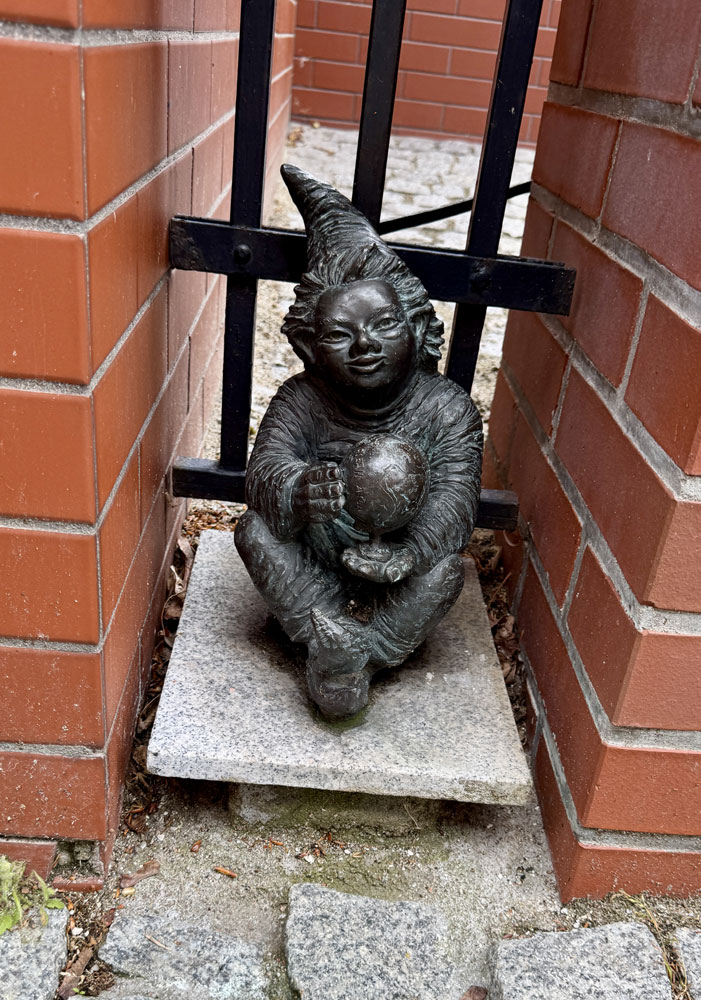
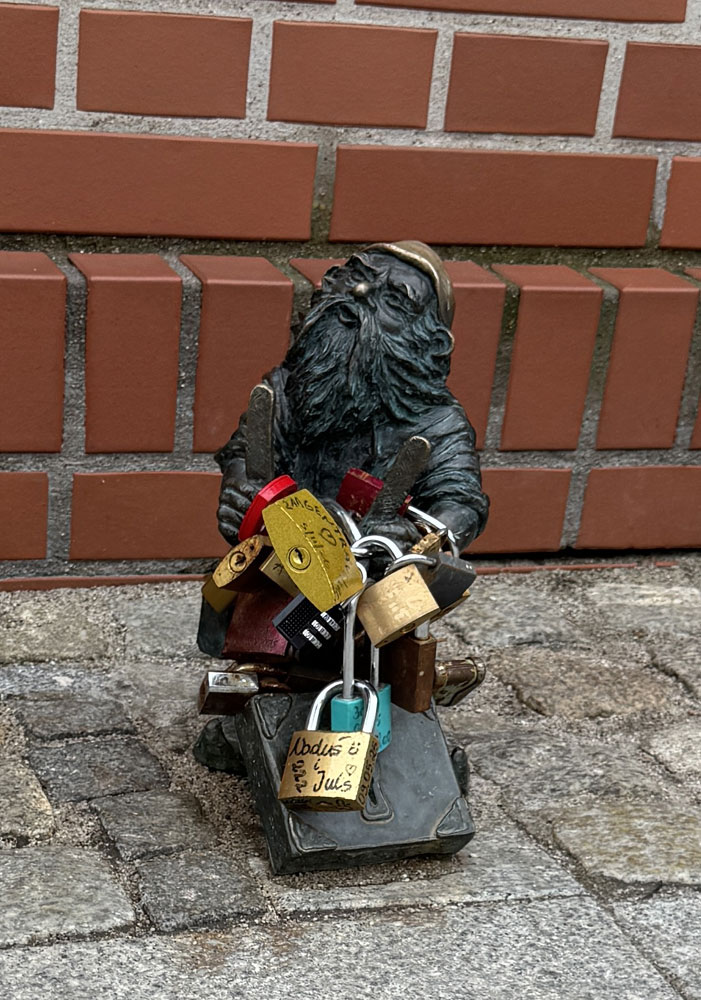
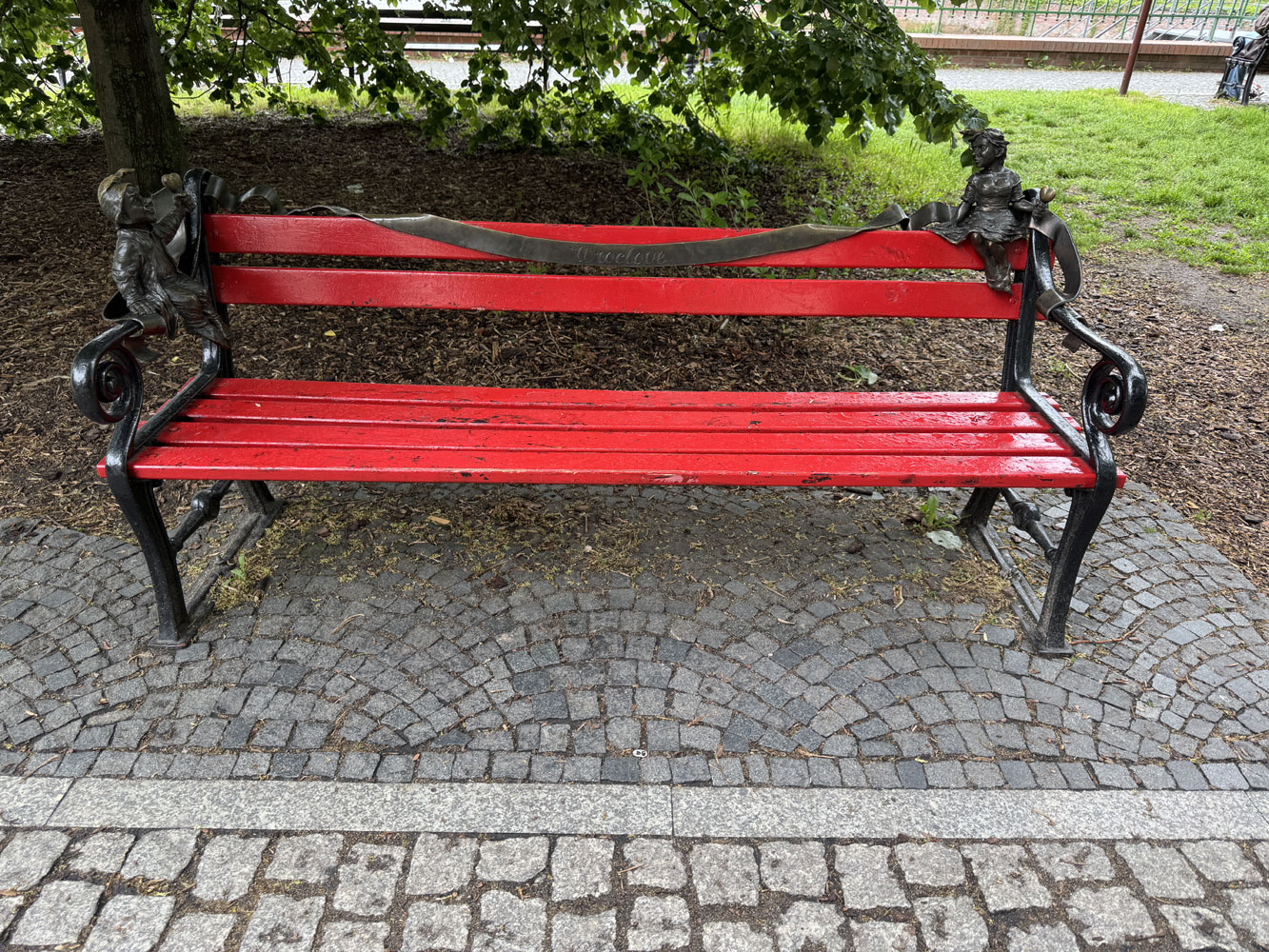
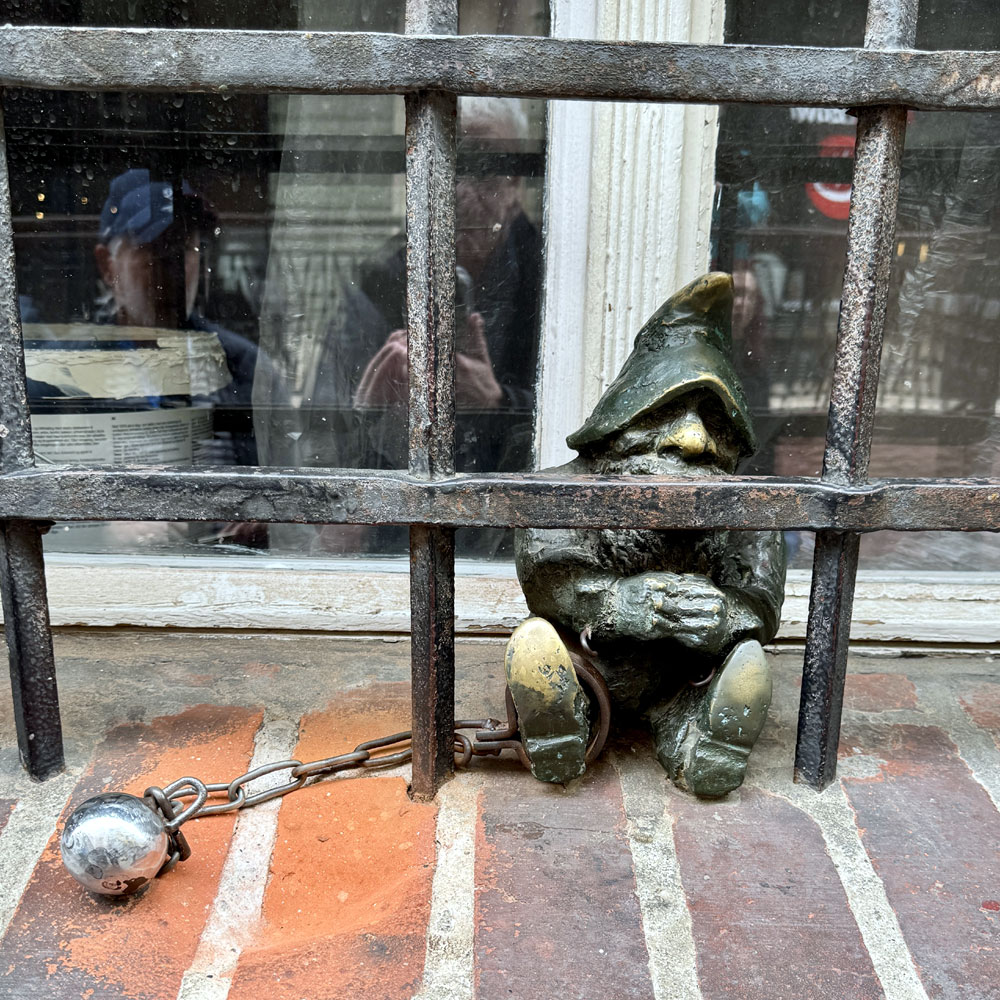
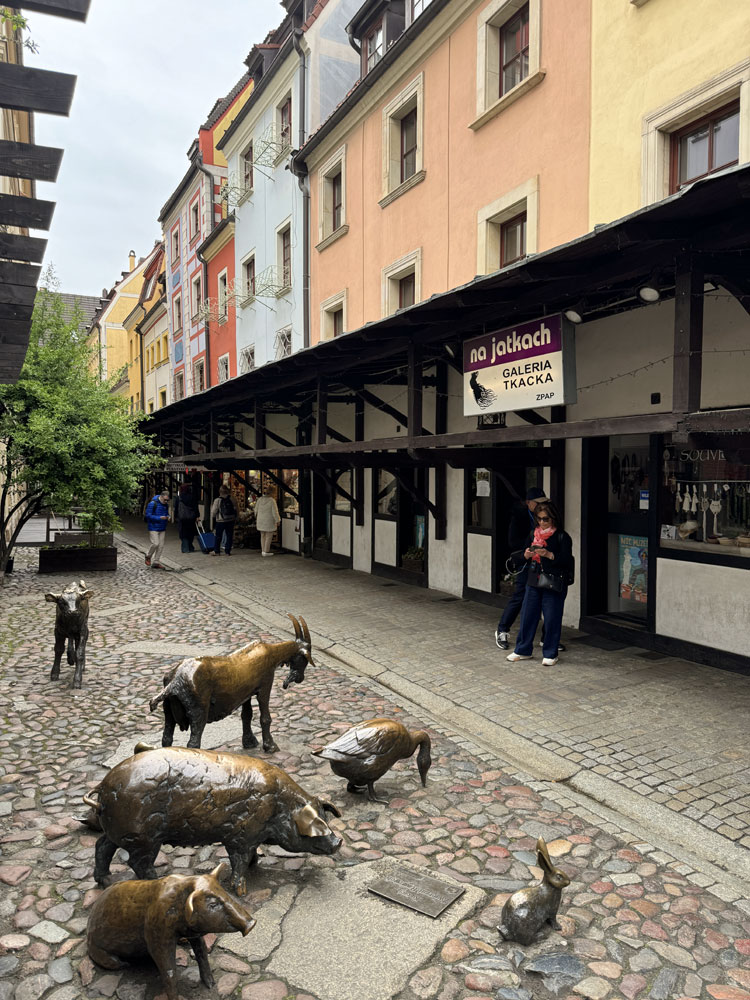
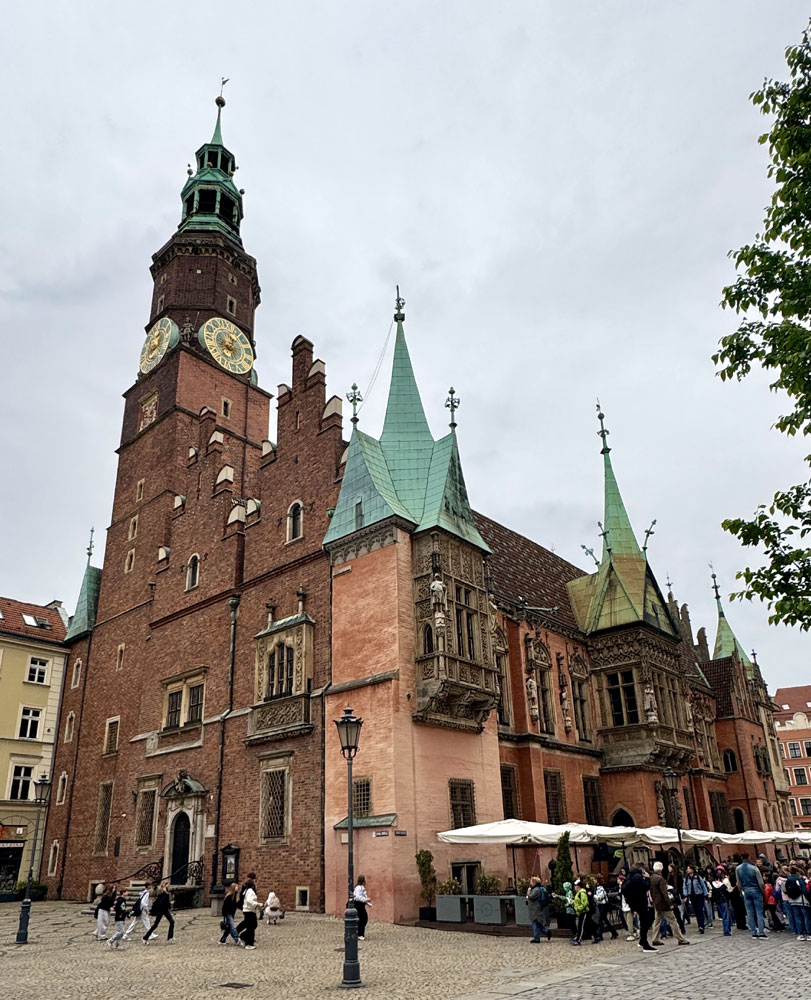
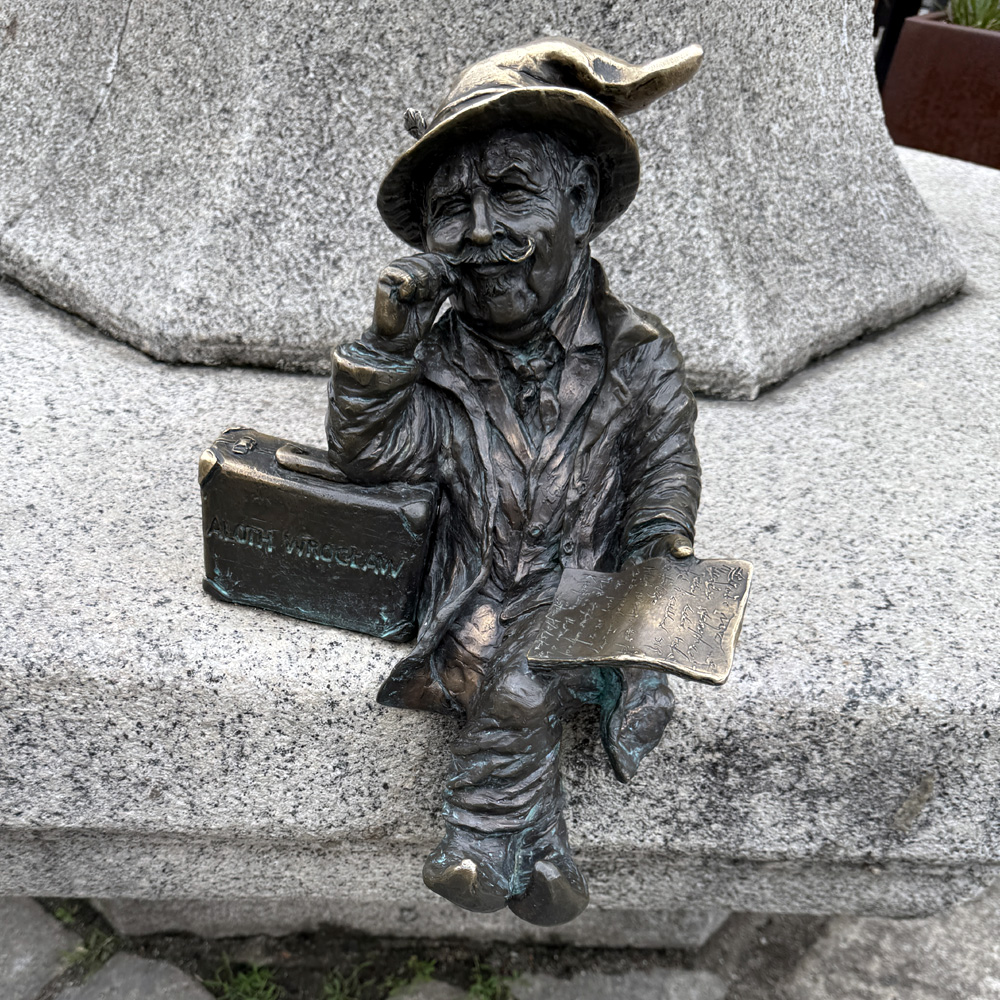
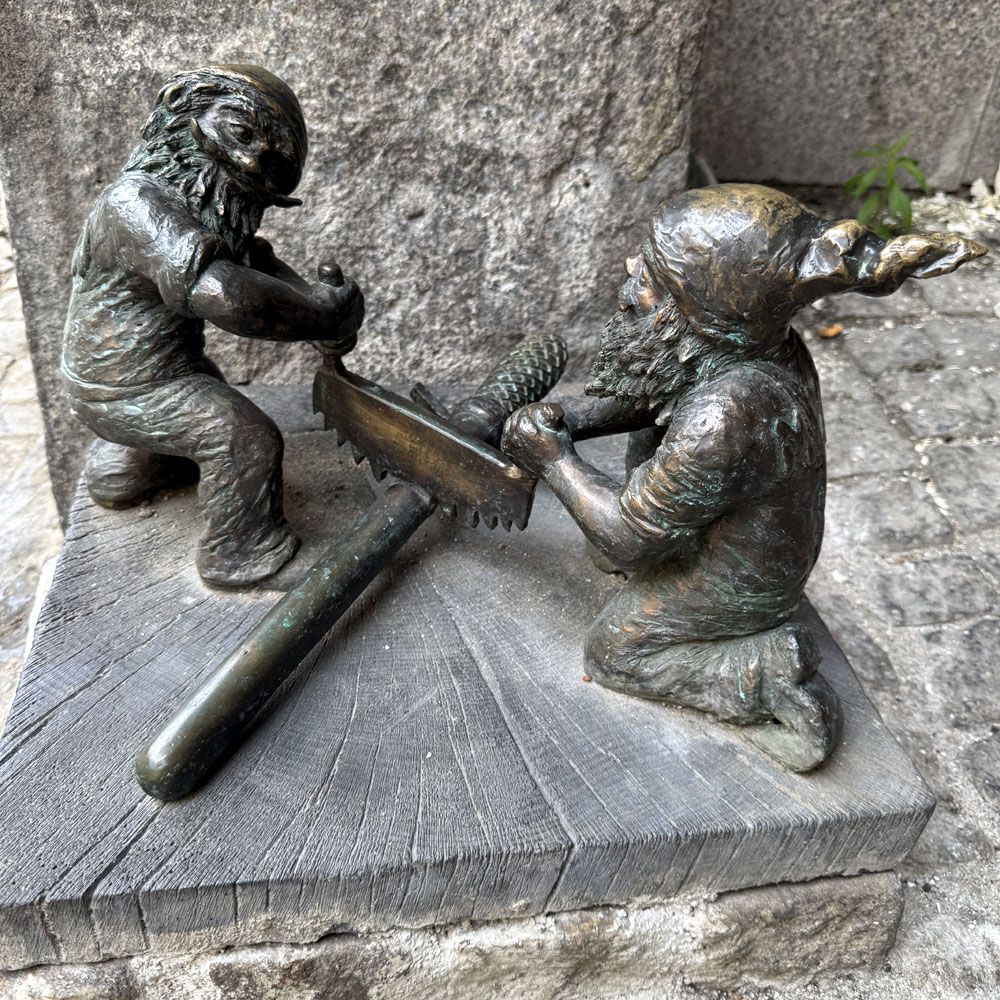
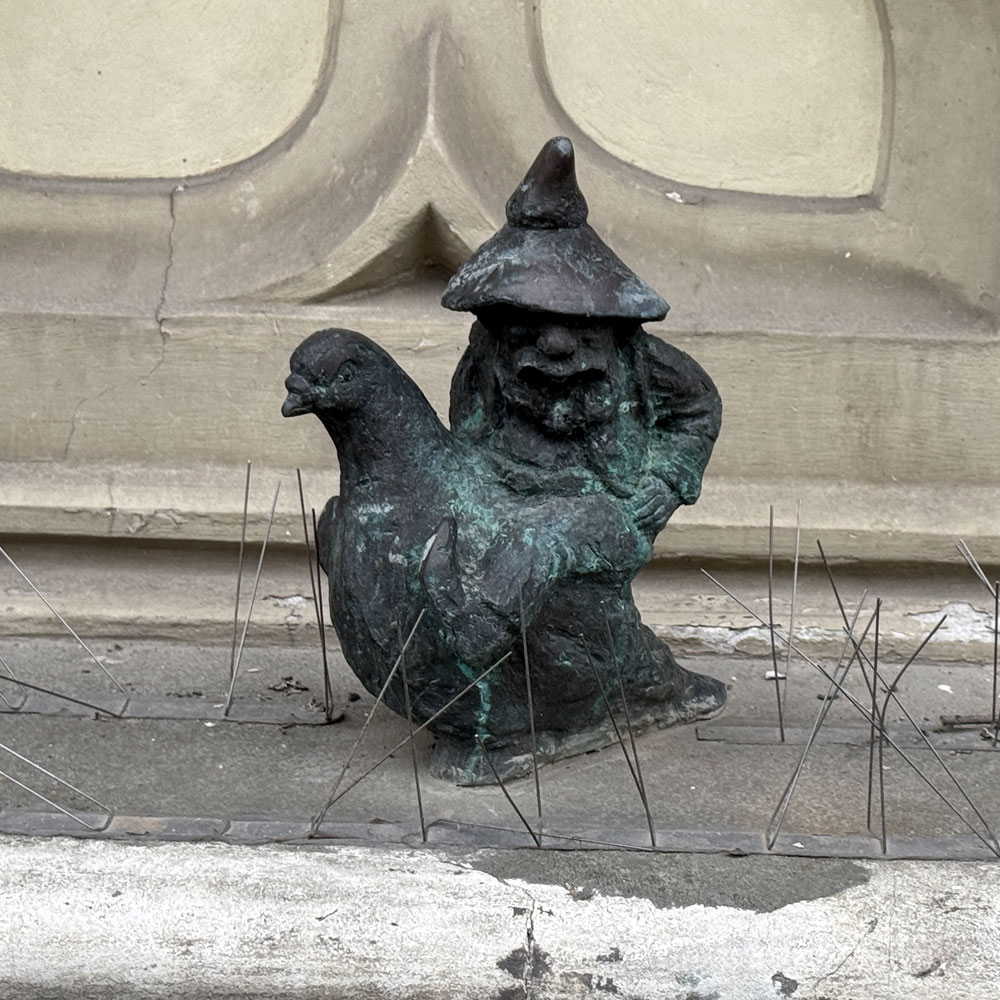
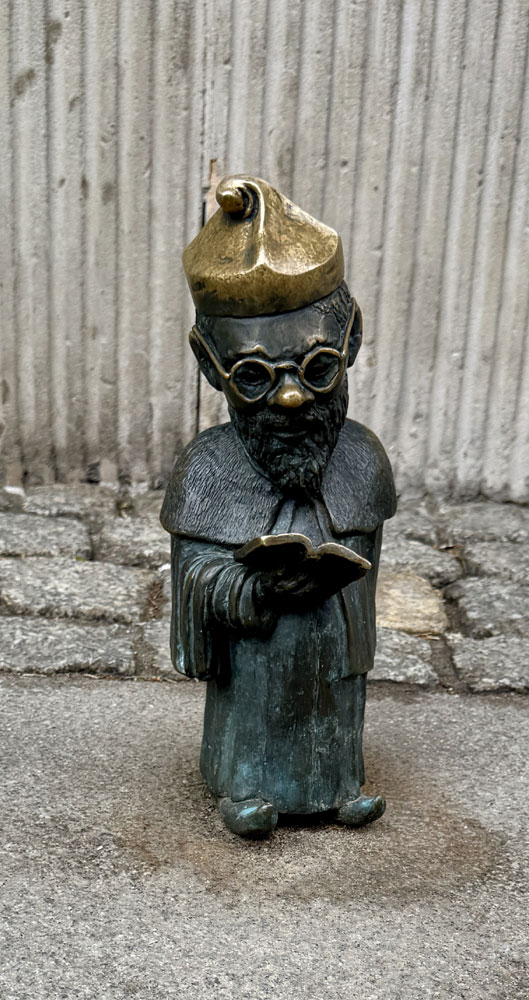
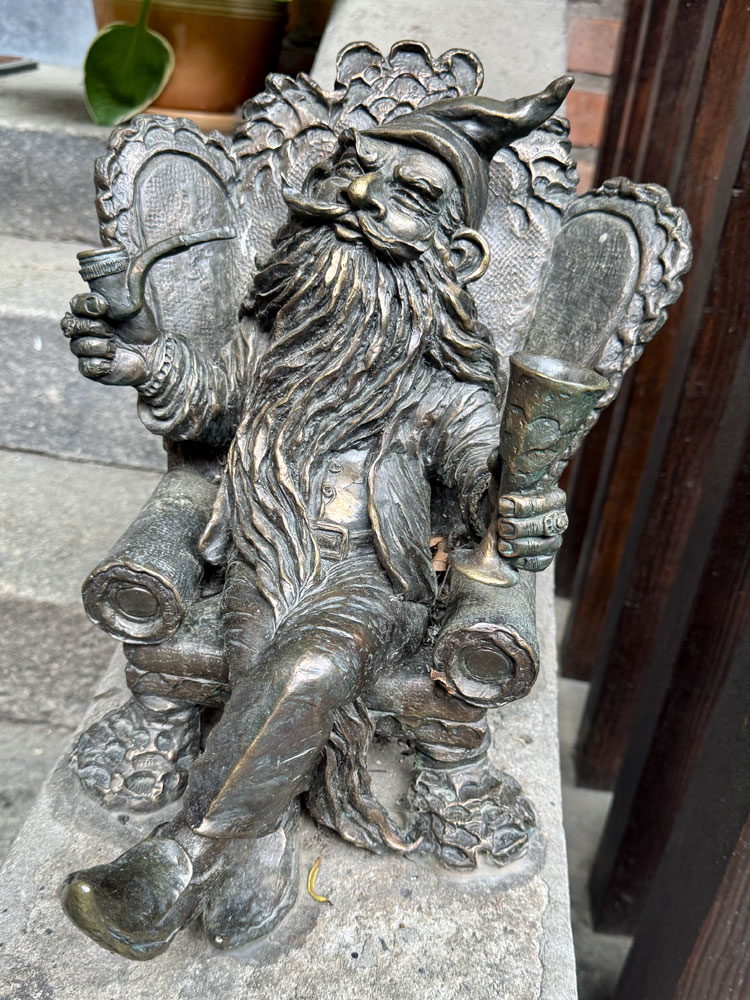
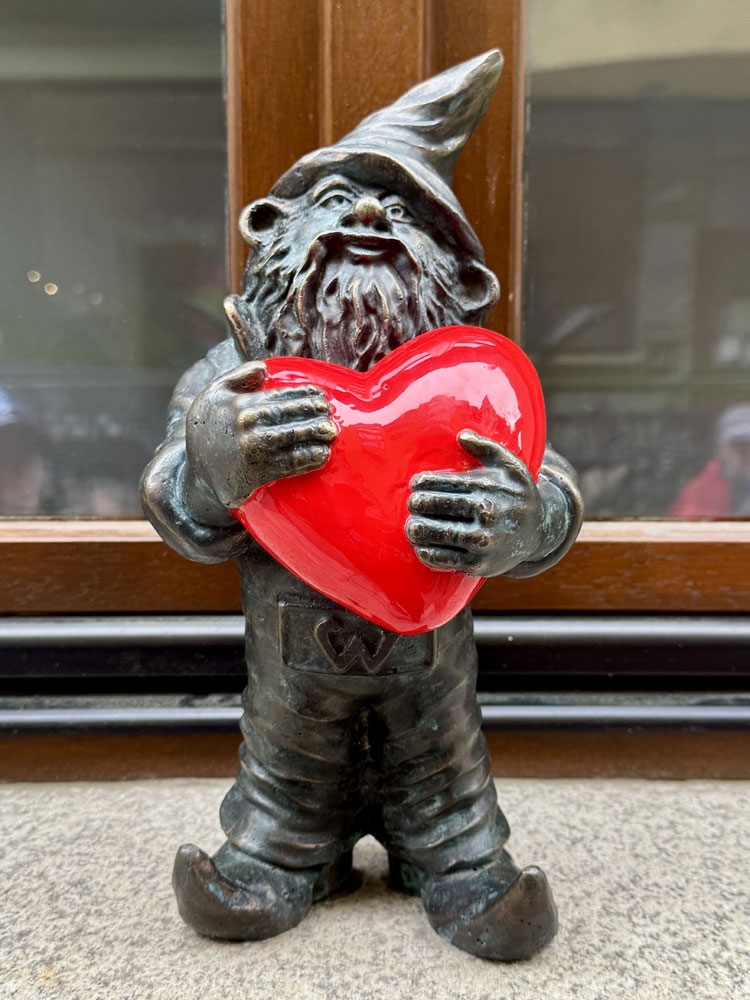
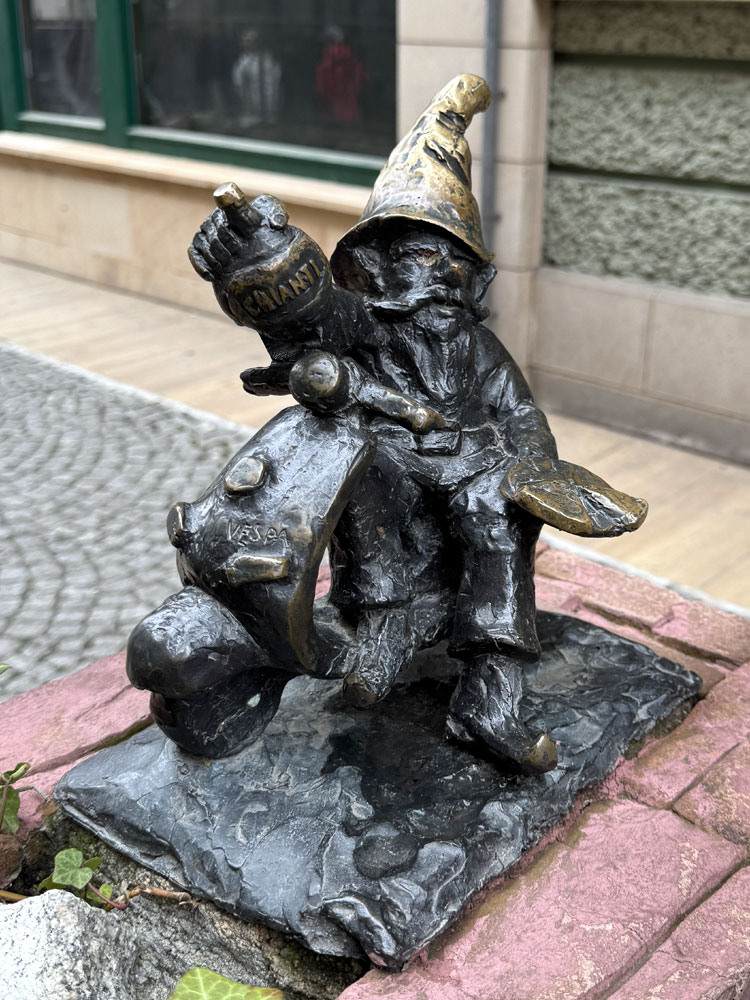
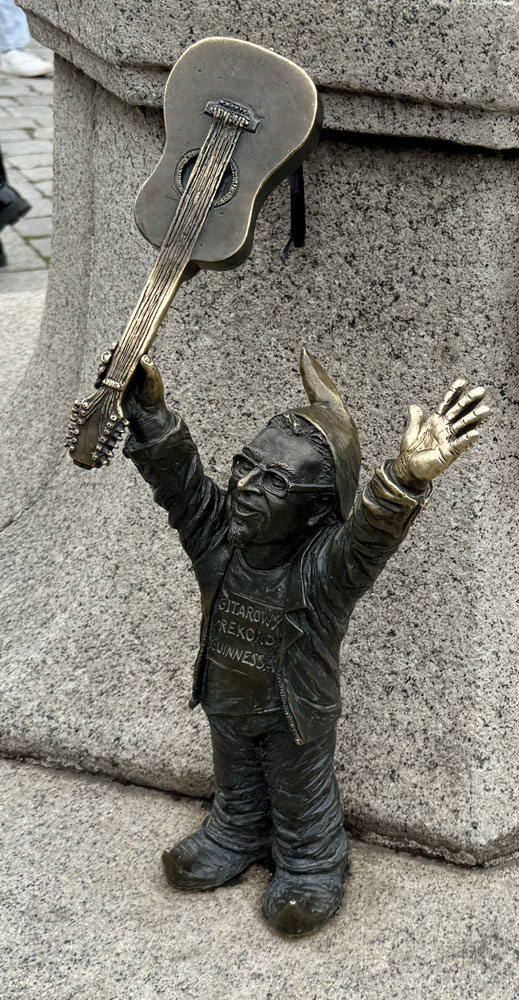
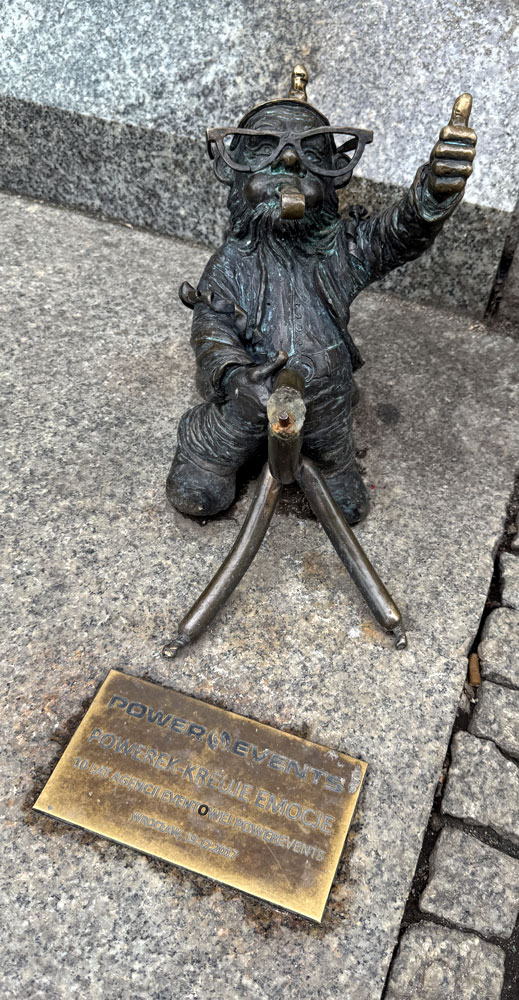
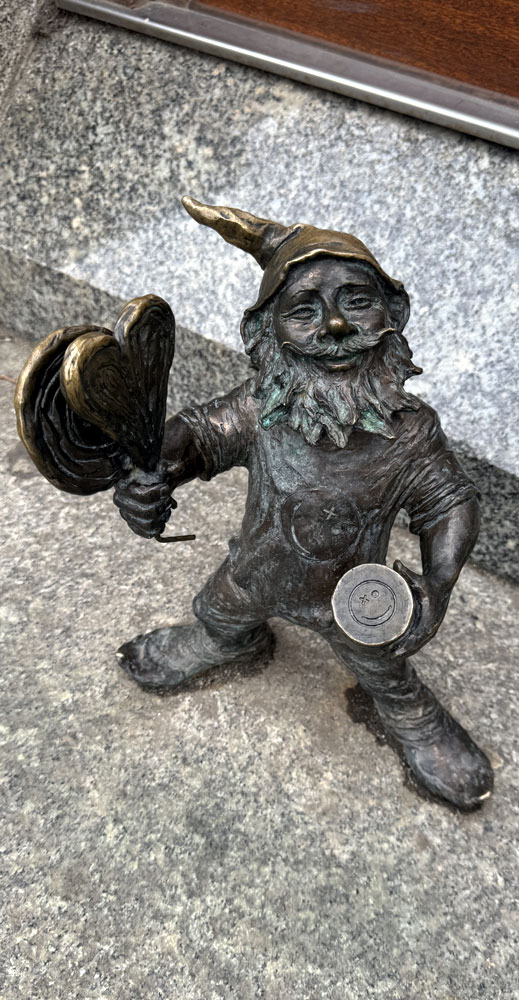
All day we had been
spotting occasional little figures
like these, but suddenly they were all over the place. We
were told that they are now a major tourist attraction.
Of course, the Wroclaw
Dwarfs even have their own Wikipedia page! |
|
|
| |
|
| |
|
| |
|
|
| |
|
| |
|
|
| |
|
| |
|
| |
|
| |
|
| |
|
| |
|
| |
|
| |
|
| |
|
|
| |
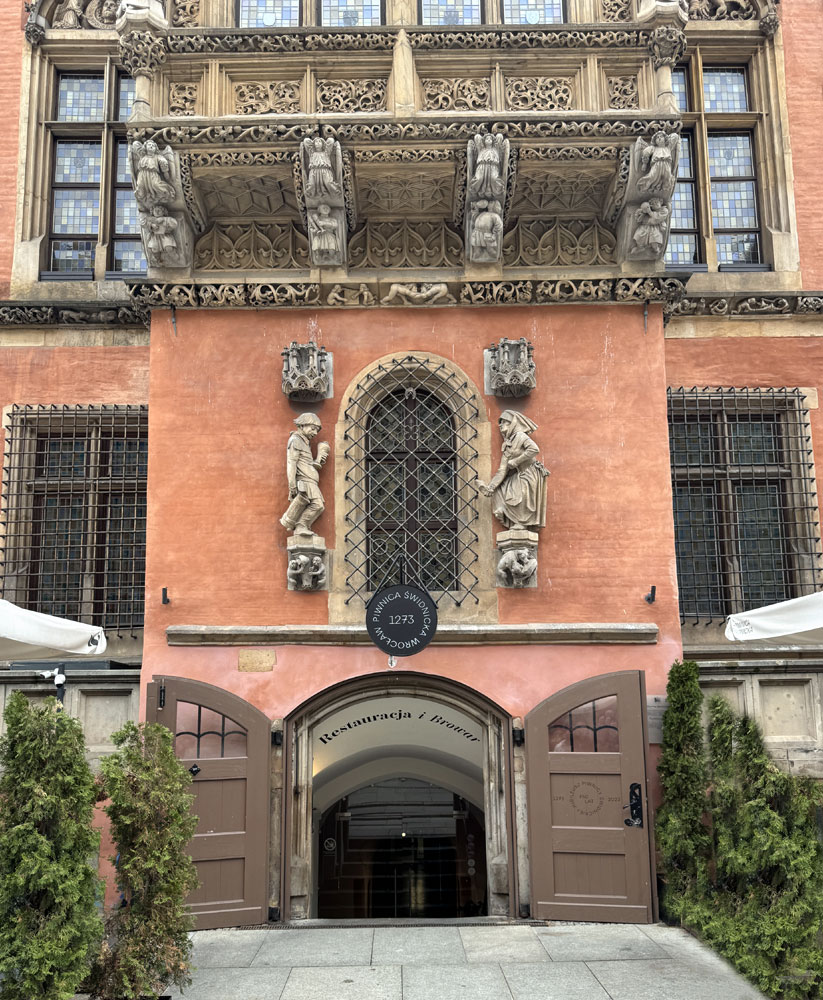
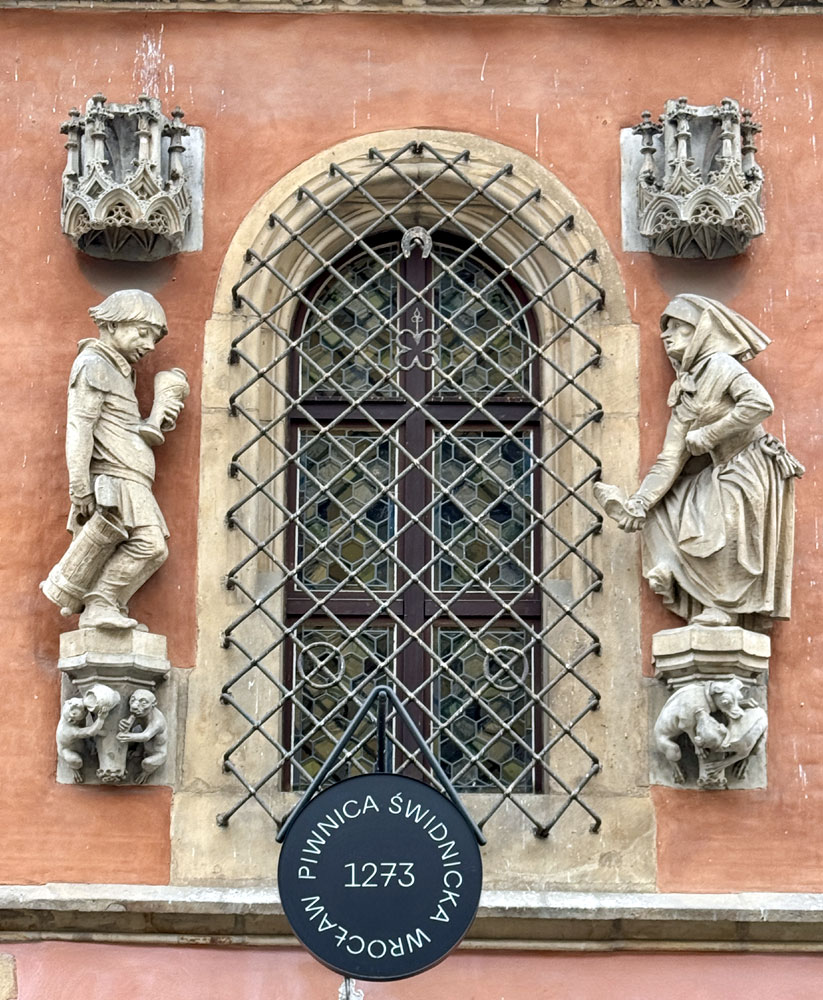
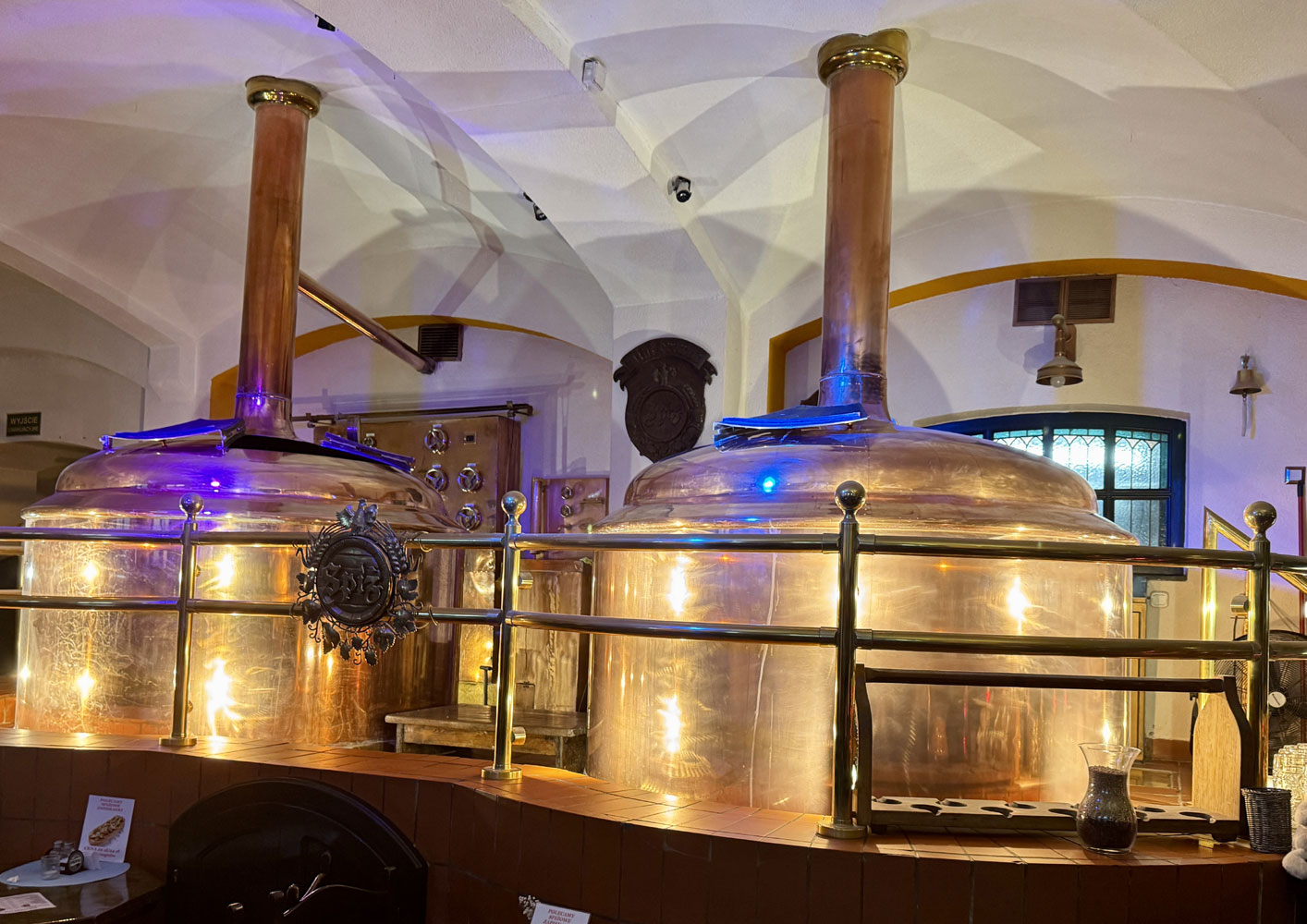
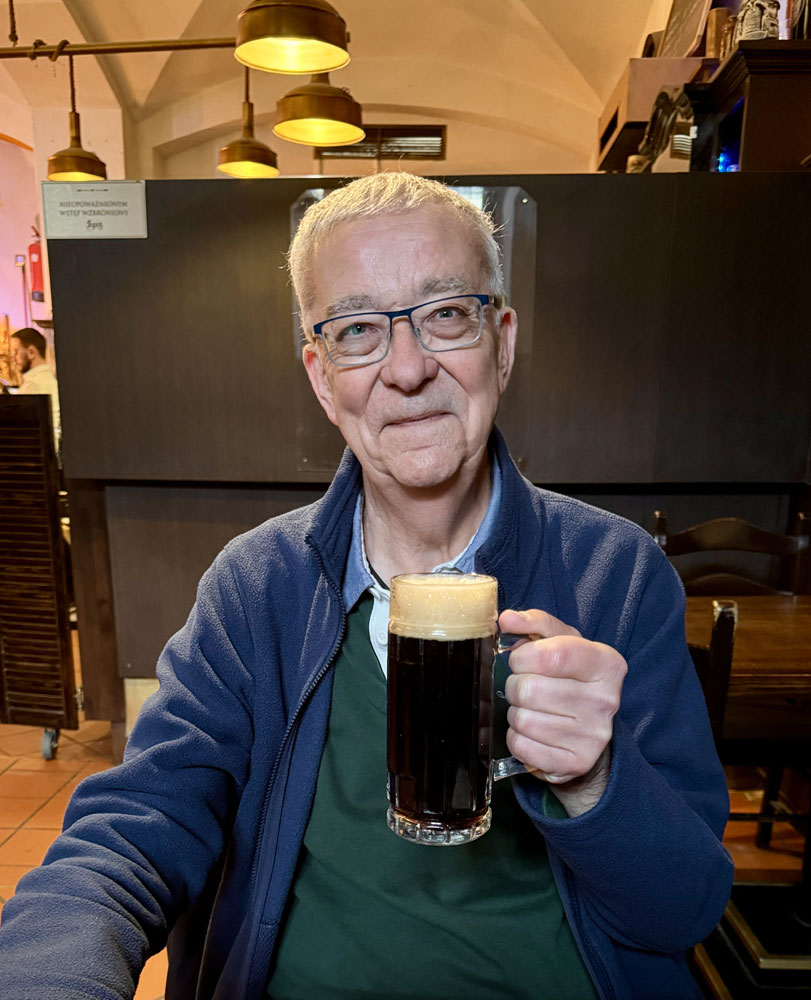
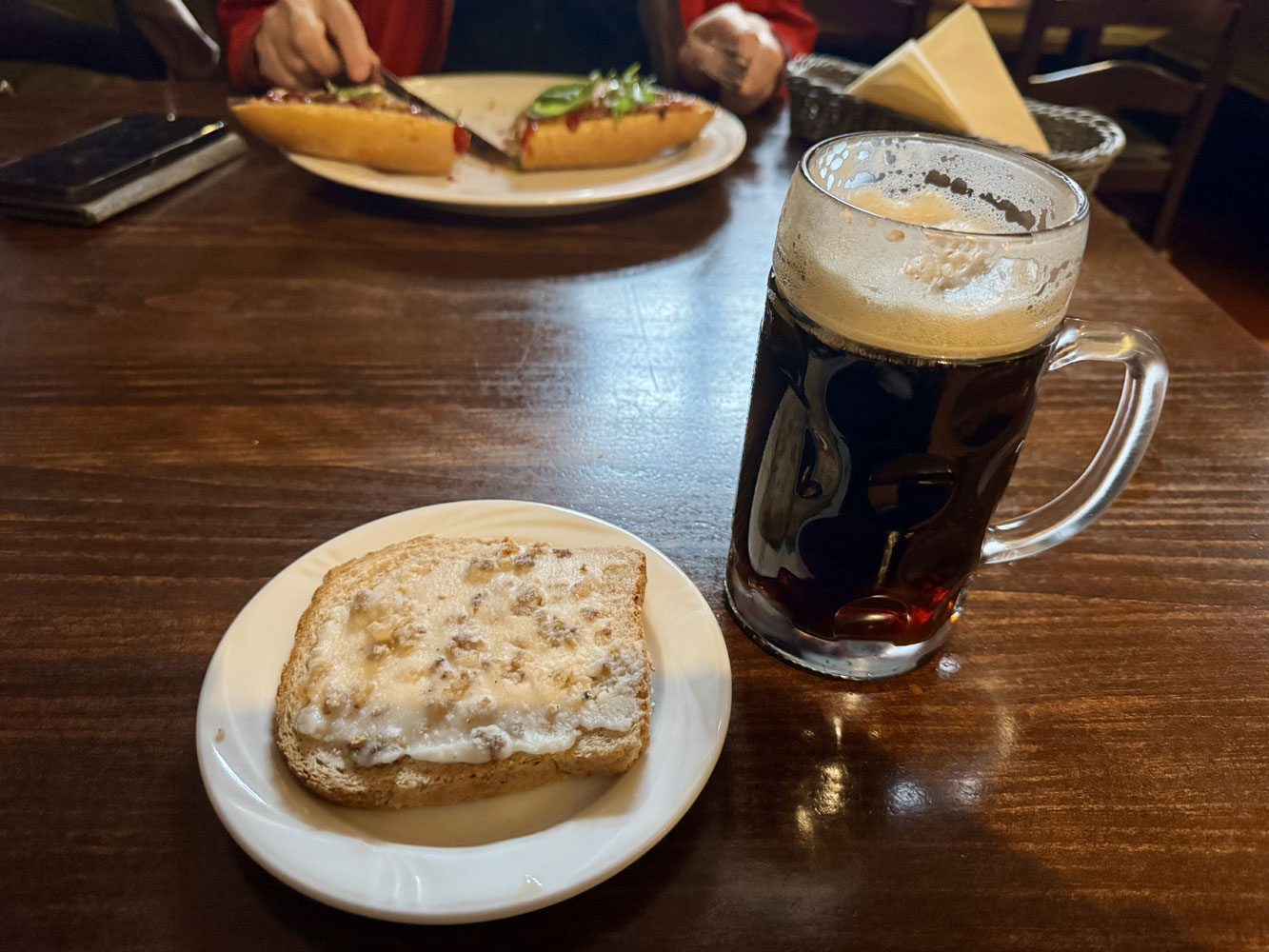
Our guide recommended
that we go downstairs into the Swidnicka
Cellar to sample their beer, served with free bread
and dripping. Geoff decided that he wanted to do that immediately,
so we parted company with the rest of the group. (The walking
tour was about to end anyway.) Bruce was less enthusiastic
because he doesn't drink beer or eat bread with dripping
and furthermore doesn't like dark and dingy pubs... but
he went along with Geoff anyway, because he was keen to
sit down after walking for quite a long time this morning. |
|
|
|
| |
|
| |
Geoff loved the beer
and the bread. Bruce made do with a diet coke and a baguette...
which was served with ketchup inside it... another one of
his dislikes. Nevertheless, he soon got over his slight
grumpiness. |
|
|
| |
|
| |
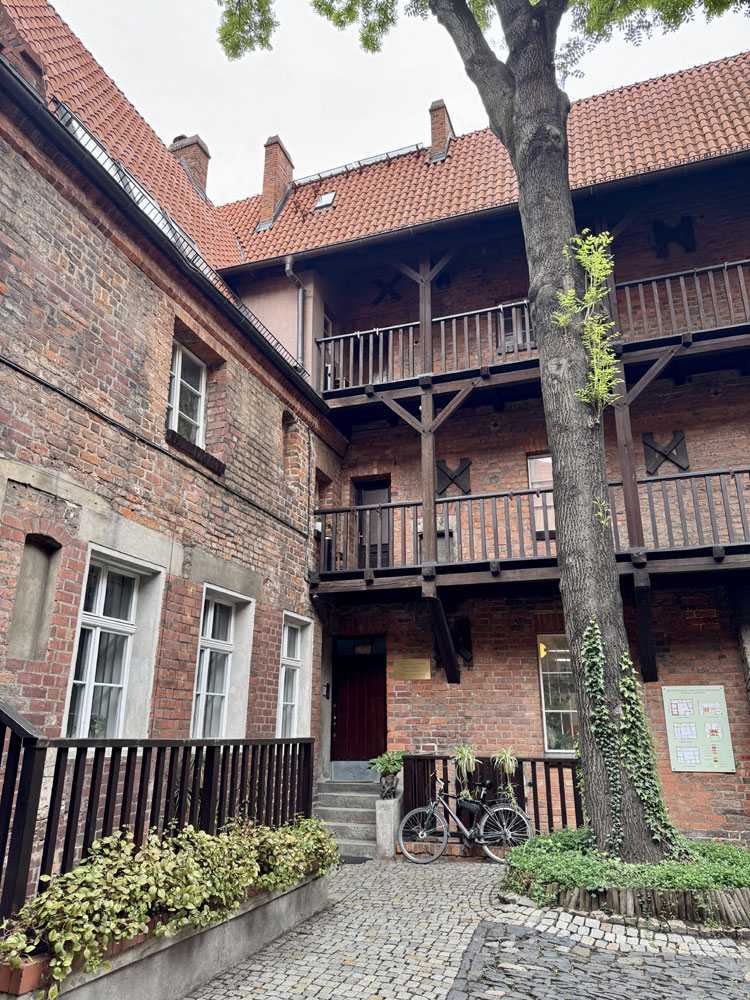
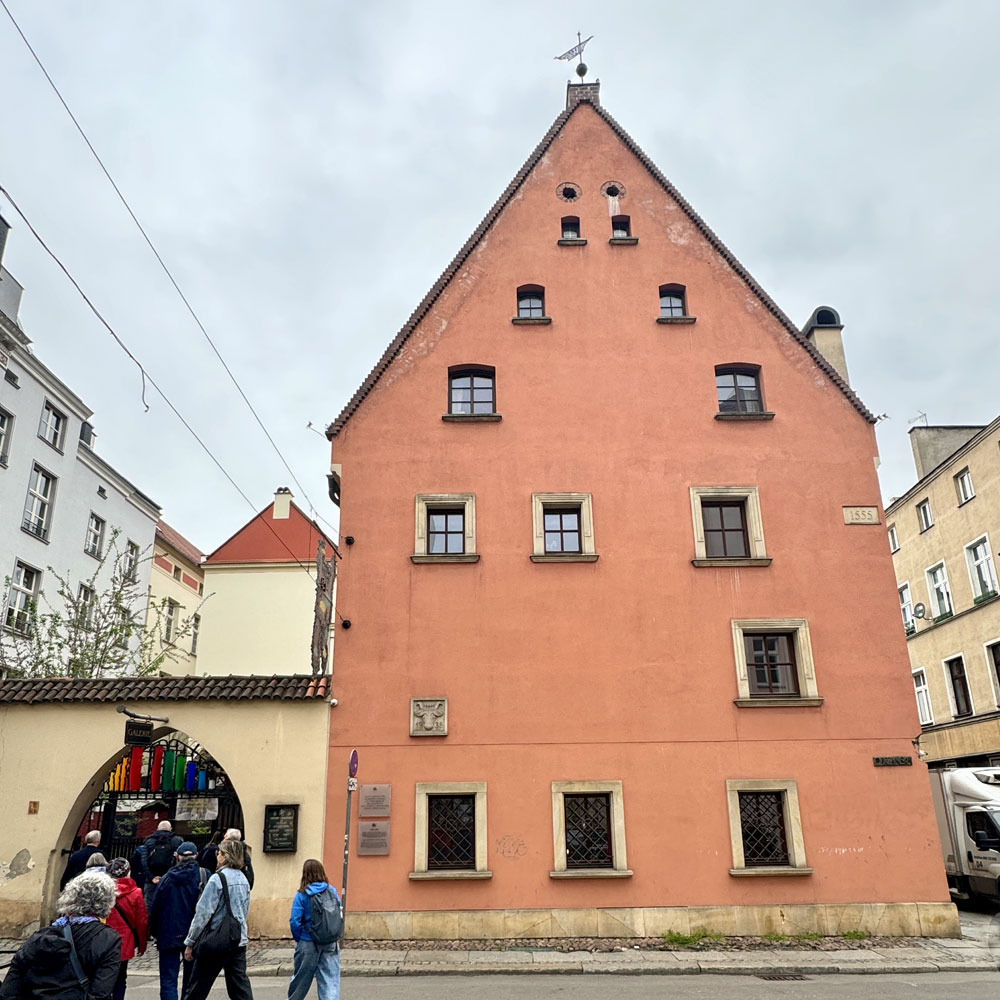
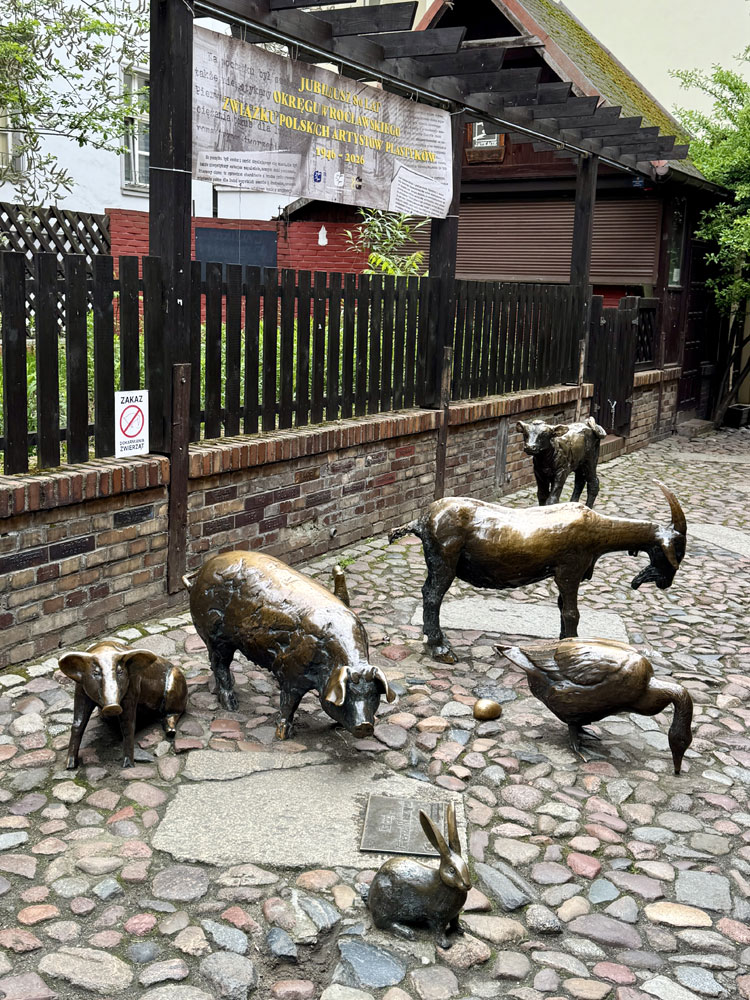
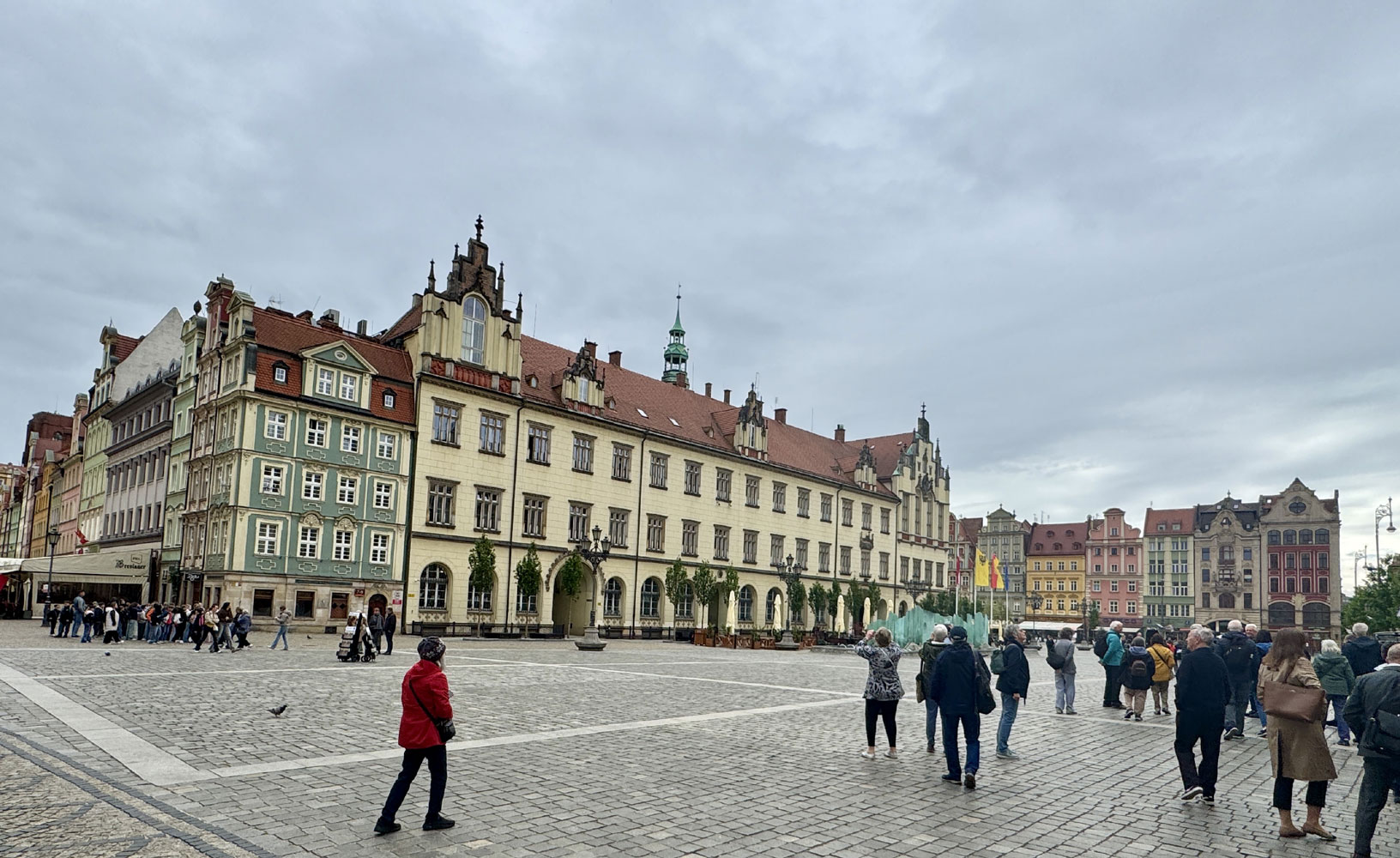
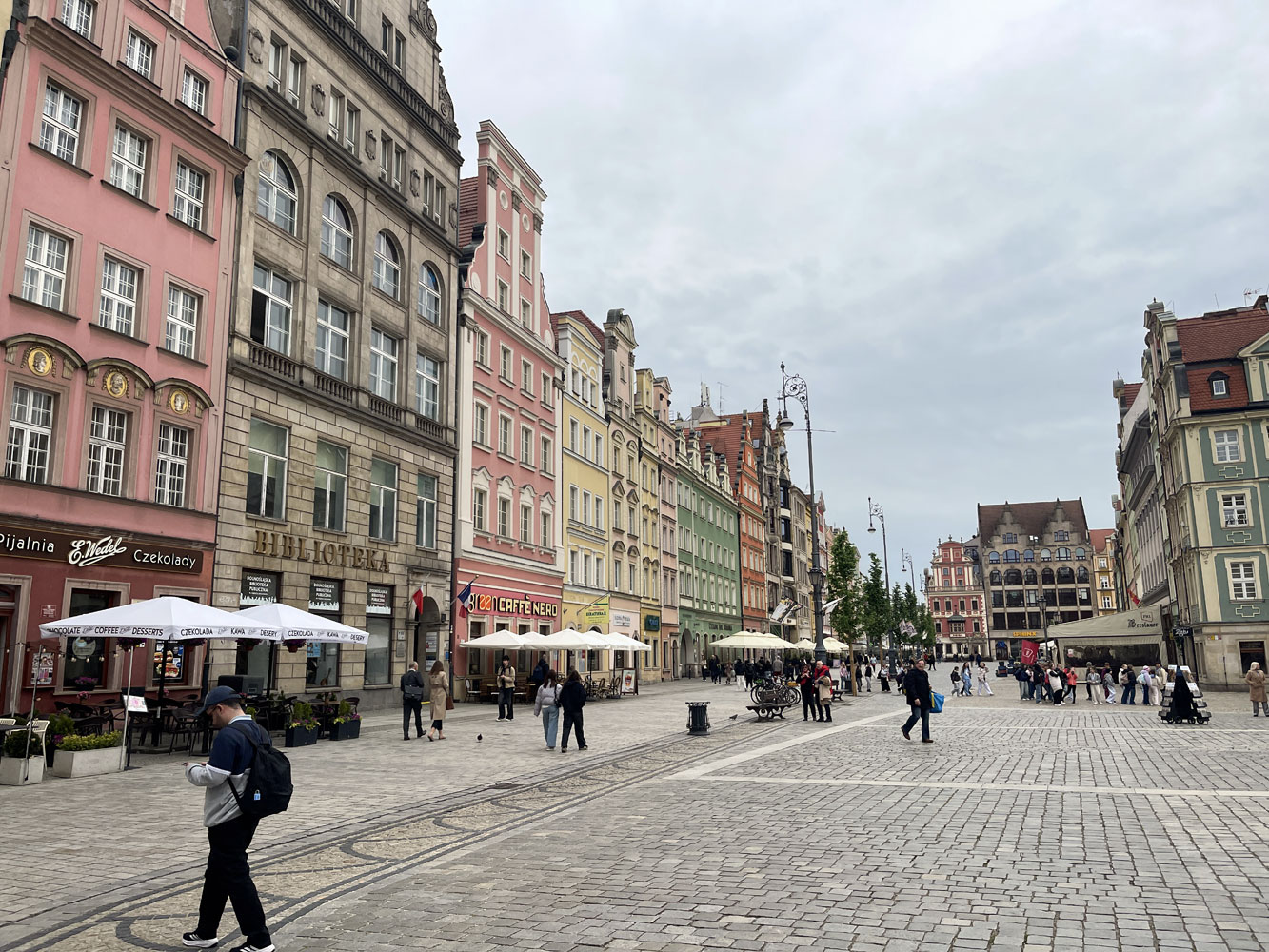
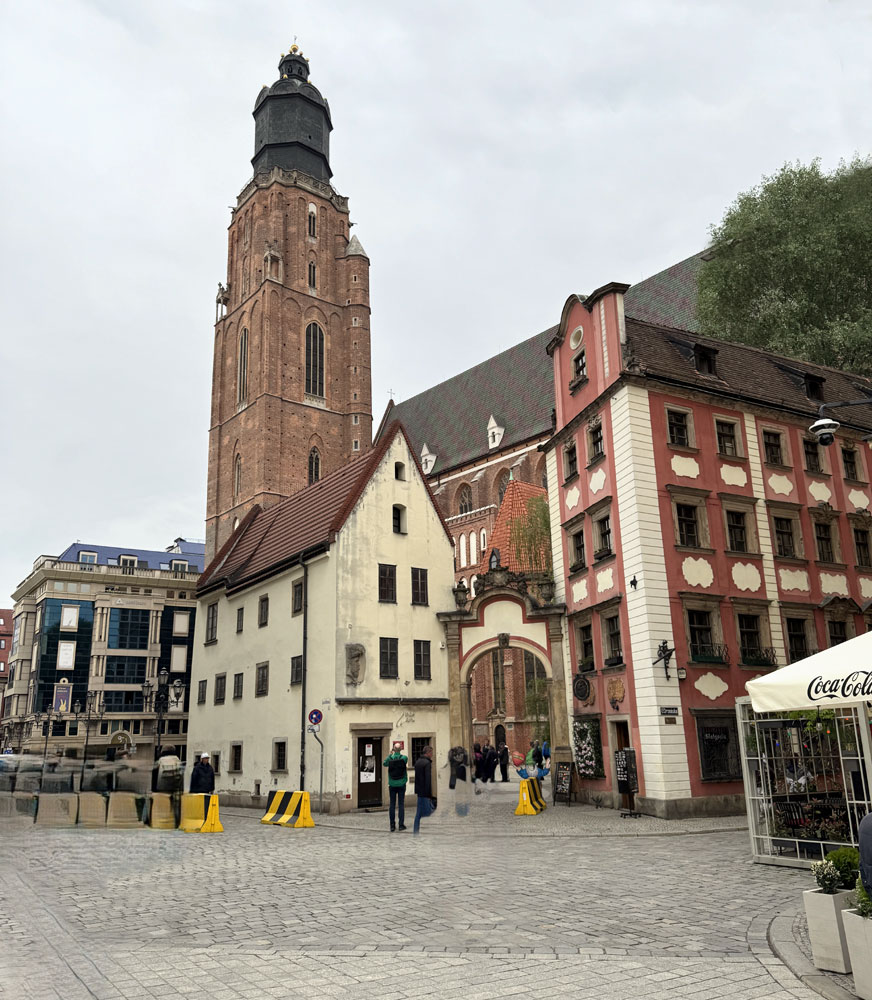
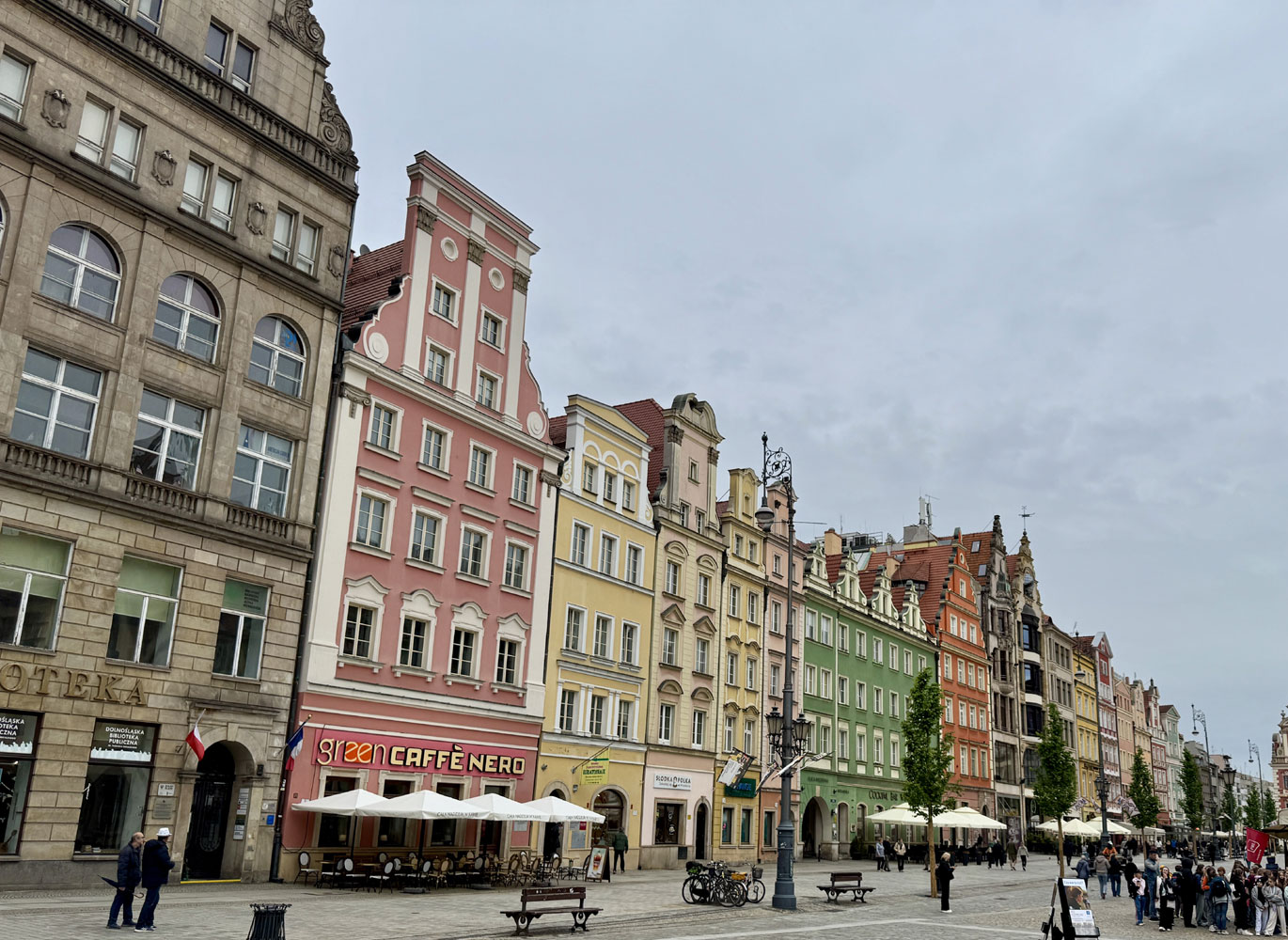
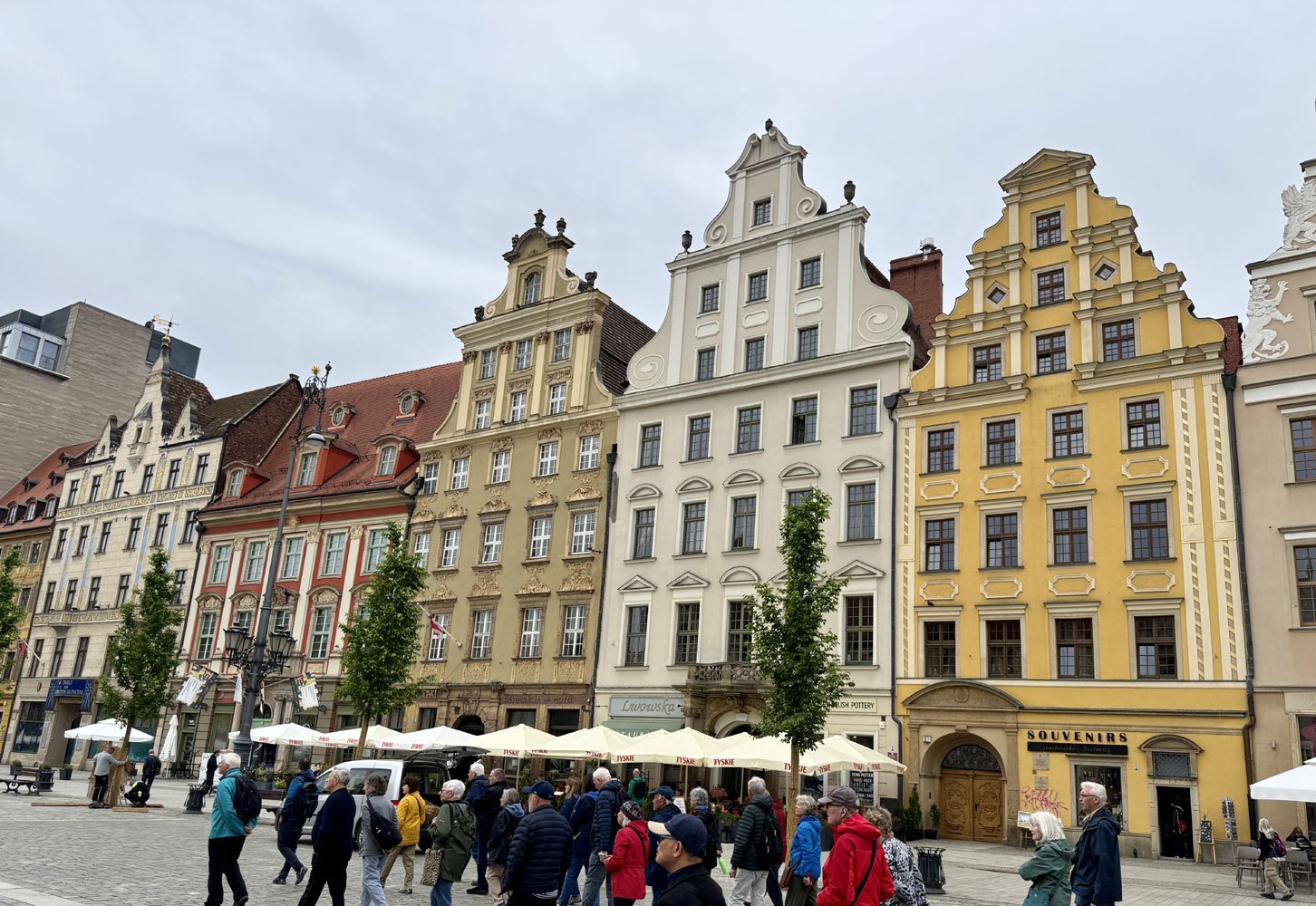
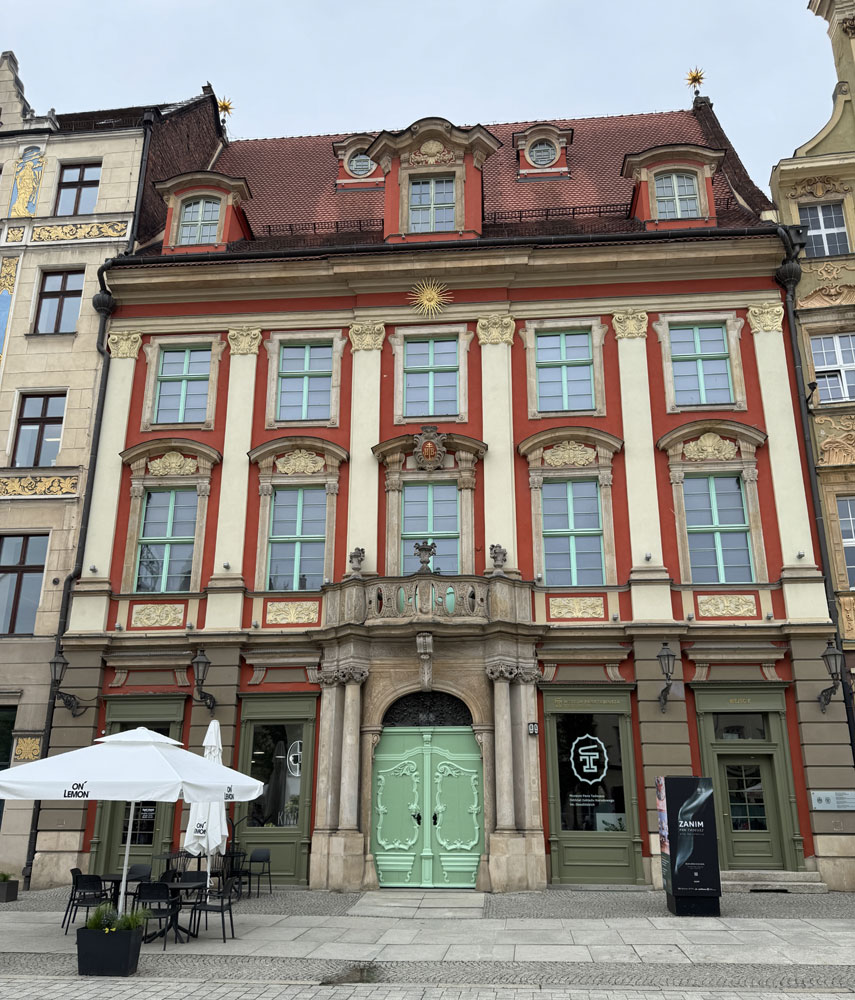
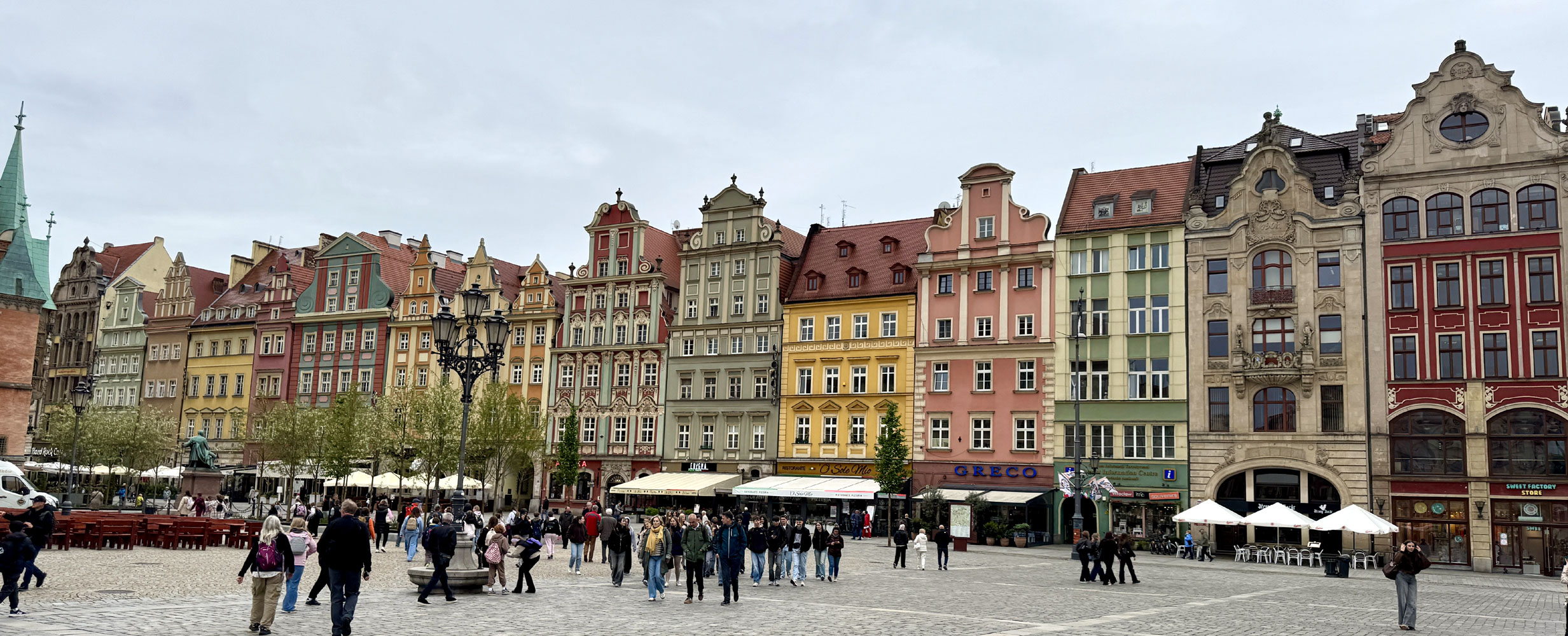
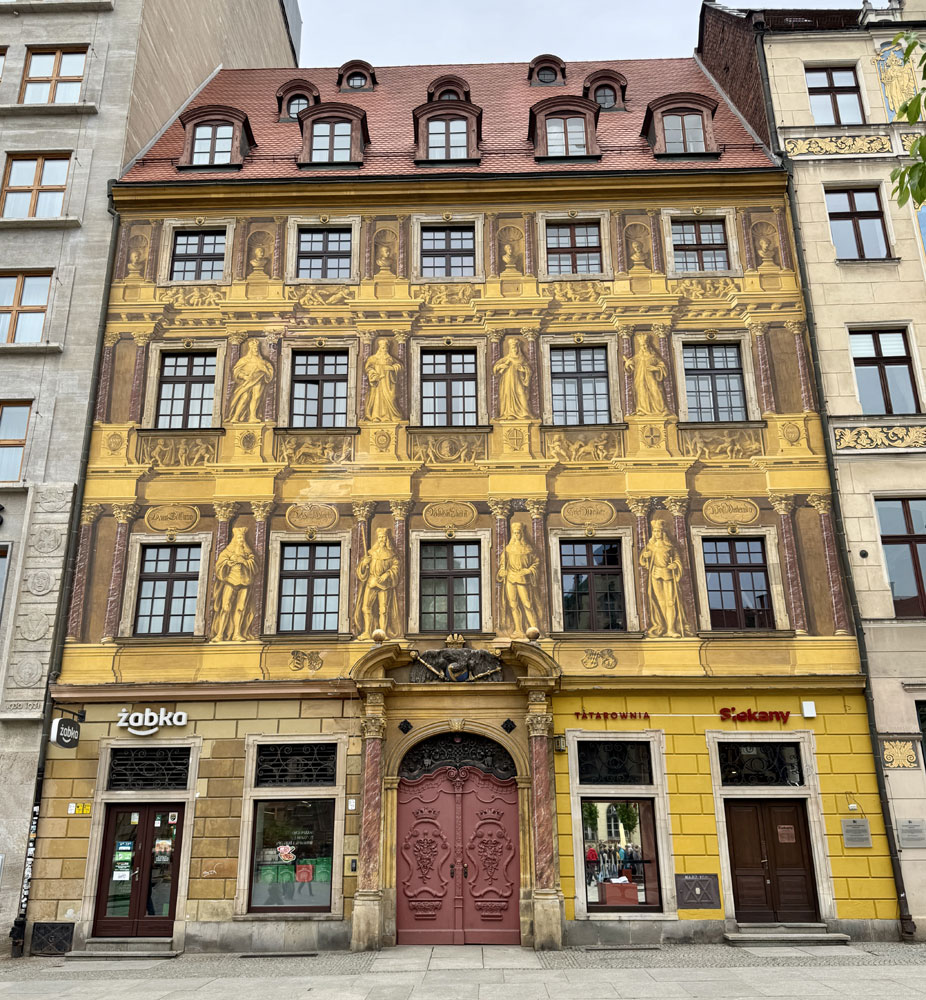
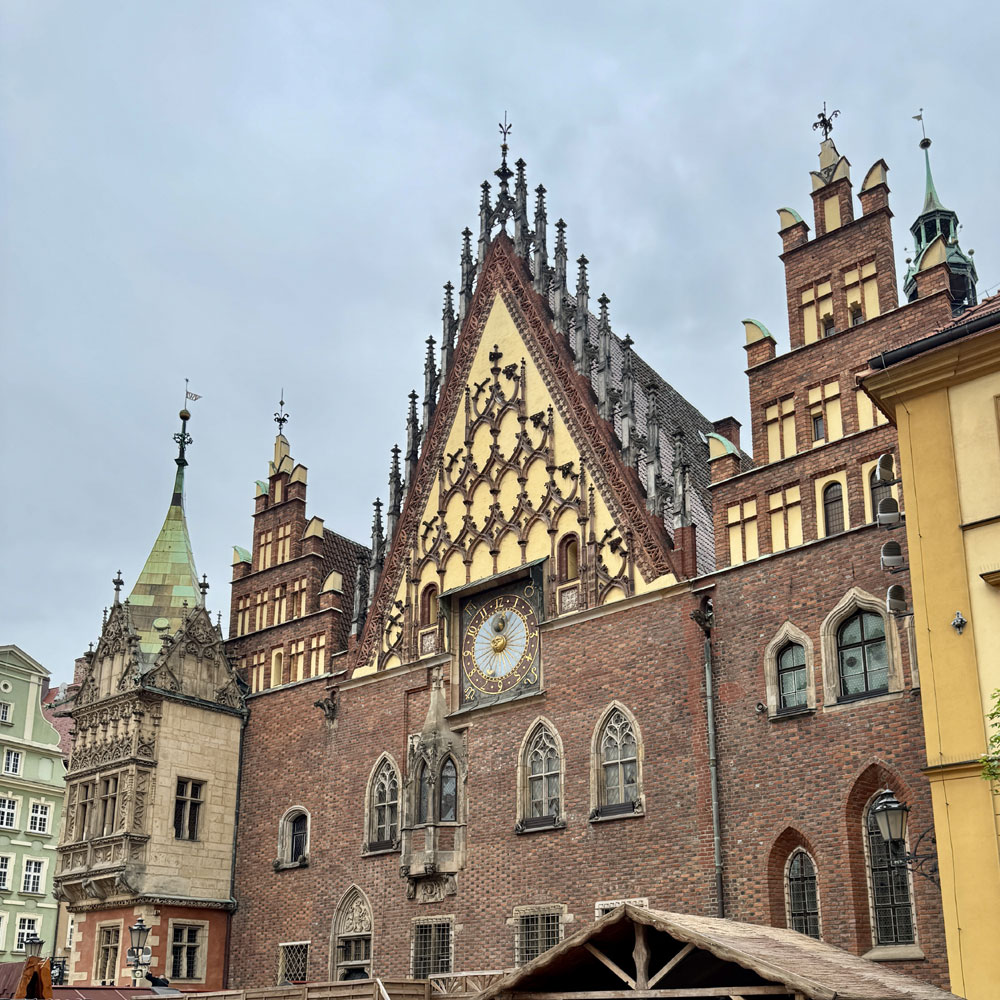
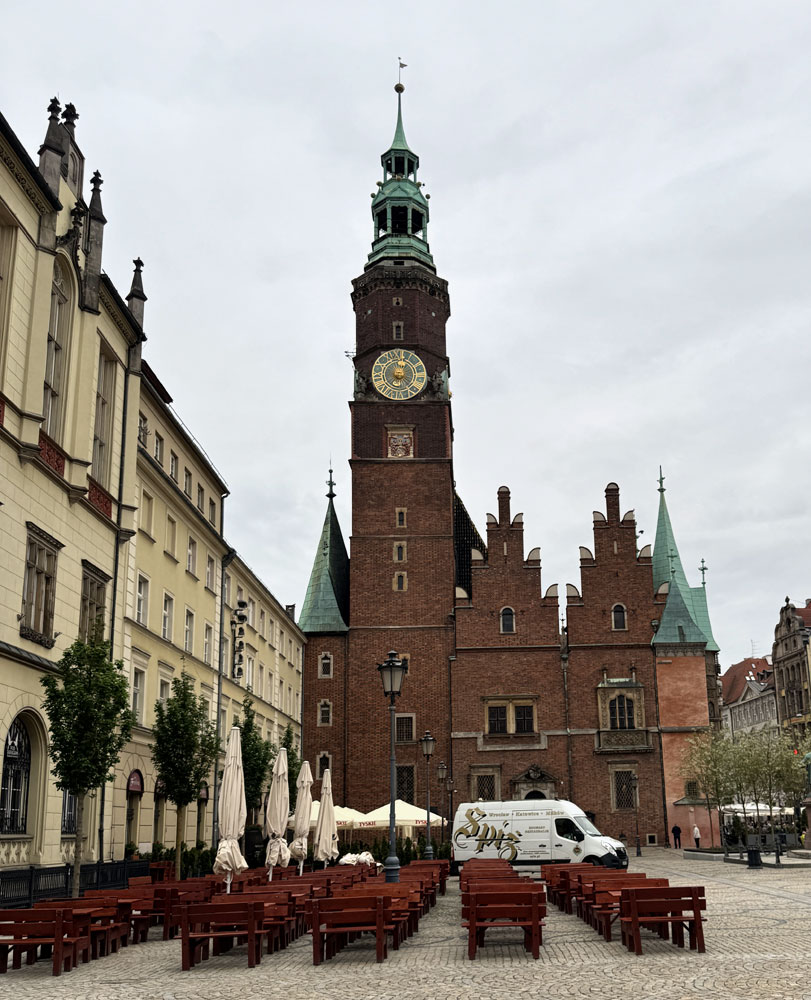
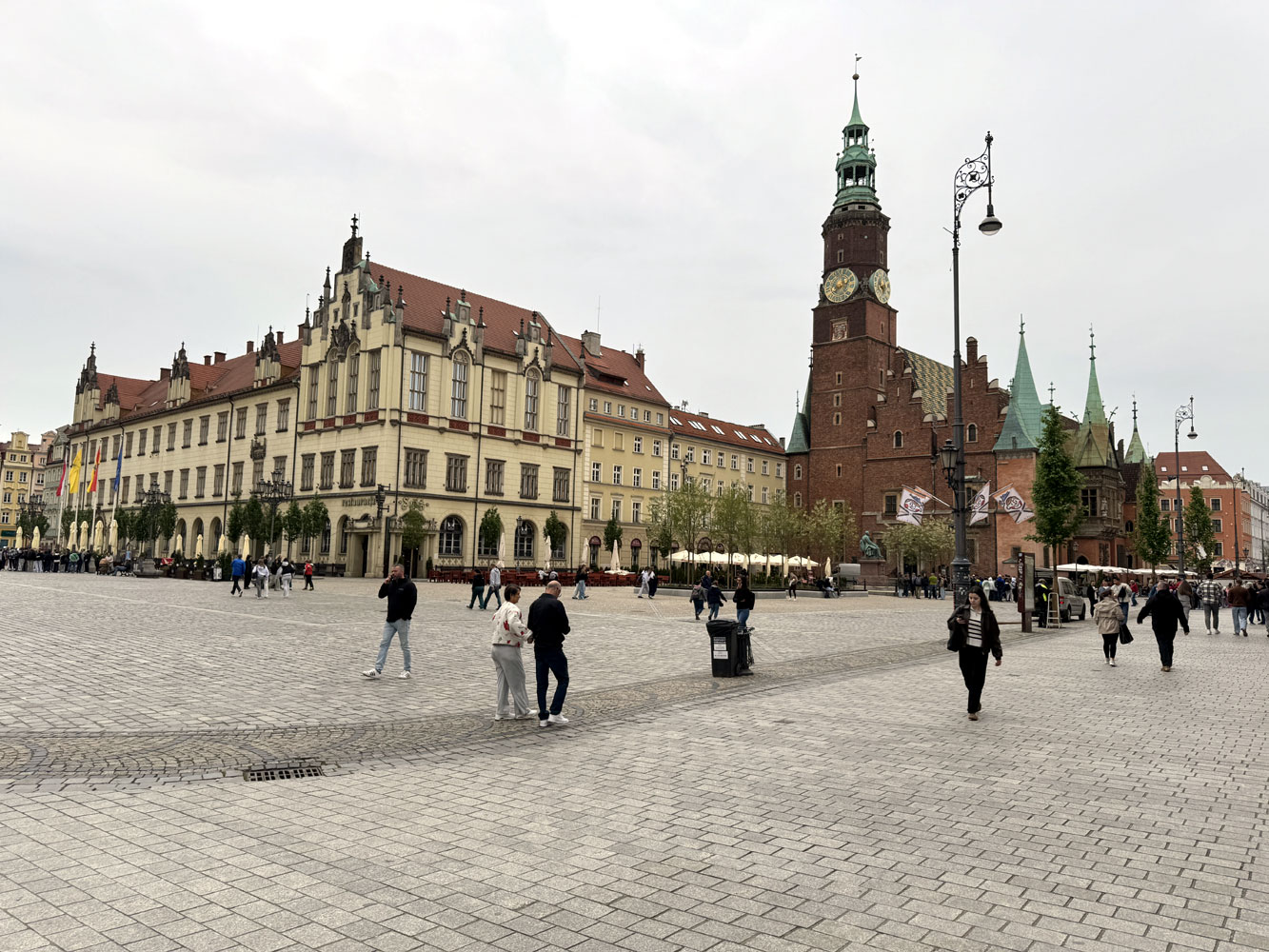
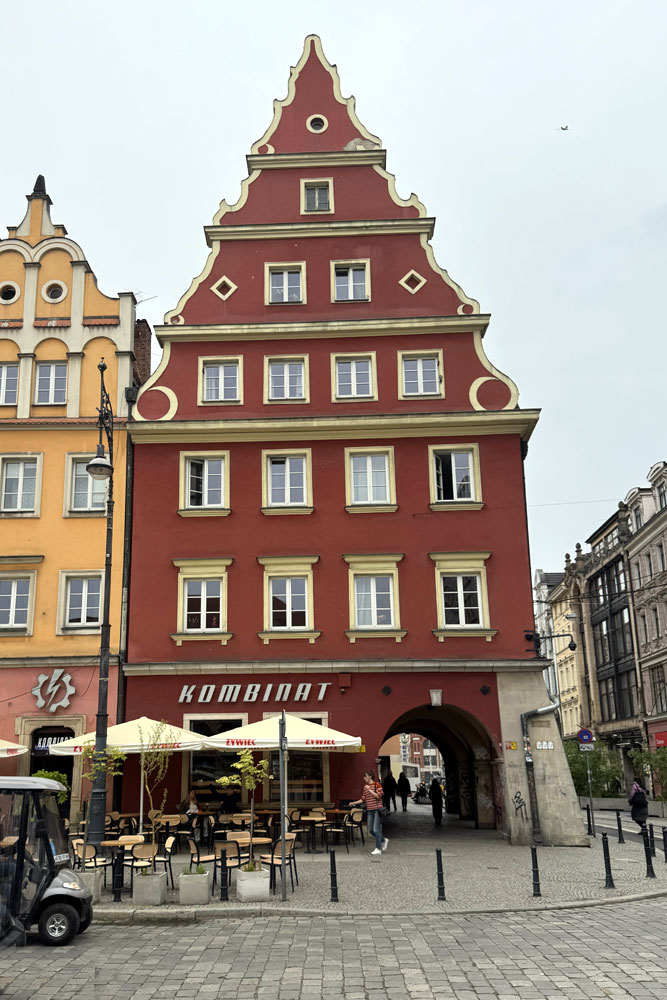
Later, we continued exploring
the square and surrounding areas by ourselves. |
|
|
| |
|
| |
|
|
| |
|
| |
|
|
| |
|
| |
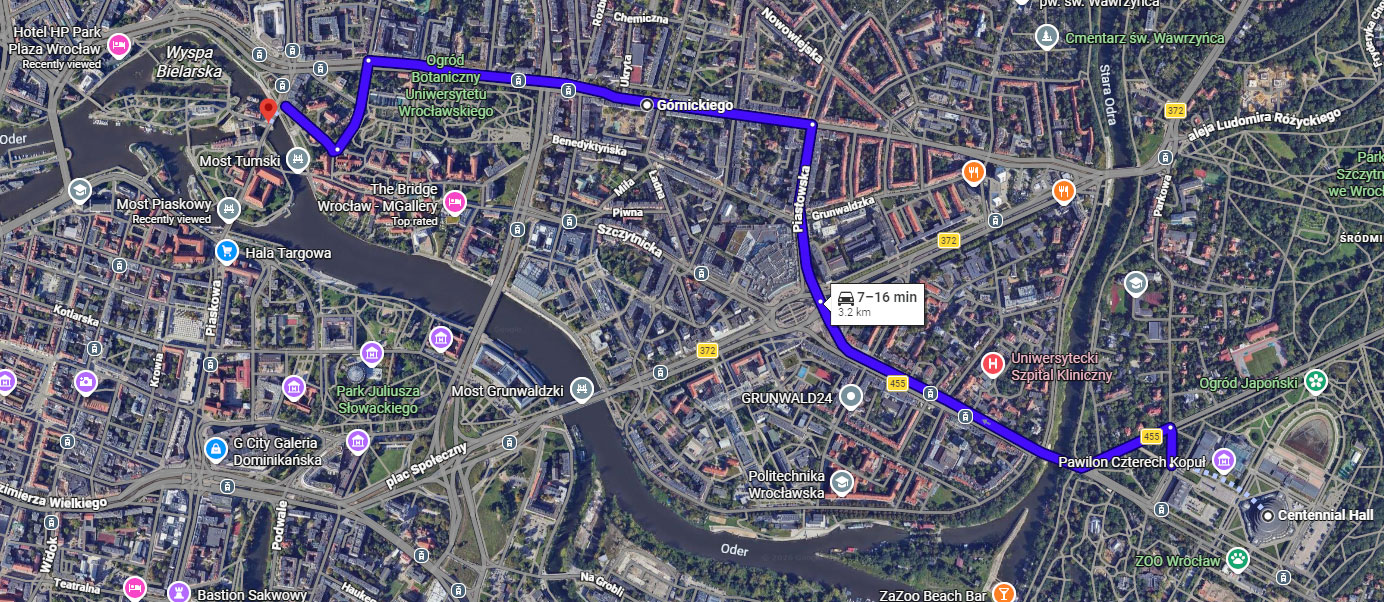
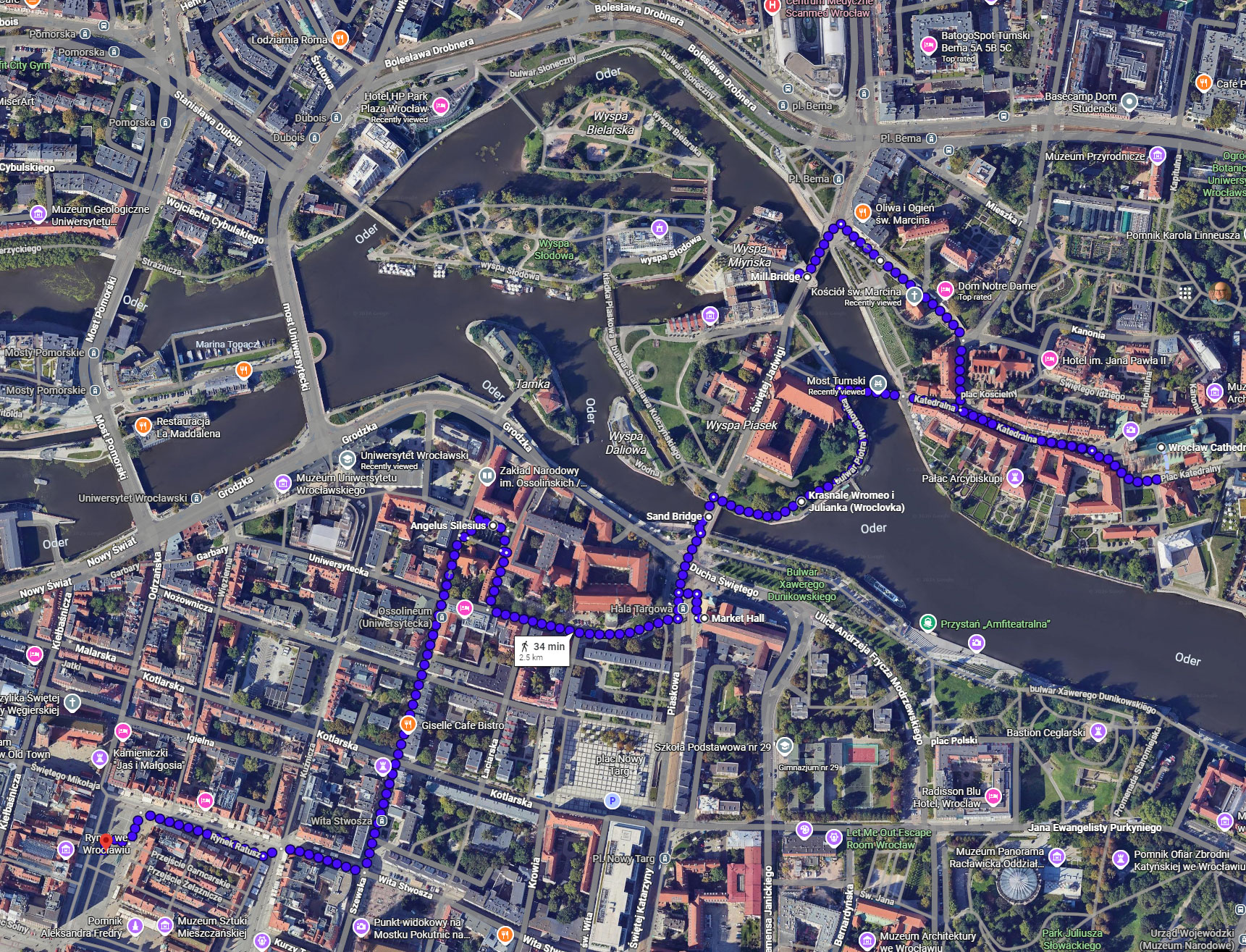
This is the extent of
the guided walk we did, from the time the coach dropped
us off at Mill Bridge, until we reached the amazing Market
Square. Our hotel, the HP Park Plaza, can also be seen in
this image (top, centre left). Click on the image to get
a larger one and then expand it fully to see more detail. |
|
|
| |
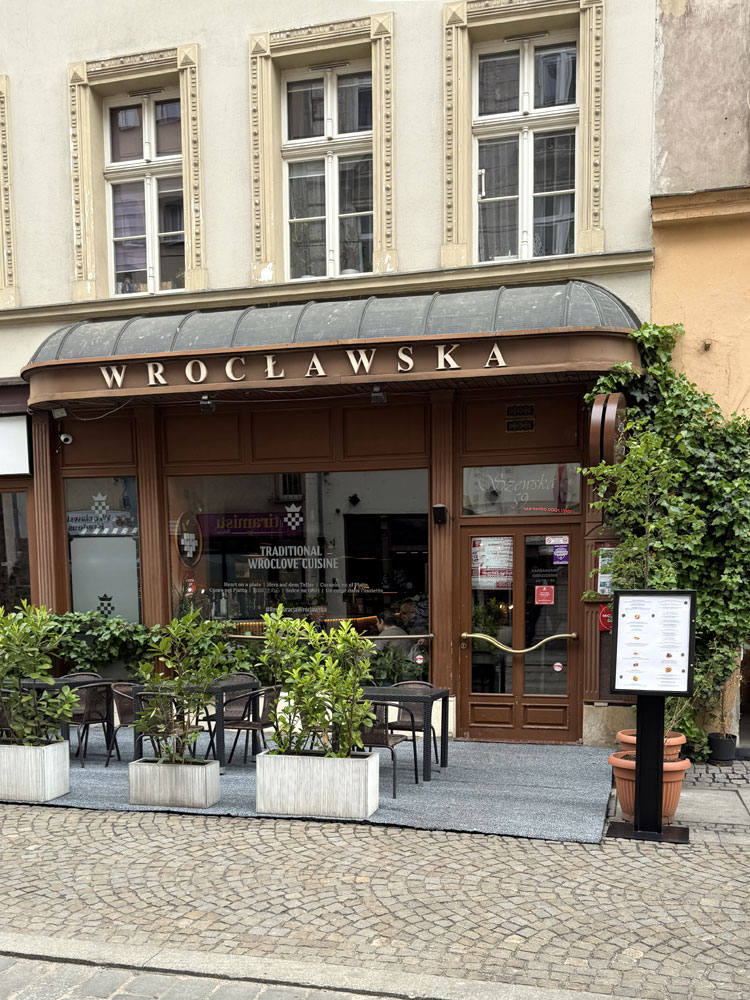
We returned to the hotel
for a rest mid-afternoon. Geoff had done some research on
local restaurants before we arrived and had booked a table
at the Michelin rated Wroclawska
Restaurant this evening. He had clearly done his homework
well, because the food was amazing! |
|
|
|
| |
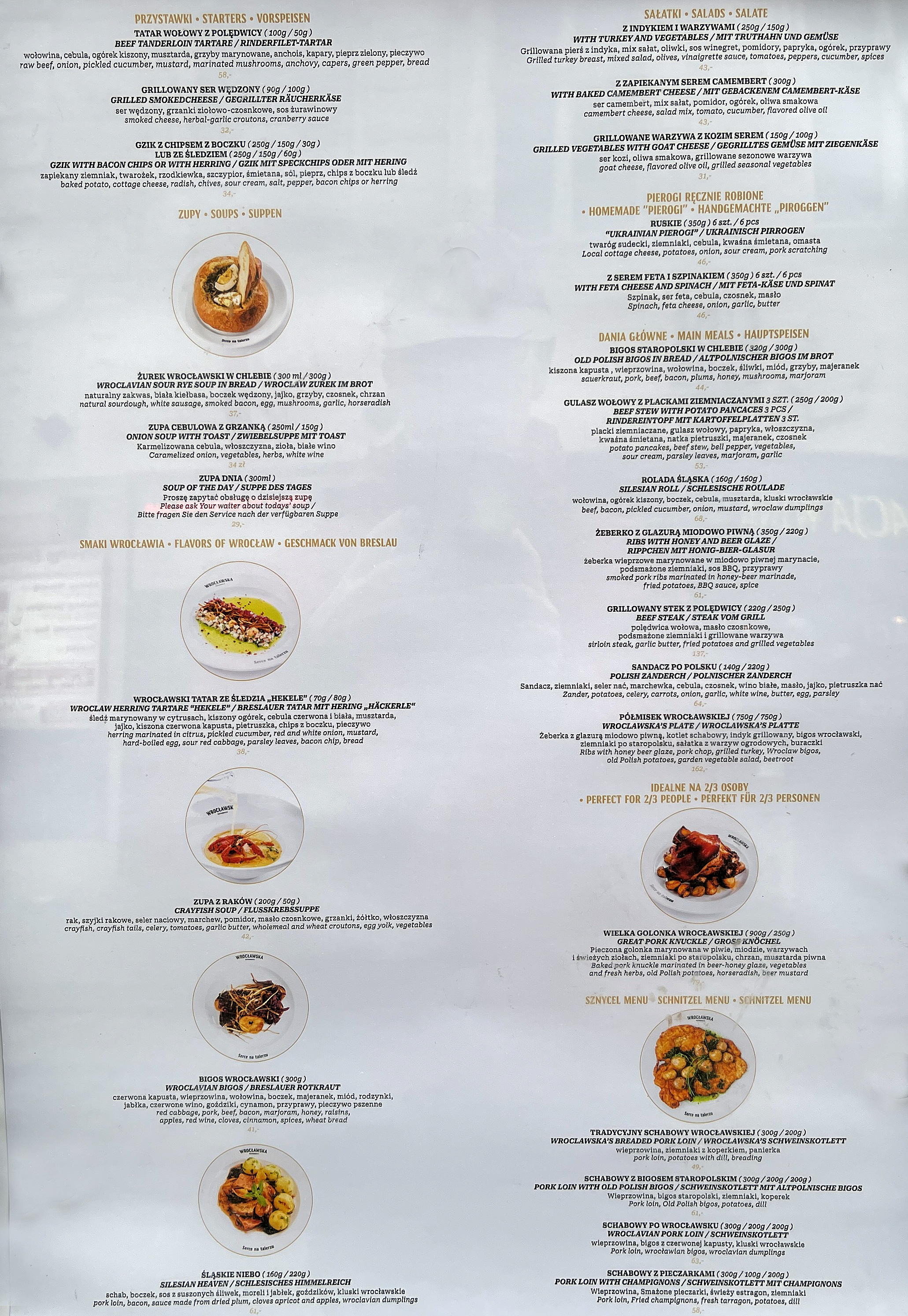
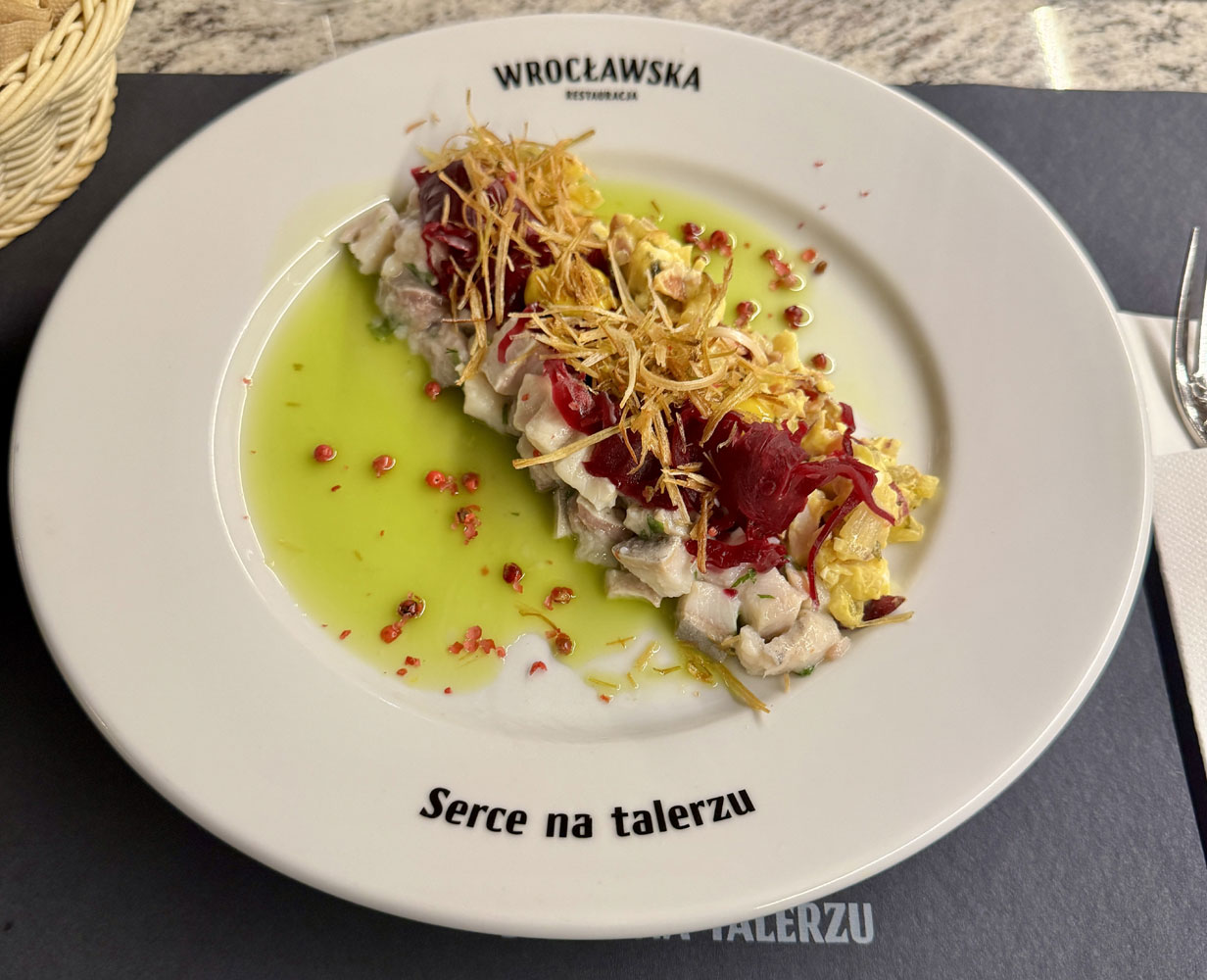
Geoff had the herring,
marinated in citrus with pickles, egg, mustard, bacon &
bread. Paired with a Riesling. |
|
|
| |
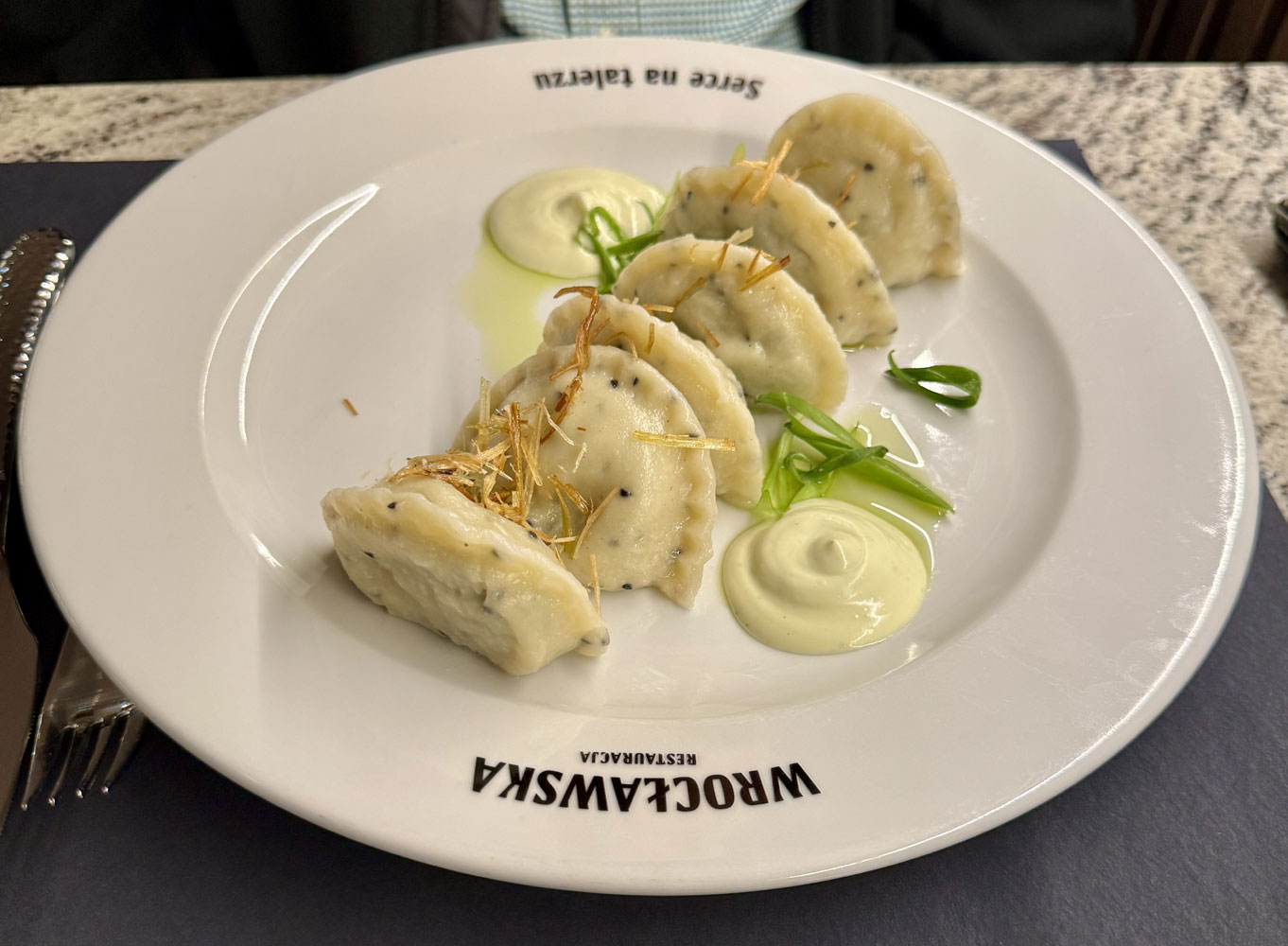
Bruce's starter was cheese
perogi, served with a Polish white wine. |
|
|
| |
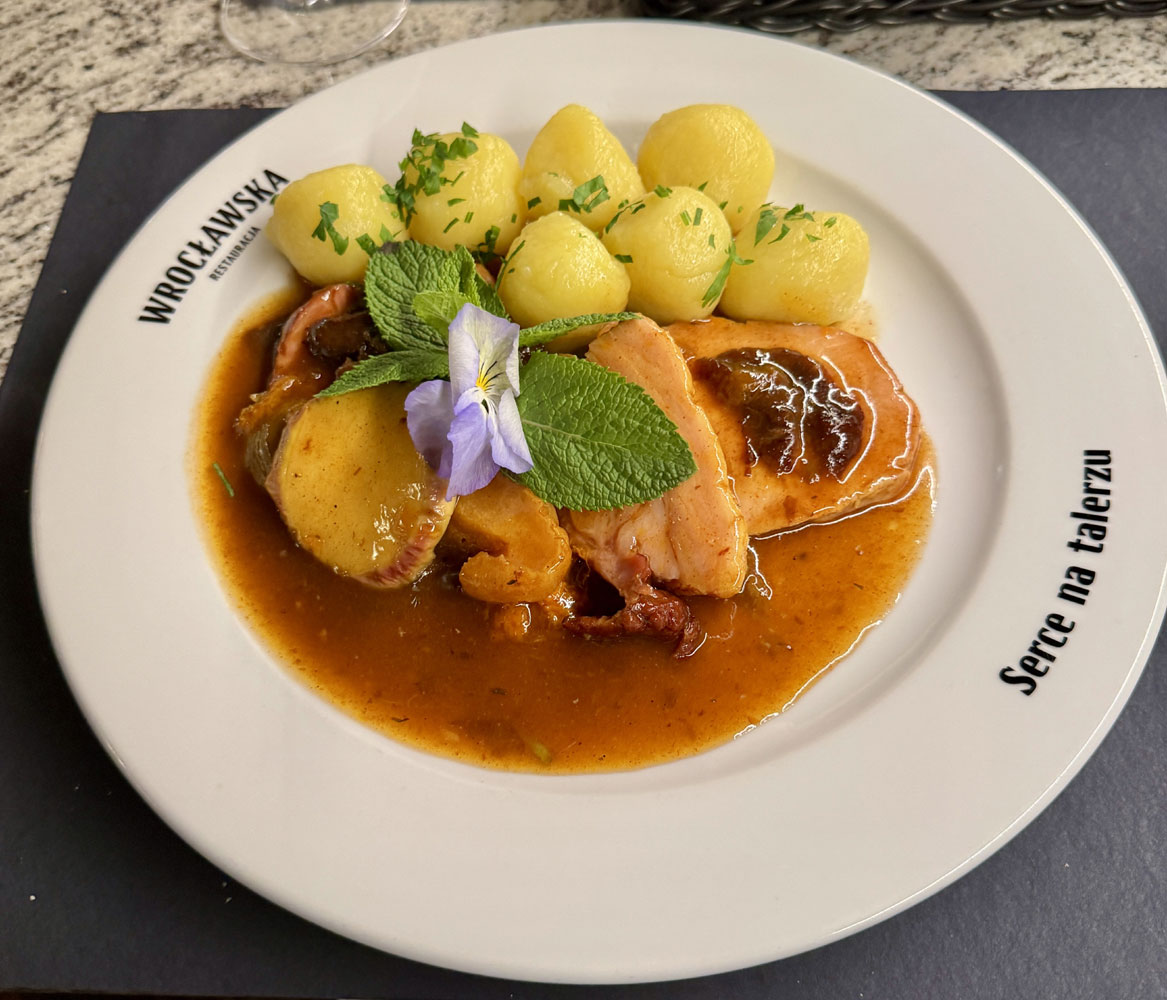
Silesian heaven - pork
loin, sauce made from dried plum, apricot, apples and cloves,
Wroclavian dumplings. Paired with a semi-dry red. This was
Geoff's main course. |
|
|
| |
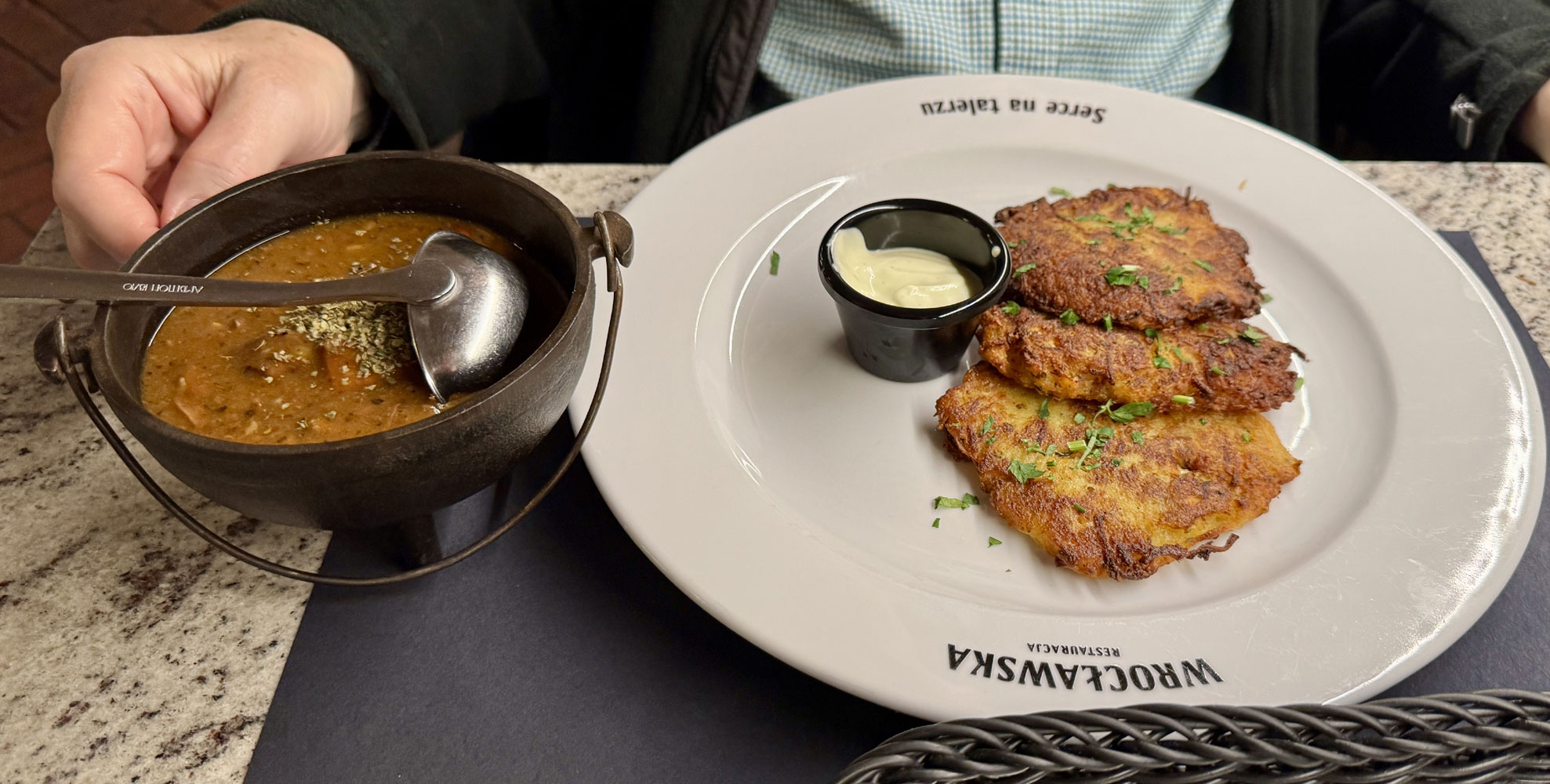
Bruce had the goulash
with potato pancakes, served with a rich Polish red wine. |
|
|
| |
|
| |
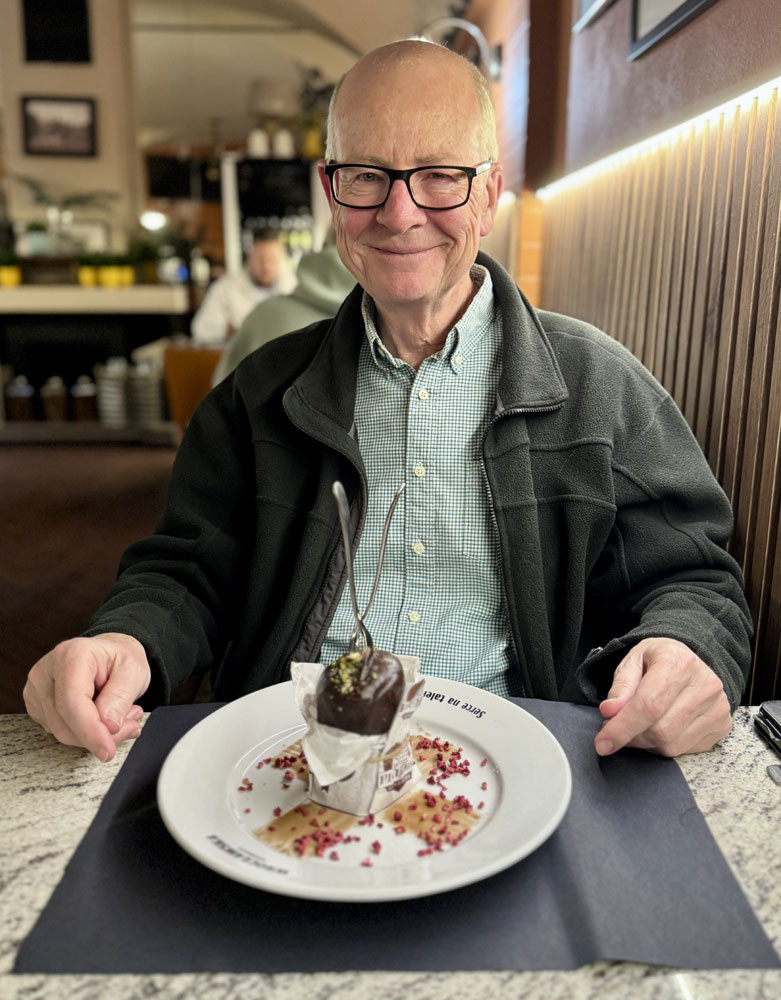
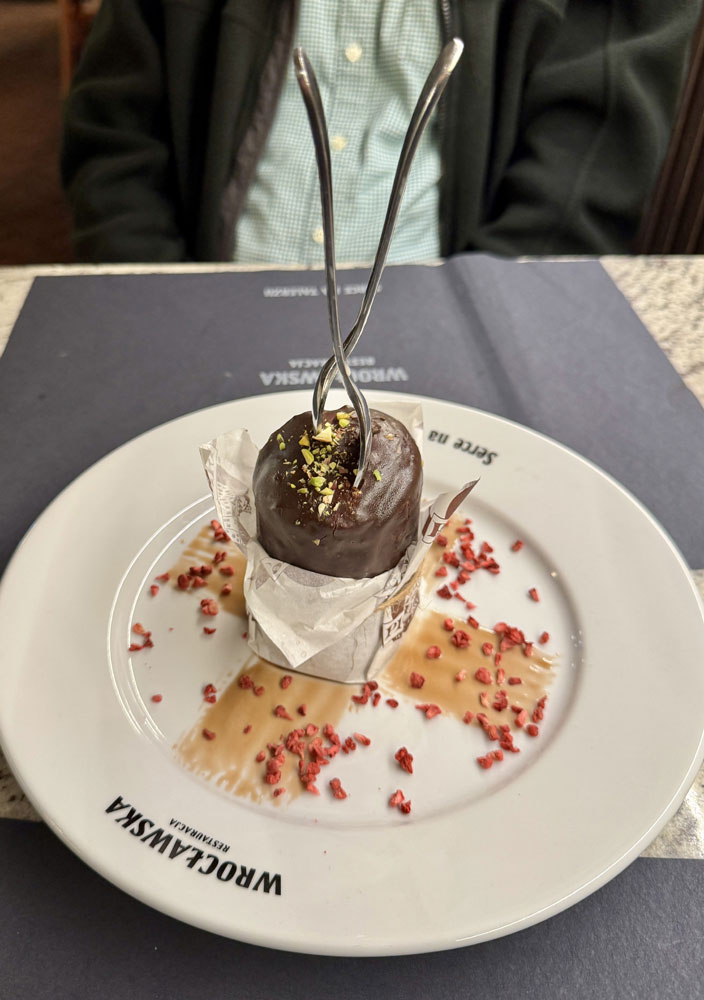
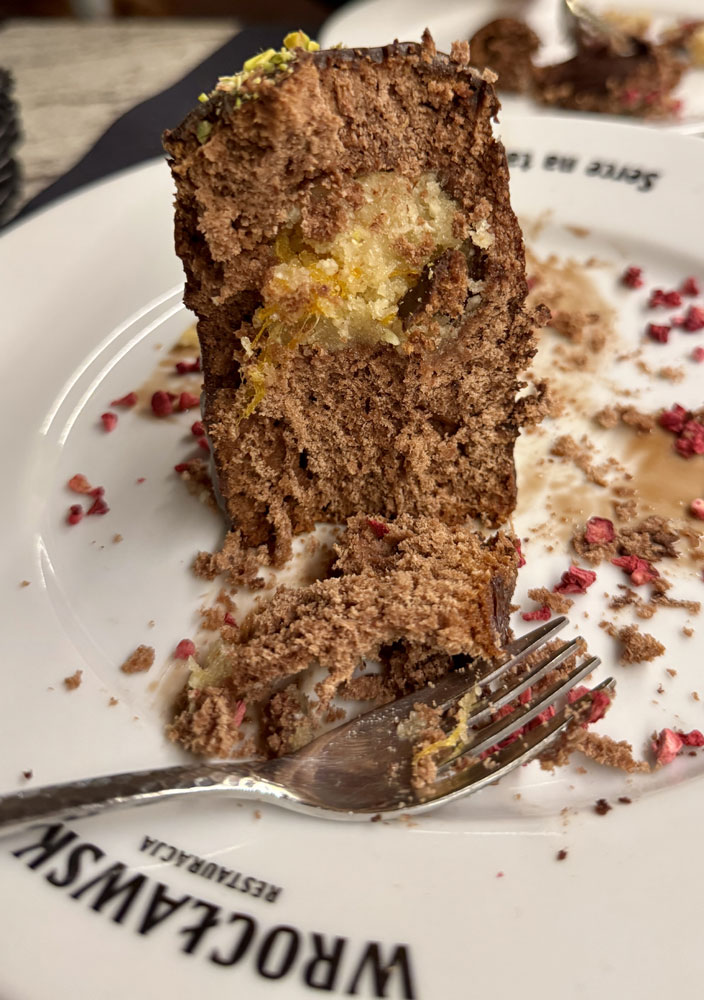
Gingerbread with marzipan
for dessert, which we shared. |
|
|
|
| |
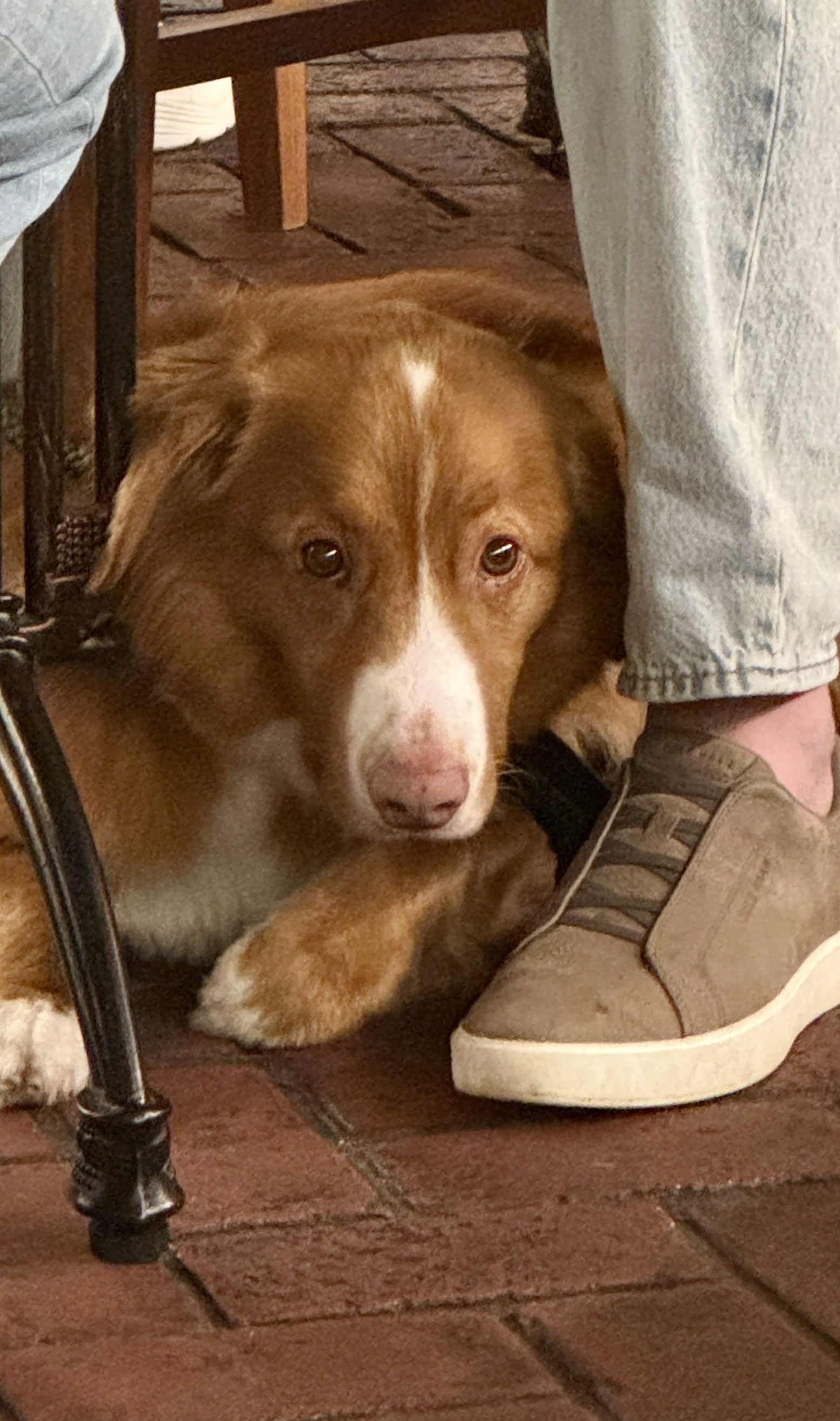
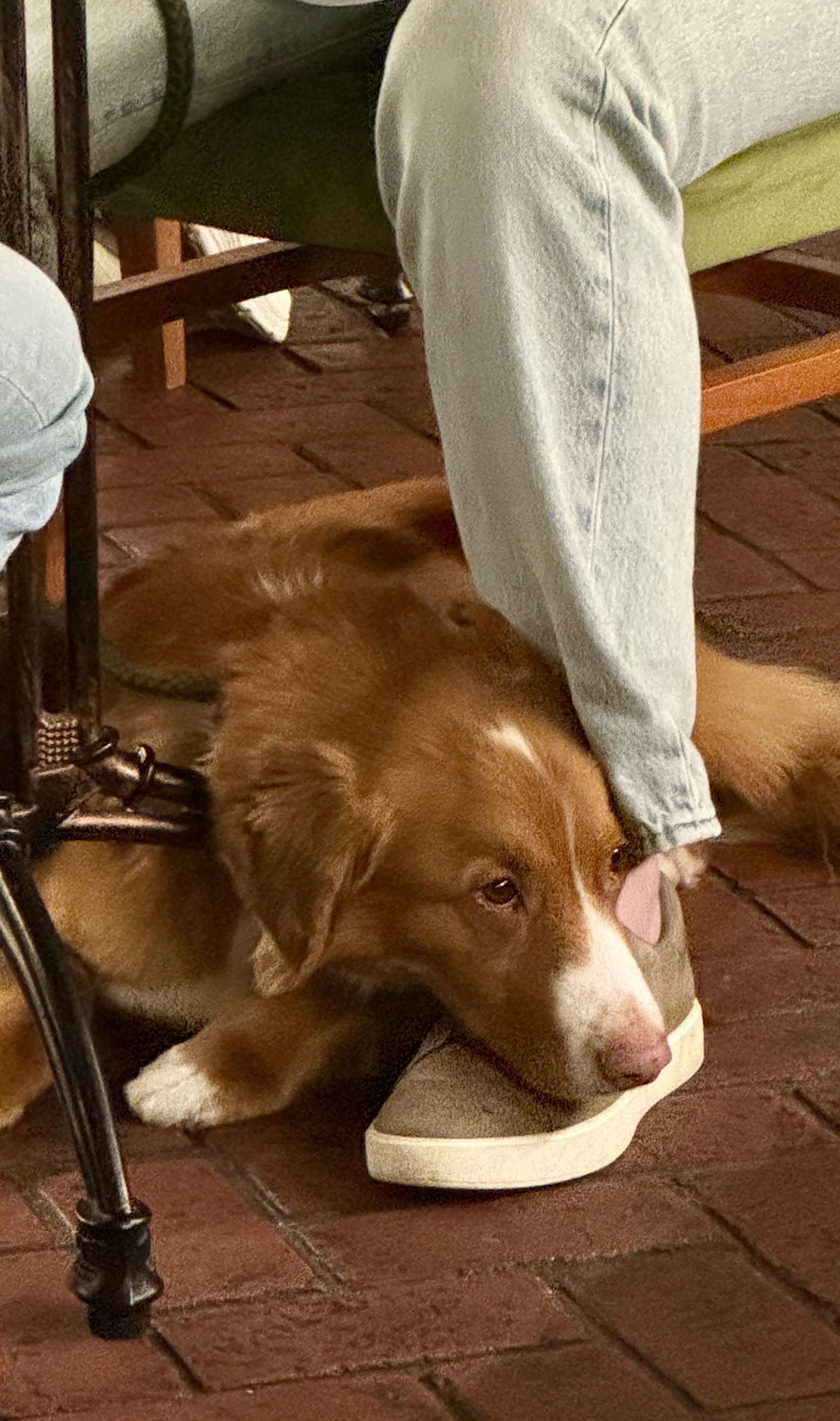
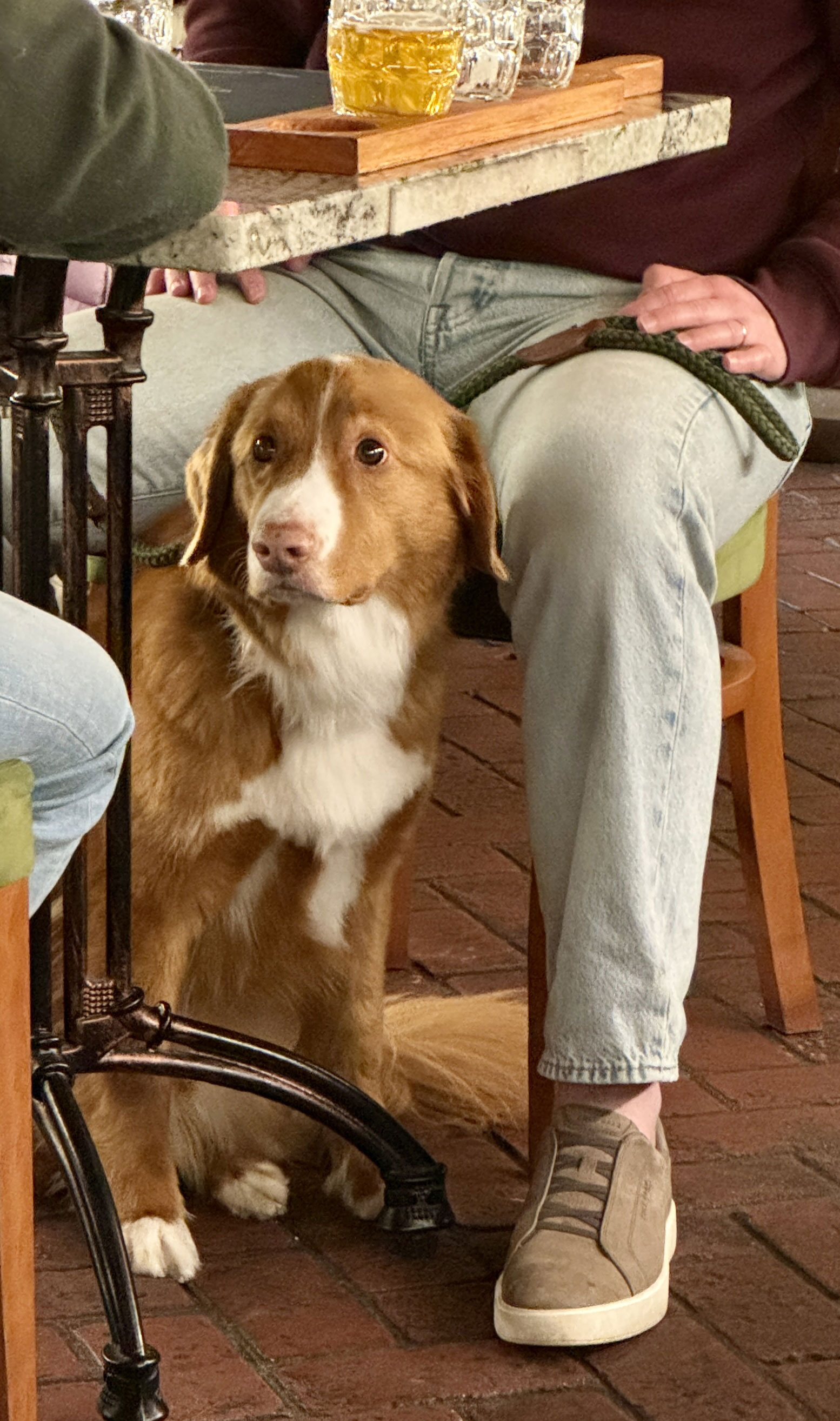
A fellow diner brought
his dog to the restaurant. It was the most beautiful dog
we have ever seen... and so well behaved too! |
|
|
| |
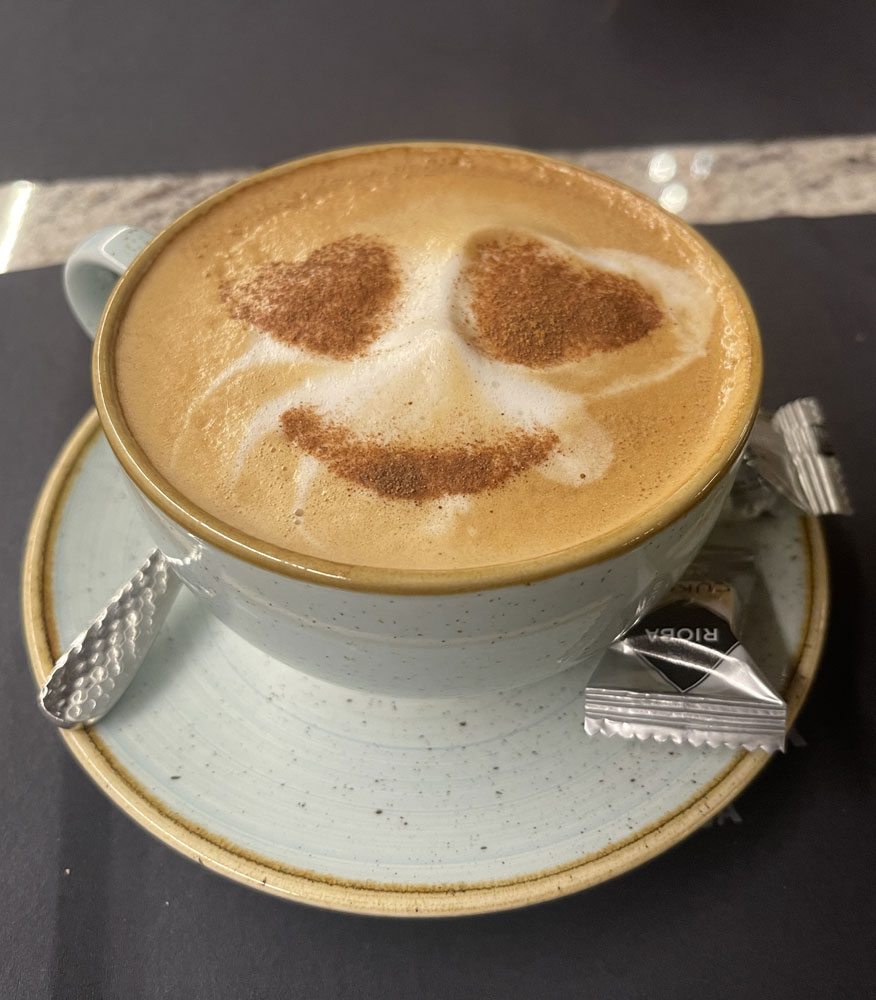
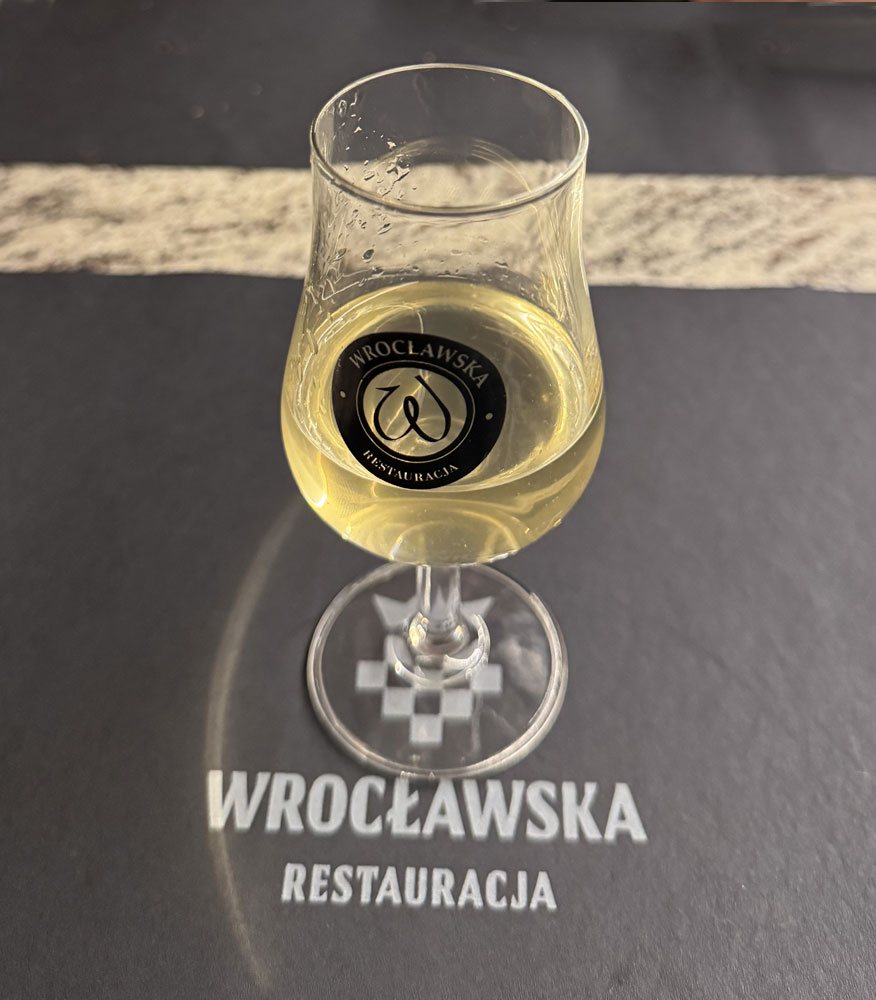
Cappuccino for Bruce,
sea buckthorn schnapps for Geoff. |
|
|
|
| |
It was still light when
we left the restaurant and the grey skies, which has persisted
for most of the day, had disappeared. |
|
|
| |
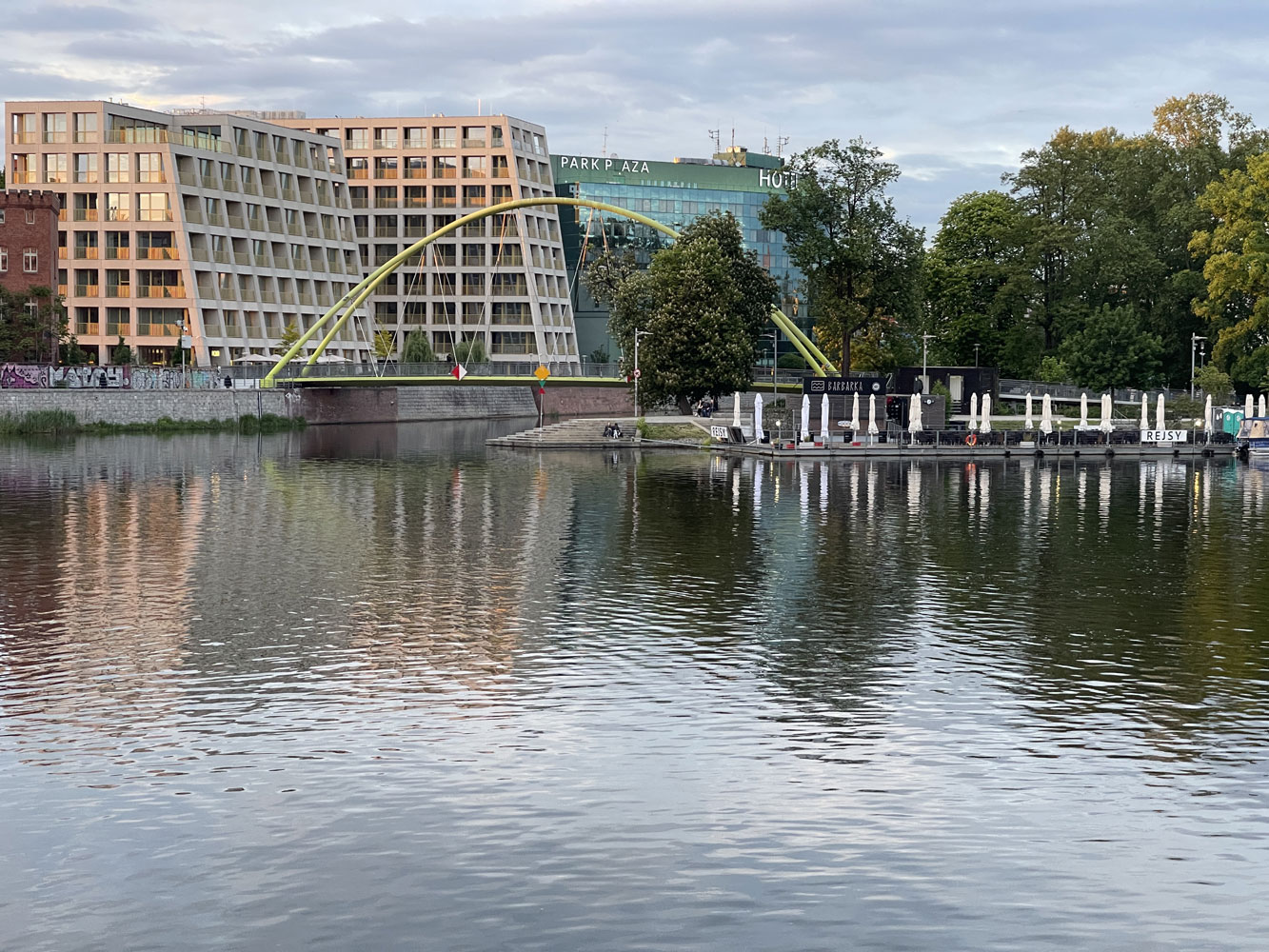
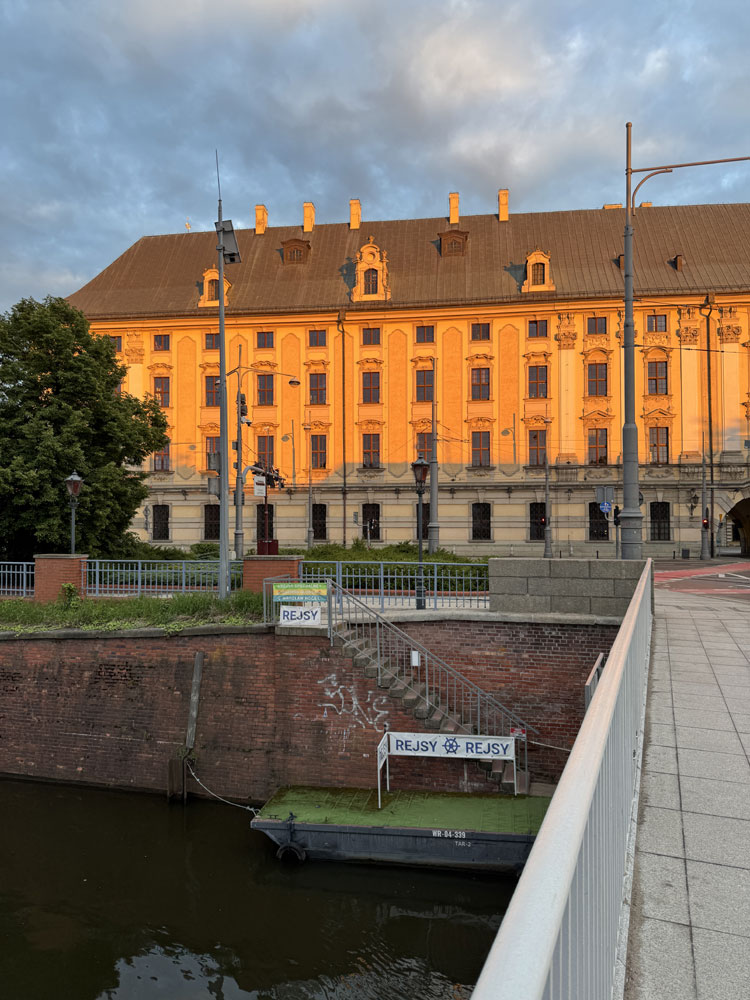
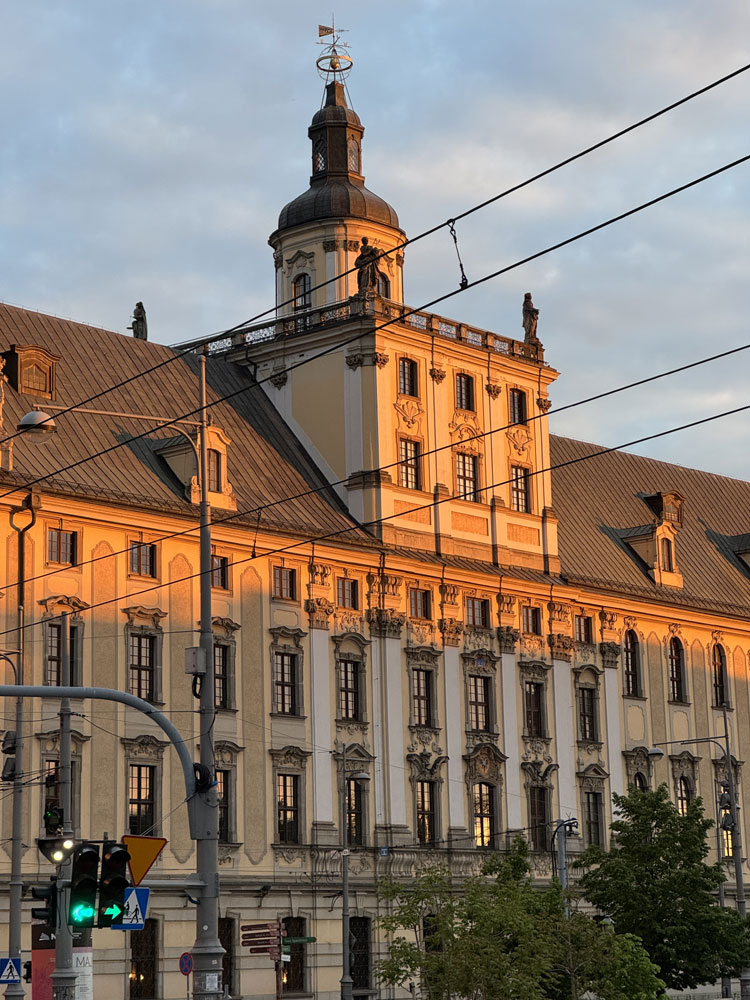
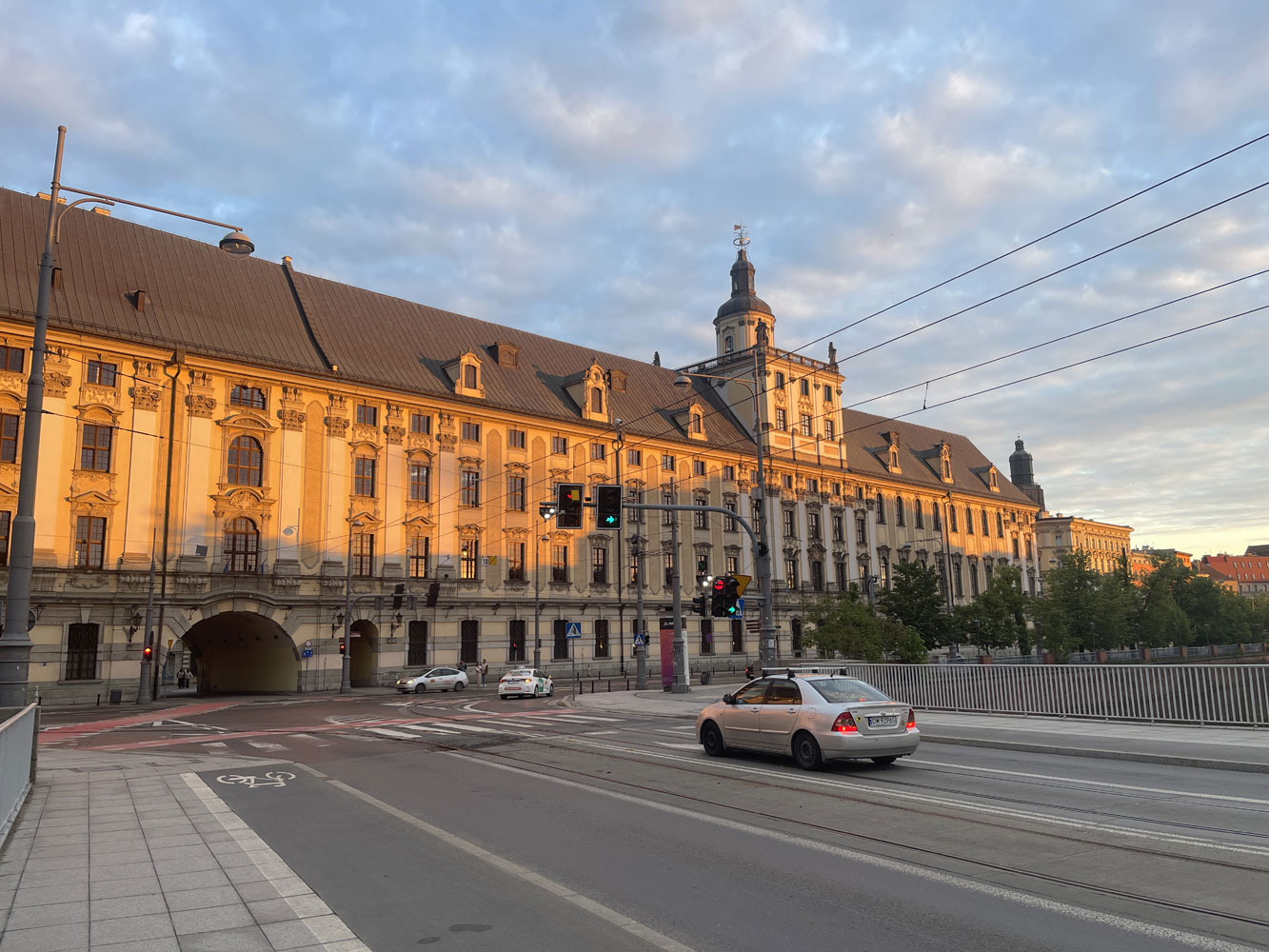
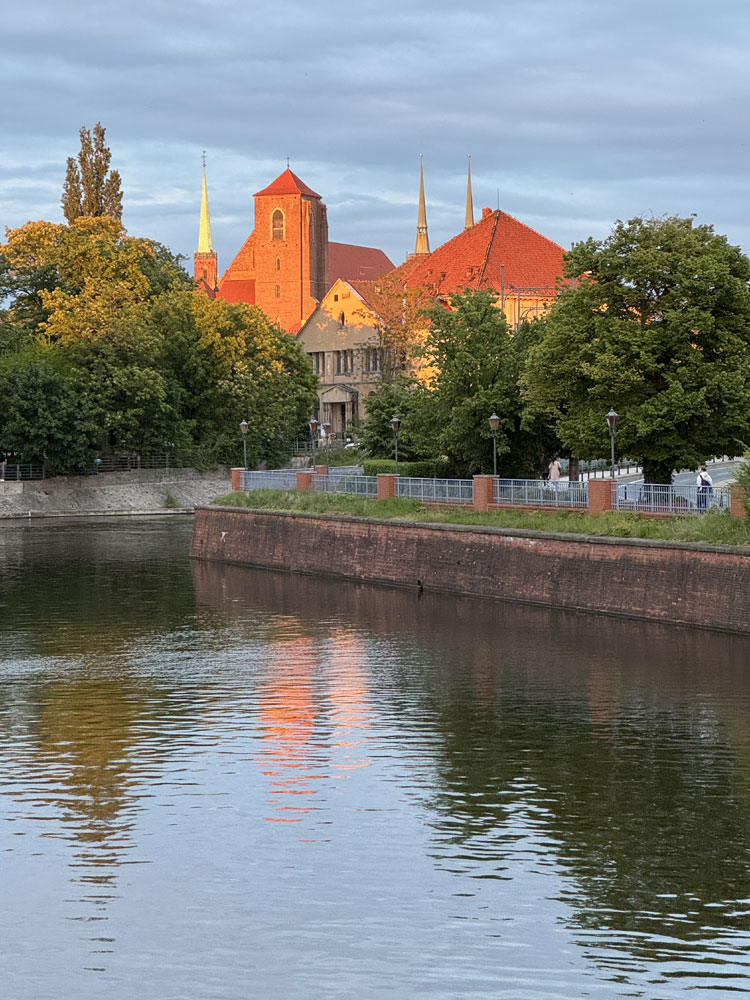
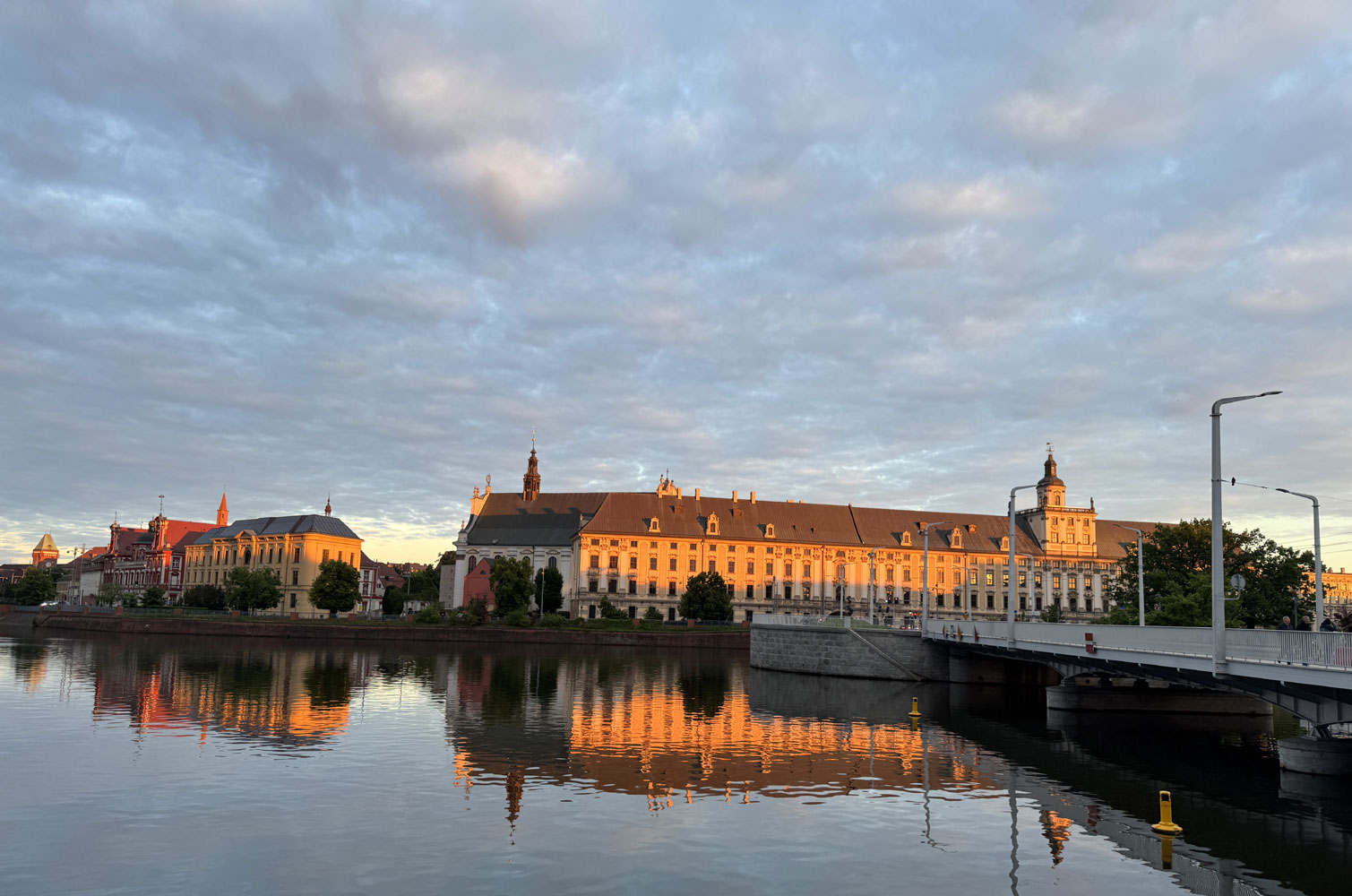
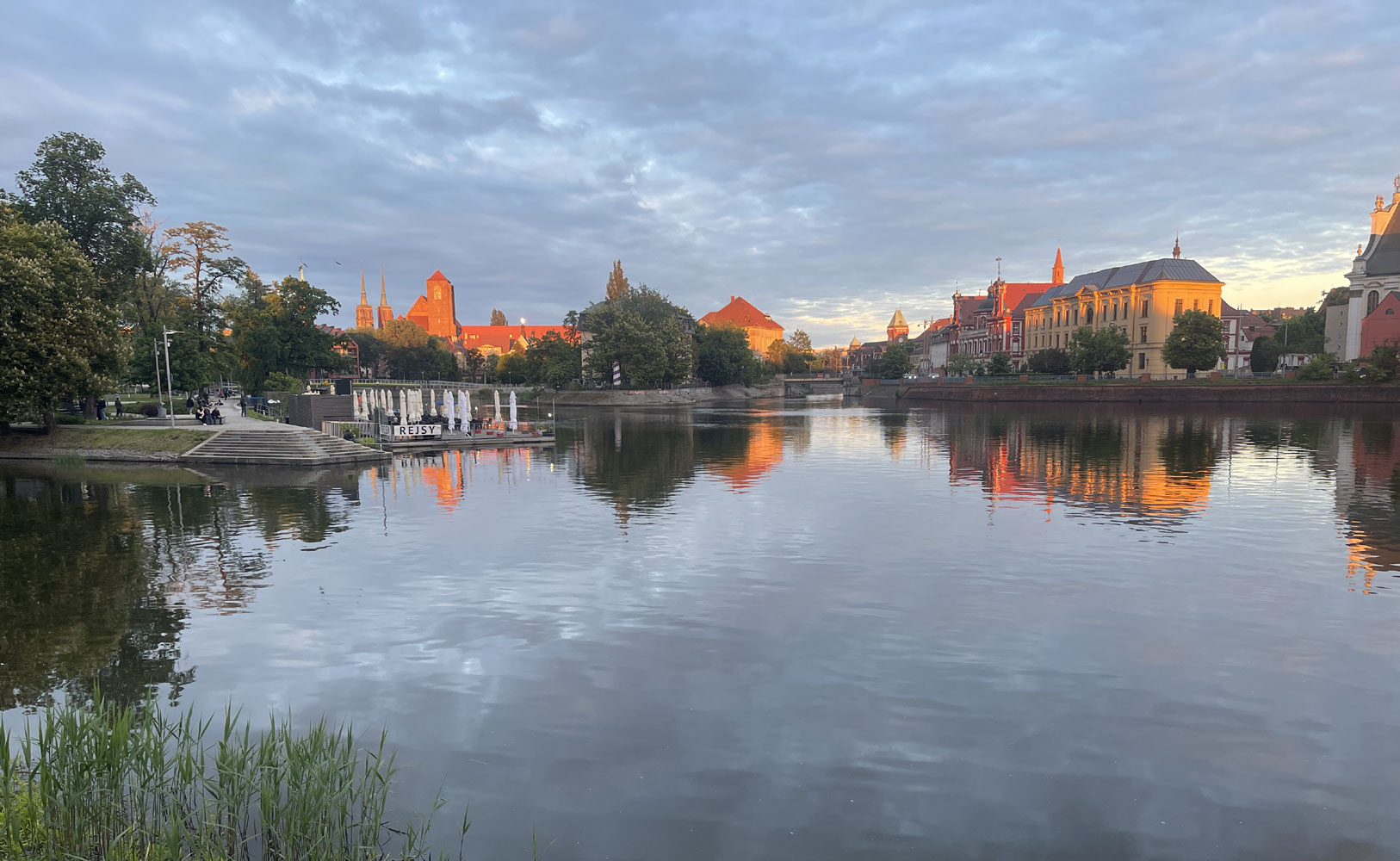
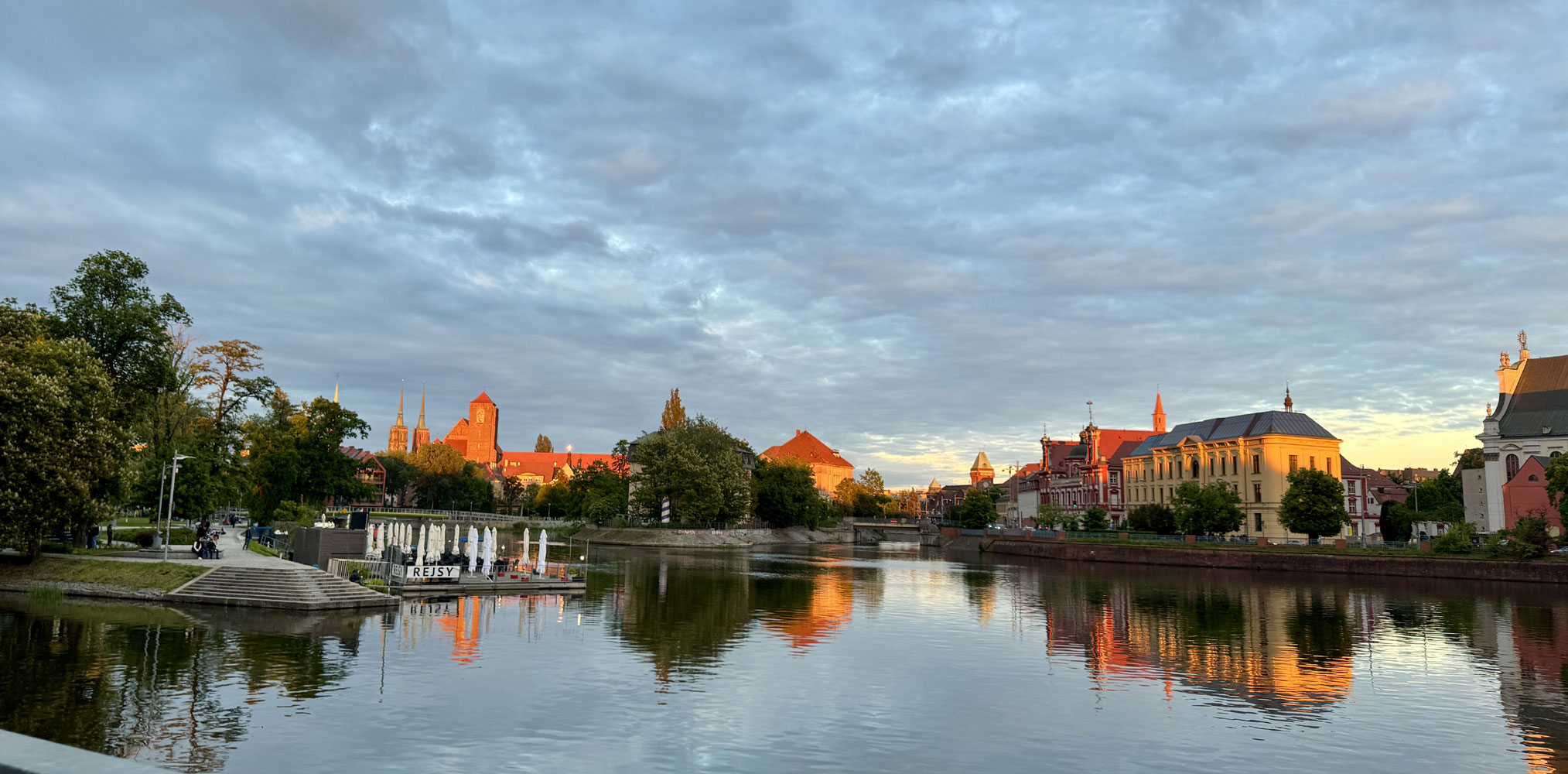
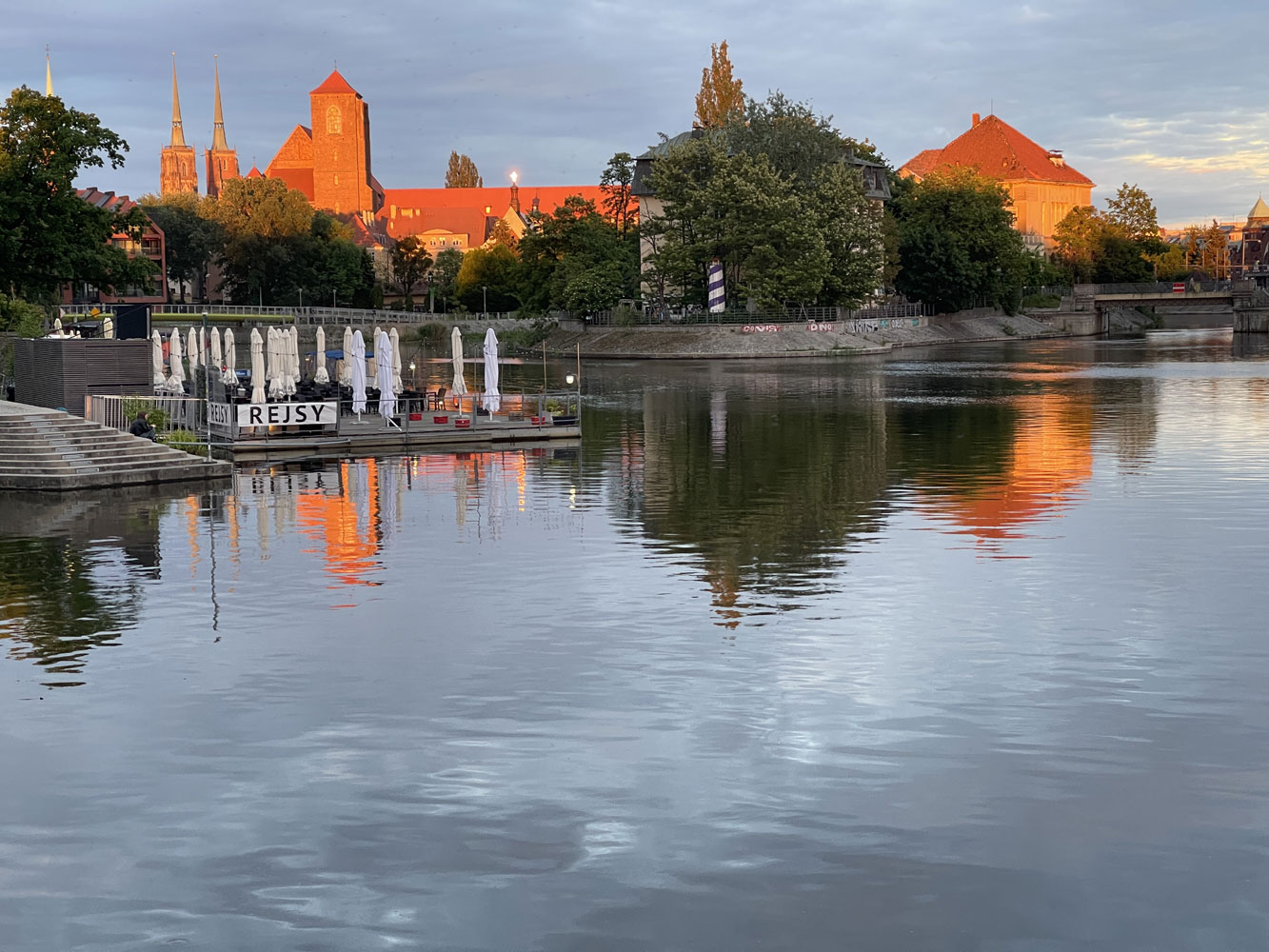
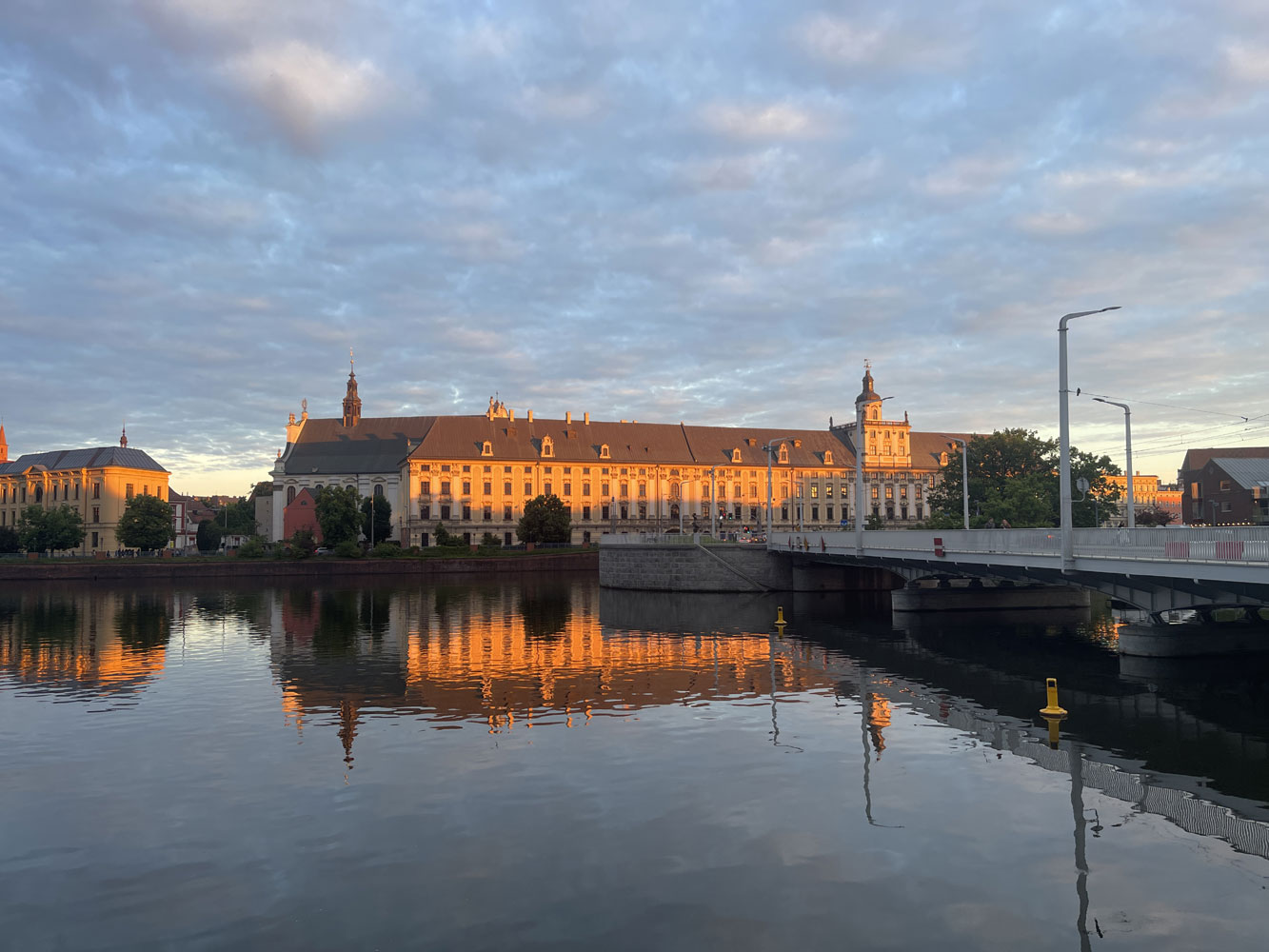
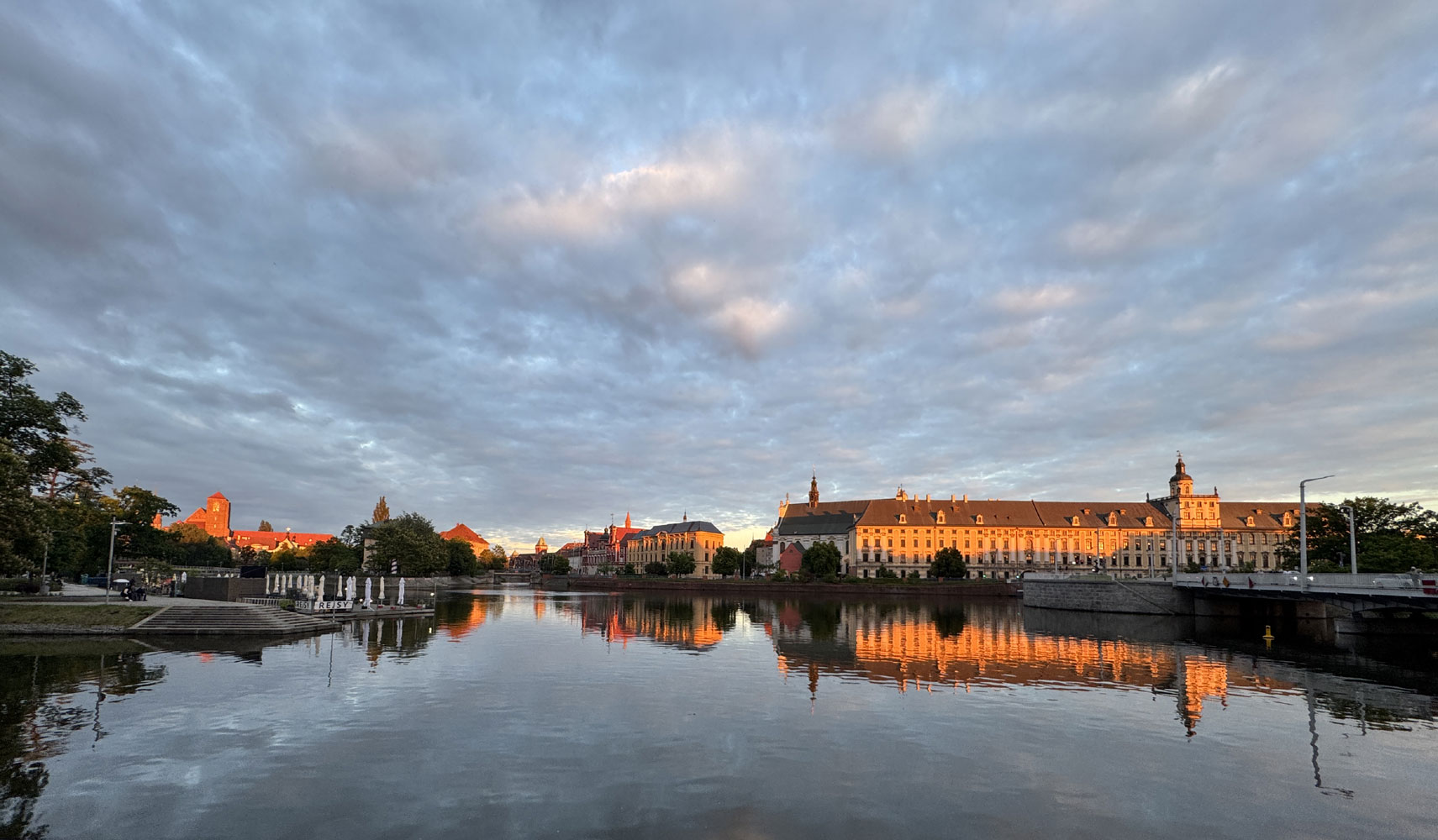
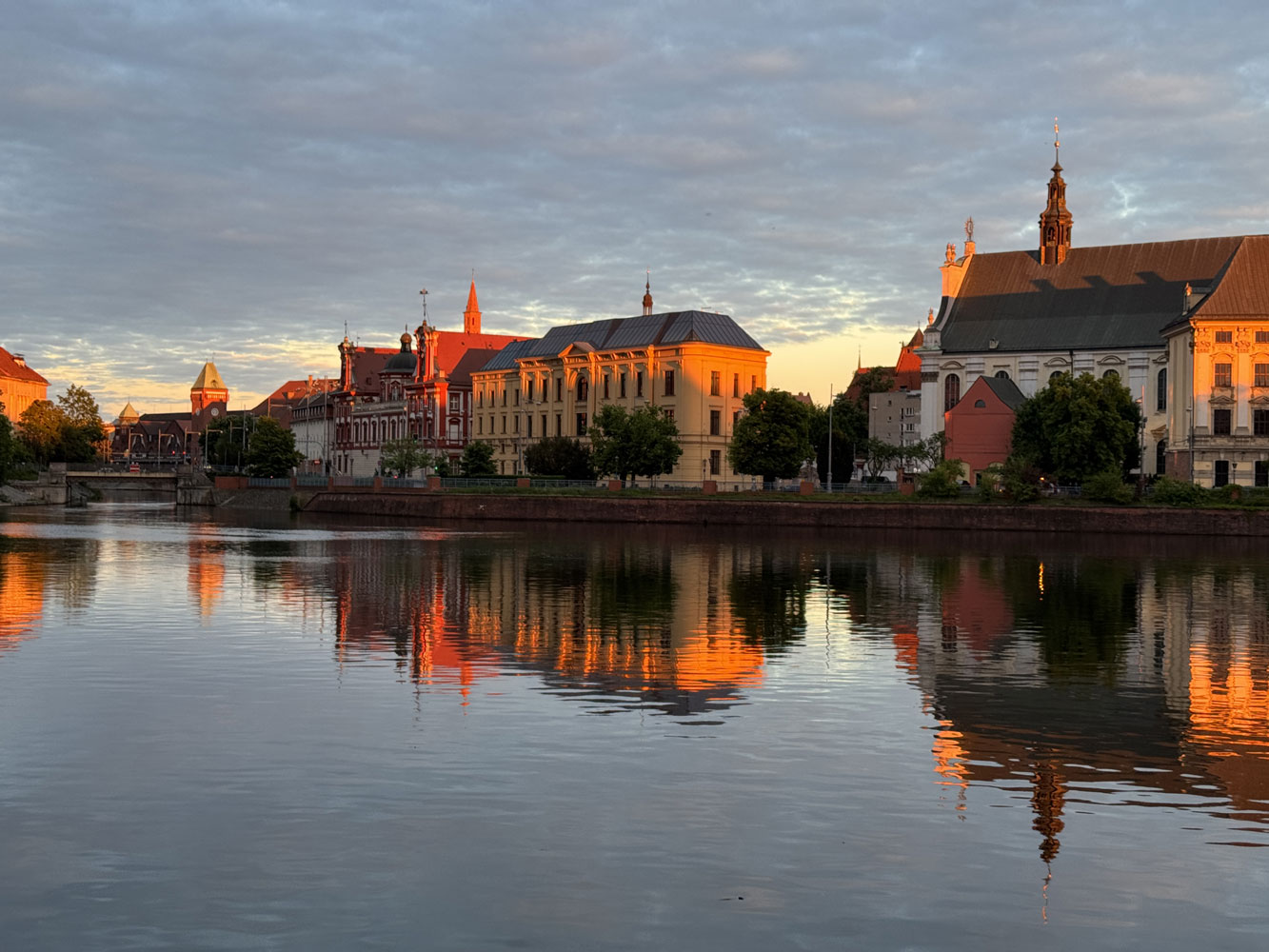
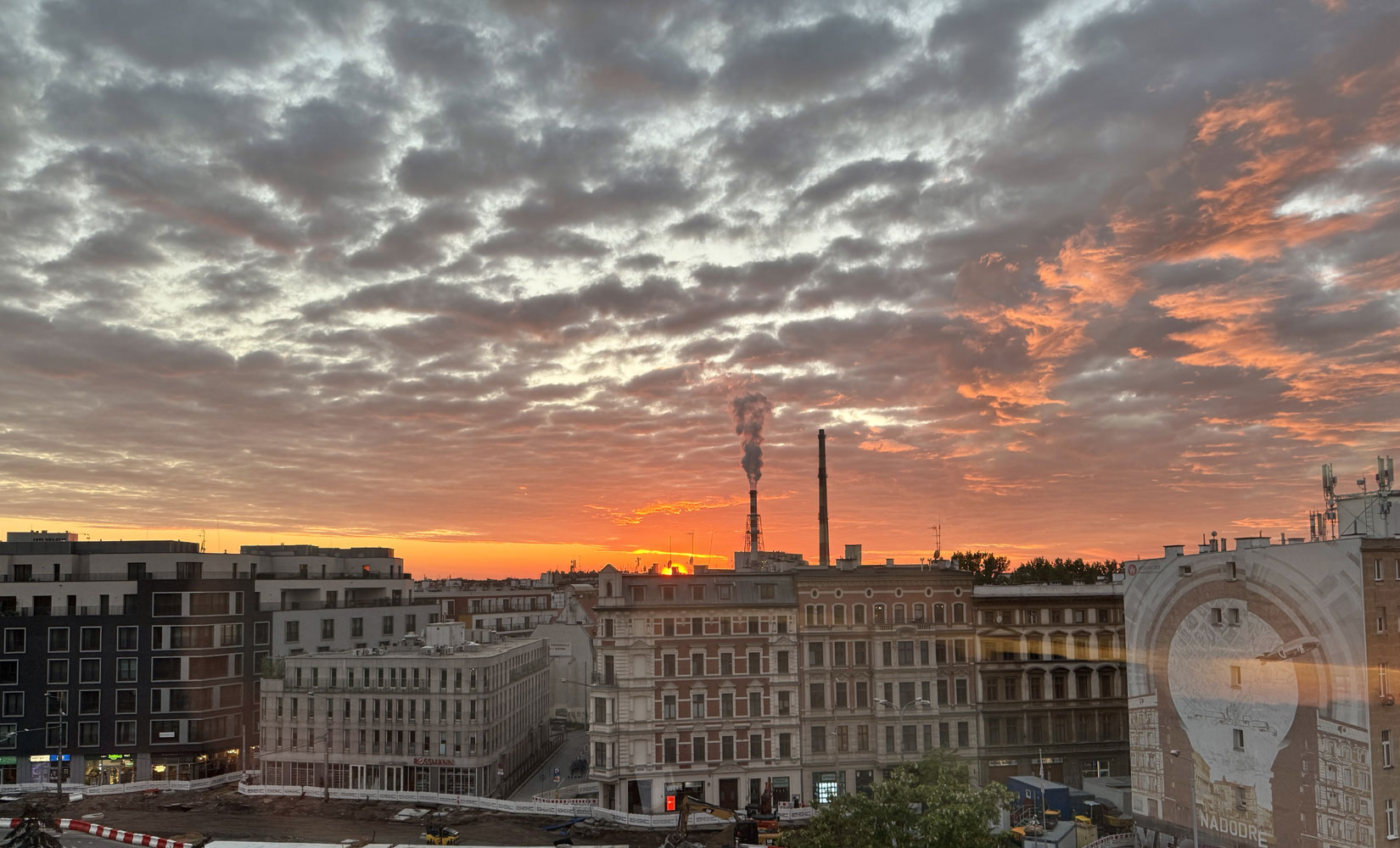
Our hotel was less than
a ten minute walk from the old town, where the restaurant
was located. During the short stroll back we were treated
to some beautiful colours as the sun was setting. |
|
|
| |
|
|
| |
|
| |
|
| |
|
| |
|
| |
|
| |
|
| |
|
| |
|
| |
|
| |
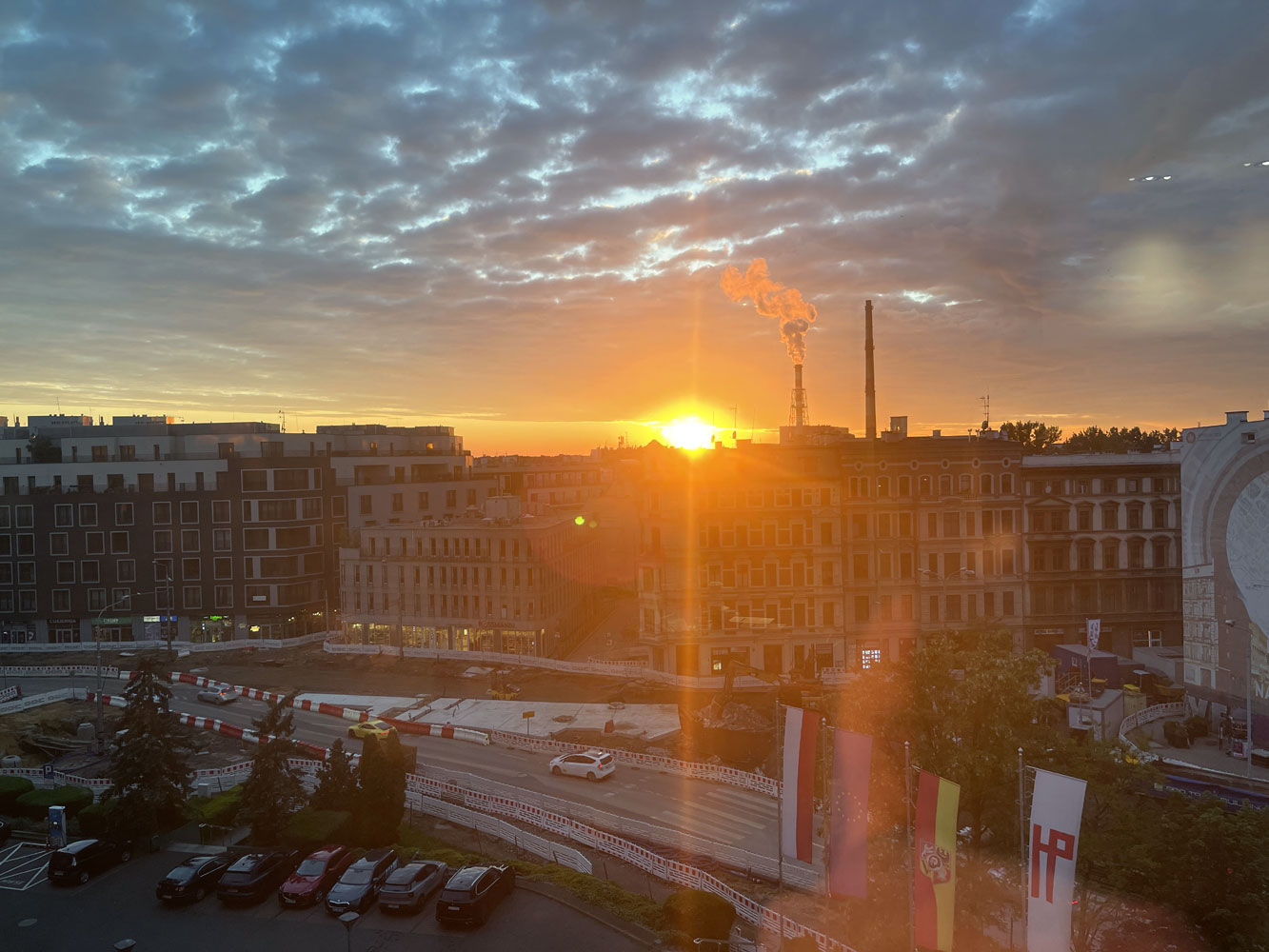
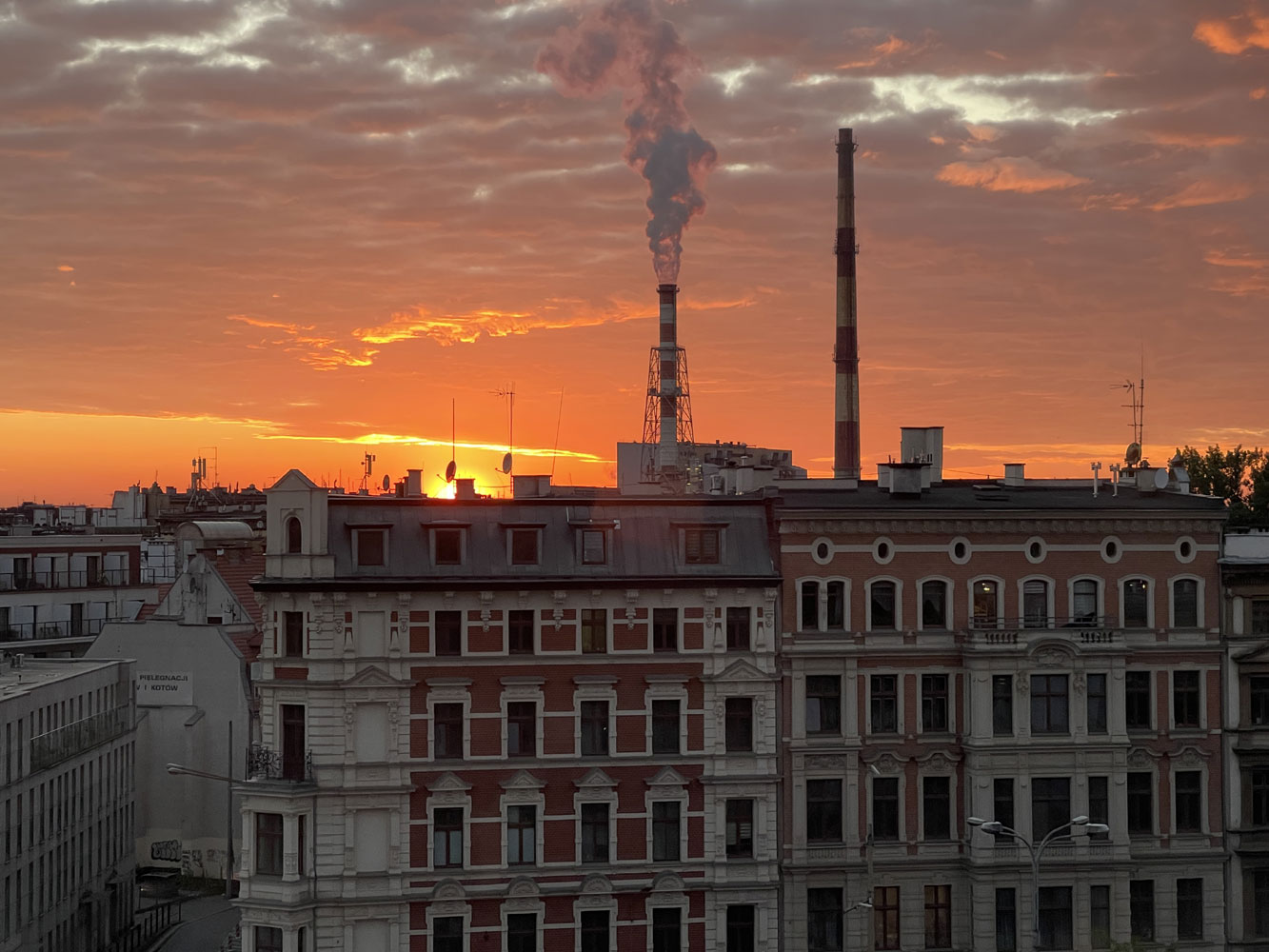
Views from our hotel
room. |
|
|
| |
|
| |
|
| |
We had really enjoyed
our busy day in Wroclaw. Tomorrow we would be leaving by
train for our next destination. |
|
| |

|
|